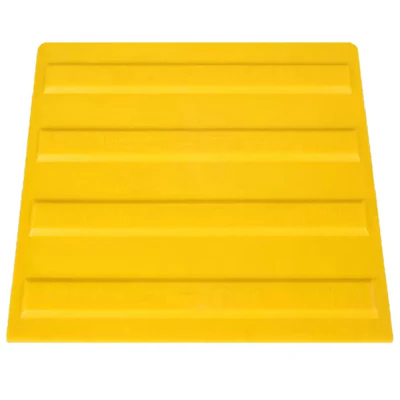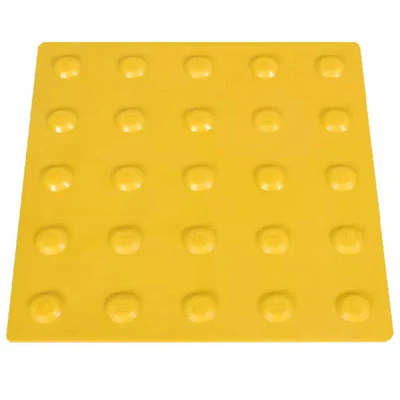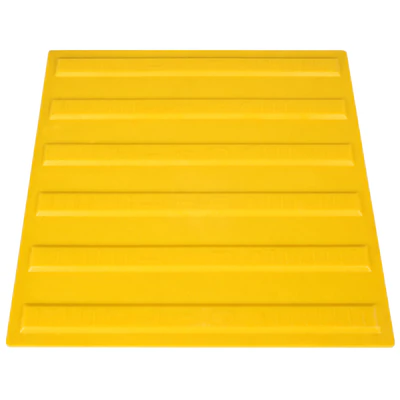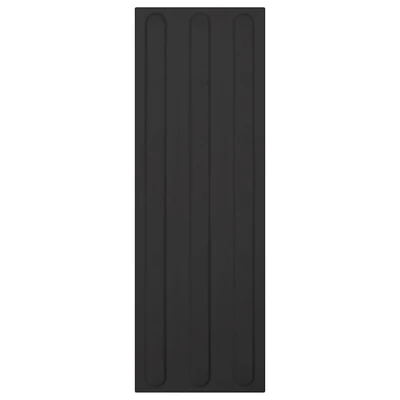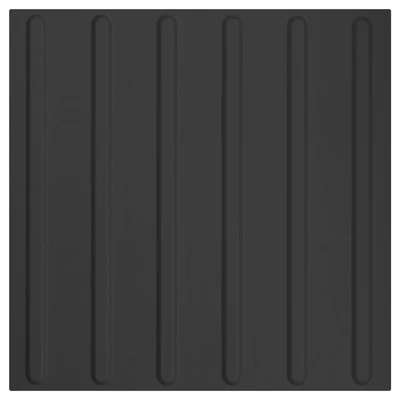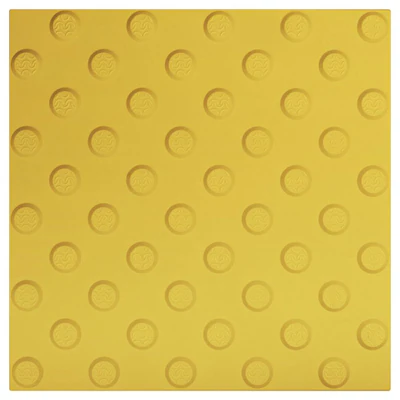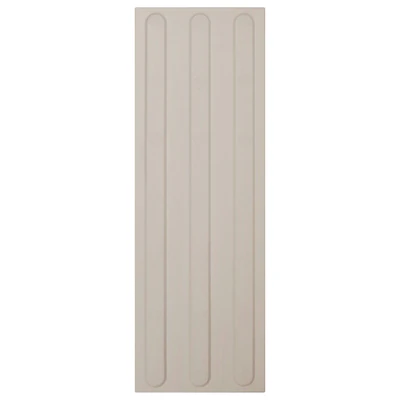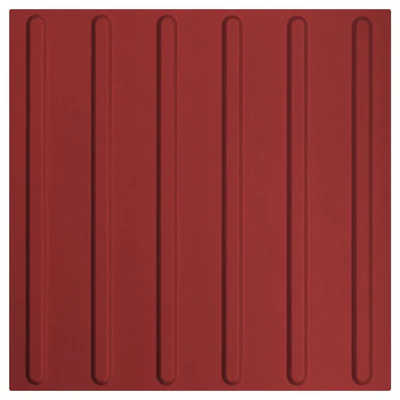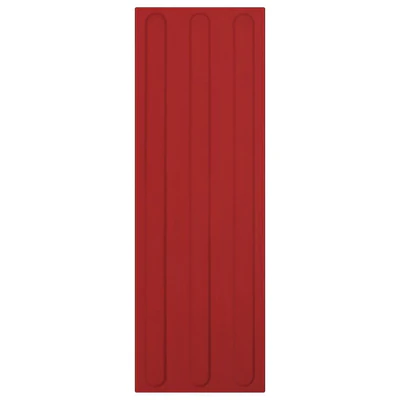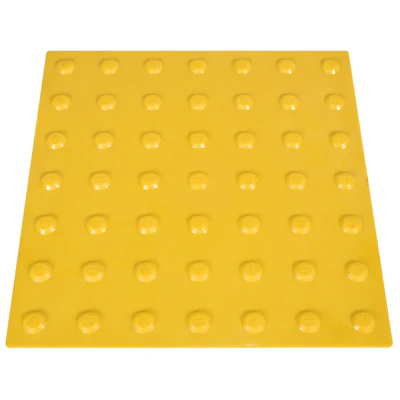
Touch mark for visually impaired people STOP 400x400 mm
27,01 lei
In stock
in6 variant
Request a quote – Touch mark for visually impaired people STOP 400x400 mm See options – Touch mark for visually impaired people STOP 400x400 mmWe use strictly necessary cookies to run the site and, only with your consent, to remember viewed products, for visit statistics and for YouTube video playback. You can change your mind at any time from “Cookie settings” at the bottom of the page. Cookie policy
Technical advice: 021 450 60 70 · Fast delivery nationwide · Blog
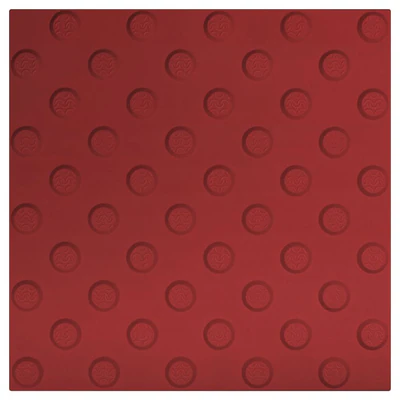
Touch markings are special surfaces mounted on the floor to guide and warn people with impaired vision.
27,01 lei
In stock
in6 variant
Request a quote – Touch mark for visually impaired people STOP 400x400 mm See options – Touch mark for visually impaired people STOP 400x400 mm20,00 lei
In stock at supplier
sup6 variant
Request a quote – Touch mark for visually impaired people 300x300 mm See options – Touch mark for visually impaired people 300x300 mm64,00 lei
In stock
in6 variant
Request a quote – Touch mark for visually impaired people STOP 300x600 mm See options – Touch mark for visually impaired people STOP 300x600 mm27,01 lei
In stock
in6 variant
Request a quote – Touch mark for visually impaired people 400x400 mm See options – Touch mark for visually impaired people 400x400 mm550,01 lei
In stock
in Request a quote – Sticker for tactile markings See options – Sticker for tactile markings76,25 lei
In stock at supplier
sup49 variant
Request a quote – Tactile carpet warning visually odded people black RAL 9004 300x300 mm See options – Tactile carpet warning visually odded people black RAL 9004 300x300 mm76,25 lei
In stock at supplier
sup49 variant
Request a quote – Tactile Warning Cover for Visually Impaired White People RAL 9003 300x300 mm See options – Tactile Warning Cover for Visually Impaired White People RAL 9003 300x300 mm113,20 lei
In stock at supplier
sup49 variant
Request a quote – White orientation tactile carpet RAL 9003 P1 150x450 mm See options – White orientation tactile carpet RAL 9003 P1 150x450 mm81,34 lei
In stock at supplier
sup49 variant
Request a quote – Tactile orientation carpet for visually odded white people RAL 9003 300x300 mm See options – Tactile orientation carpet for visually odded white people RAL 9003 300x300 mm113,20 lei
In stock at supplier
sup49 variant
Request a quote – Black orientation tactile carpet RAL 9004 P1 150x450 mm See options – Black orientation tactile carpet RAL 9004 P1 150x450 mm81,34 lei
In stock at supplier
sup49 variant
Request a quote – Tactile carpet visually oriented impaired black people RAL 9004 300x300 mm See options – Tactile carpet visually oriented impaired black people RAL 9004 300x300 mmPrice on request
In stock at supplier
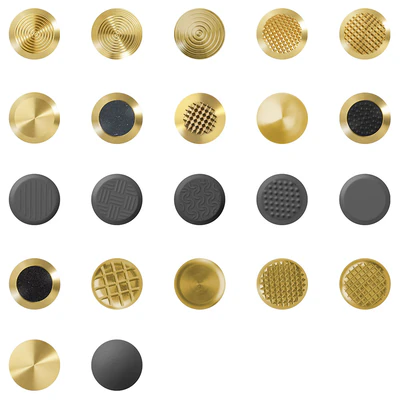
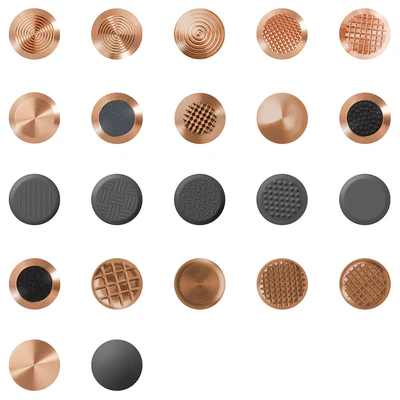
sup Request a quote – Warning clips tactile markings of brass See options – Warning clips tactile markings of brassPrice on request
In stock at supplier
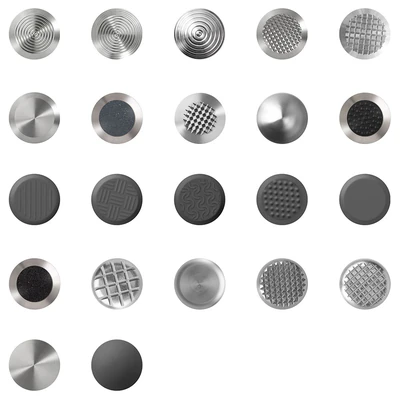
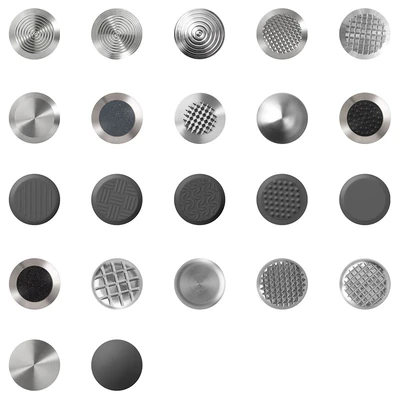
sup Request a quote – Warning clips aluminium tactile markings See options – Warning clips aluminium tactile markingsPrice on request
In stock at supplier
sup Request a quote – Warning clips tactile markings from bronze See options – Warning clips tactile markings from bronzePrice on request
In stock at supplier
sup Request a quote – Stainless steel tactile tactile marking warning clippers See options – Stainless steel tactile tactile marking warning clippers76,25 lei
In stock at supplier
sup49 variant
Request a quote – Tactile warning marking for visually odded people yellow RAL 1003 300x300 mm See options – Tactile warning marking for visually odded people yellow RAL 1003 300x300 mm113,20 lei
In stock at supplier
sup49 variant
Request a quote – Yellow orientation tactile marking RAL 1003 P1 150x450 mm See options – Yellow orientation tactile marking RAL 1003 P1 150x450 mm113,20 lei
In stock at supplier
sup49 variant
Request a quote – Touch mark of orientation ivory RAL 1014 P1 150x450 mm See options – Touch mark of orientation ivory RAL 1014 P1 150x450 mm81,34 lei
In stock at supplier
sup49 variant
Request a quote – Orientation tactile marking for visually odded people yellow RAL 1003 300x300 mm See options – Orientation tactile marking for visually odded people yellow RAL 1003 300x300 mm81,34 lei
In stock at supplier
sup49 variant
Request a quote – Touch mark orientation visually odded people red RAL 3001 300x300 mm See options – Touch mark orientation visually odded people red RAL 3001 300x300 mm113,20 lei
In stock at supplier
sup49 variant
Request a quote – Touch mark red orientation RAL 3001 P1 150x450 mm See options – Touch mark red orientation RAL 3001 P1 150x450 mmWe didn't find any products for the chosen filters.
Products in this category cover dimensions between 300 mm and 600 mm. Check the size, material and compatibility with your application in each product file.
In addition, for orders and questions, the TopTrafic.ro team offers delivery throughout the country and technical advice.
Touch markings are special elements applied to the flooring that transmit information by touch, using the surface relief and texture. They allow people with impaired vision to safely orient themselves in public and private spaces.
These surfaces are not simple ‘models' applied to the floor. They are part of a coherent system of accessibility of the built environmenthaving the role of:
In a modern society, accessibility is not optional. It is an essential condition for integration and safety.
Unseen or visually impaired persons shall use the white stick and perceive the differences in texture by:
The surface in relief conveys information by way of interference. The form and orientation of the elements determines the type of message transmitted.
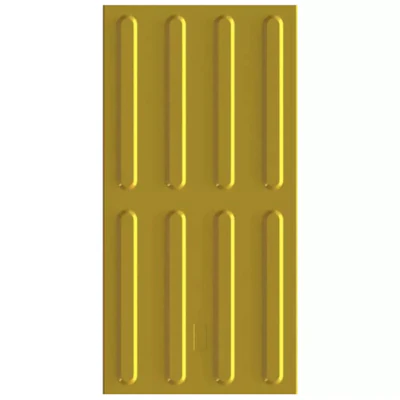
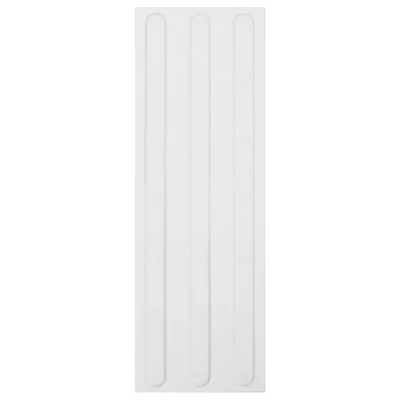
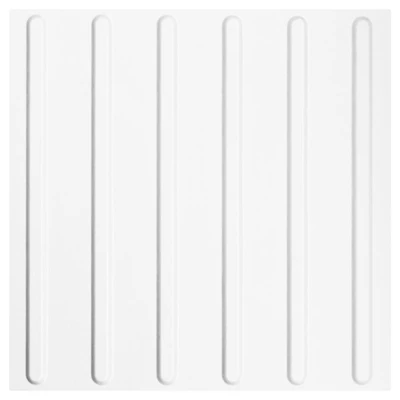
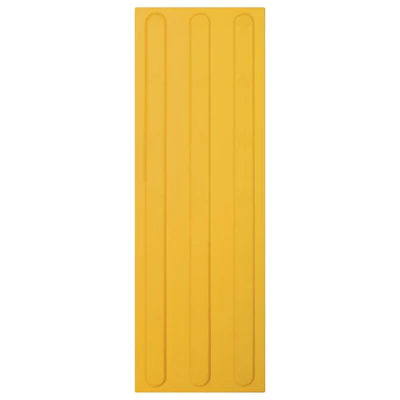
1. Directional guidance (parallel lines)
Indicates direction of walk.
Mount on main tracks: sidewalks, hallways, towers, transport stations.
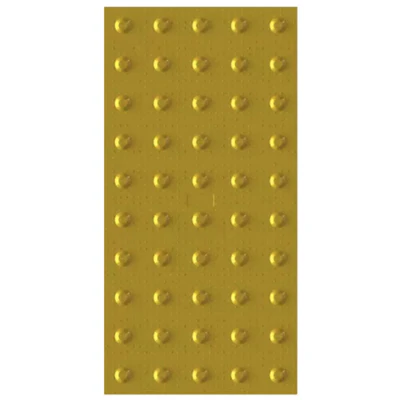
2. Warning (points/cones)
Signs a danger or an area where increased attention is required:
These two types combine to create a coherent and safe path.
Their implementation is required in most modern public spaces.
Proper implementation dramatically reduces the risk of accidents.
Reduce the risk of falling or accident in areas with level differences.
A person with impaired vision may move without a companion.
Accessibility legislation requires adaptation of public spaces.
An accessible space conveys professionalism and social responsibility.
Polyurethane/hard PVC
Stainless steel
Aluminium
Ceramic / prefabricated concrete
solutions integrated in the outer pavement
Compound material with non-slip inserts
Industrial material is required for malls or railway stations.
For offices or small institutions, polymeric solutions are sufficient.
The right choice starts from analysis, not price.
Inside or outside?
Reduced pedestrian, medium or intense?
Concrete, gravel, asphalt, pavement?
An incorrect installed system can become useless or even dangerous.
Planning must be done before assembly, not during execution.
A well-implemented project lasts for years without major interventions.
Modular systems allow only the change of damaged areas.
Yes, in most cases accessibility legislation requires adaptation of spaces for people with disabilities.
The tracks indicate the direction of the walk, the dot plates warn about a danger.
Yes, if the support is stable and the adhesive is suitable.
Outdoor models are designed for severe weather conditions.
The tactile markings are not an aesthetic detail and no optional element. They are a fundamental component of modern infrastructure, contributing to safety, autonomy and social integration.
A well-chosen and well-mounted system transforms any space into an accessible, responsible and ready environment for all users.
Investment in accessibility is not just a legal obligation. It's a statement of professionalism and respect.
Get our offers and news once a month. You can unsubscribe at any time.