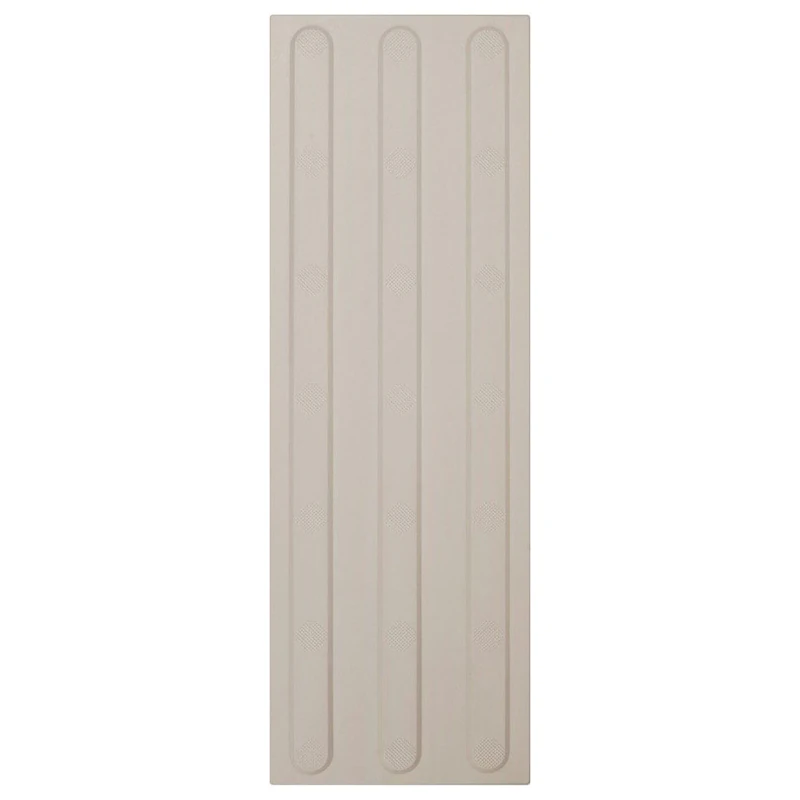
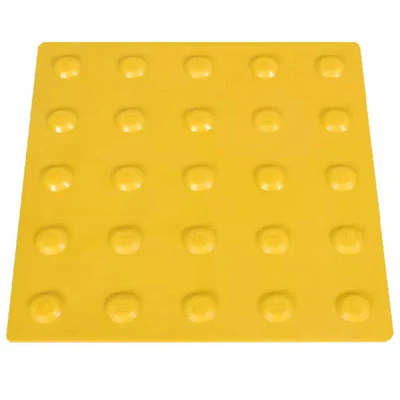
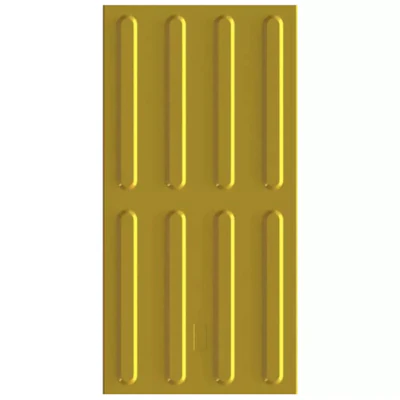
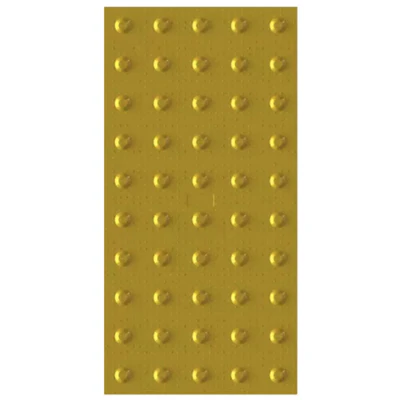
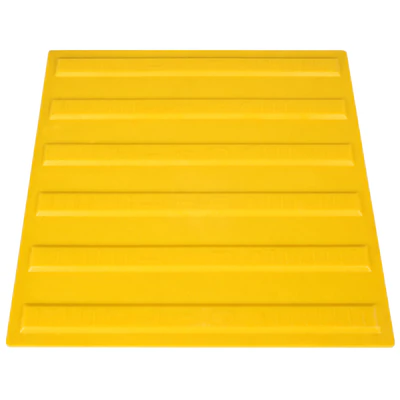
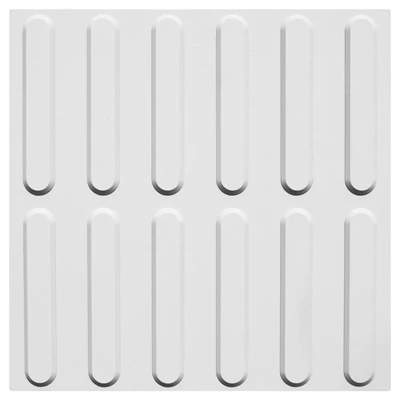
In a modern space, accessibility is no longer a "nothing to have", but a real need. The ivory orientation tactile marking RAL 1014 P1 150x450 mm is designed to transform any traffic area into a safe, intuitive environment and in accordance with current standards. Whether we're talking about public buildings, commercial spaces or urban infrastructure, this kind of directional tactile marking provides clear and continuous guidance for blind or sightless persons.
Nuance Ivory RAL 1014 brings a distinct aesthetic advantage – discreet integration in elegant spaces, without compromising visibility. At the same time, the P1 touch profile provides clear feedback on touch and contact with the white stick.
Why do you need tactful guidance markings in your projects
Accessibility is not only a legal requirement, but also evidence of social responsibility. In the absence of guidance tactile systems, people with impaired vision experience major difficulties in orientation.
Real problems solved by this product:
- Lack of a clear path in large spaces
- Difficulties in identifying travel directions
- Increased risk of accidents
- Non-compliance with the rules in force
The ivory P1 orientation tactile marking creates safe and intuitive routes, being frequently used in:
- airports
- metro and train stations
- shopping malls
- hospitals and clinics
- public institutions
- office buildings
Intelligent and functional design – P1 profile for clear orientation
What does the P1 profile mean?
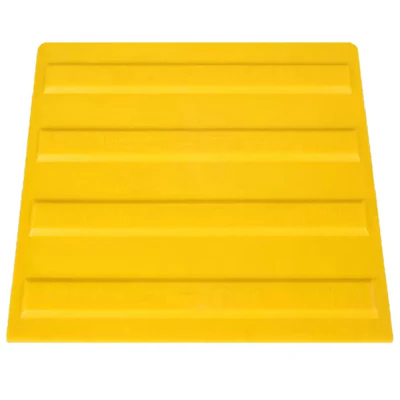
The P1 profile consists of longitudinal ribs, specially designed to indicate the direction of movement.
How it works:
- continuous linear guide
- immediate tactile perception
- clear differentiation from warning areas
- compatibility with the stick for visually odded people
This type of marking is used for:
- Main route
- Corridor
- Access directions
- connections between important points
Detailed technical specifications – performance and sustainability
Optimised dimensions for efficiency
- Size: 150 x 450 mm
- Ideal format for modular mounting
- Allows flexible route configuration
Premium material
- Resistant polymer / industrial composite
- High resistance to heavy traffic
- Dimensional stability over time
Color: Ivory RAL 1014
- Premium aesthetic, suitable for modern spaces
- Balanced Visual Contrast
- Elegant alternative to standard yellow
Functional properties:
- anti-slip
- UV resistant
- moisture resistant
- Easy to maintain
- inner/exterior compatible
Competitive advantage: aesthetic integration without compromise
Most tactile markings are yellow, for maximum visibility. However, in certain architectural projects, this may affect design.
Variant ivory RAL 1014 offers:
- harmonious integration in premium spaces
- Maintaining tactile functionality
- professional and clean appearance
Ideal for:
- hotels
- Corporate buildings
- Showrooms
- luxury spaces
Fast and safe assembly – adaptable to any surface type
Mounting types:
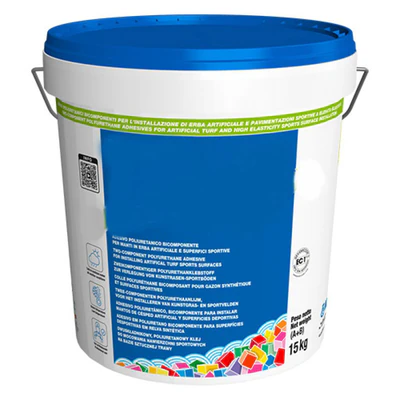
- Professional adhesive glue
- Mechanical fixing (depending on the support)
Compatible surfaces:
- concrete
- Fat
- granite
- marble
- epoxy pardosyl
Benefits:
- Quick installation
- reduced implementation costs
- individual replacement possibility
Where this tactile marking is most commonly used
Public spaces:
- government institutions
- city planning
- Schools and universities
Transport:
- rails
- airports
- bus stations
Commercial:
- malls
- supermarkets
- Big magazine
Medical:
- hospitals
- clinical
- recovery centre
Commercial benefits for the customer
- Increases the accessibility of space
- Compliance with legal and regulatory requirements
- Reduce the risk of accidents
- Improve user experience
- Consolidate the professional image of the brand
- Sustainable solution with low long-term costs
- Quick installation without major interruptions
Difference between guidance and warning markings
Orientation Marking (P1):
- Directional guidance
- continuous path
- longitudinal ribs
Warning marking:
- hazard warning
- stop or change zones
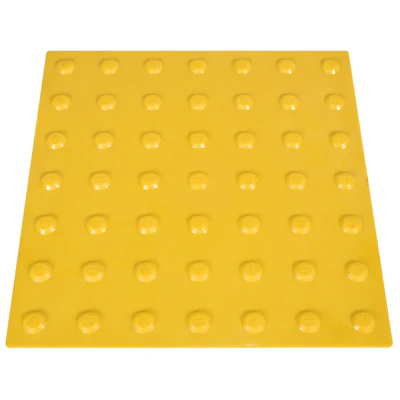
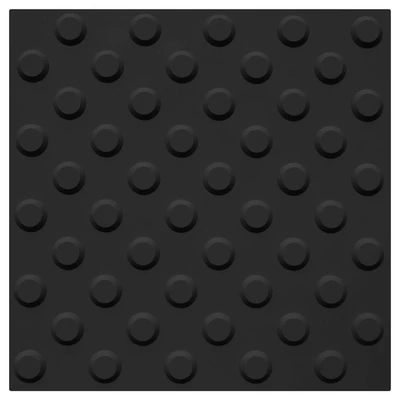
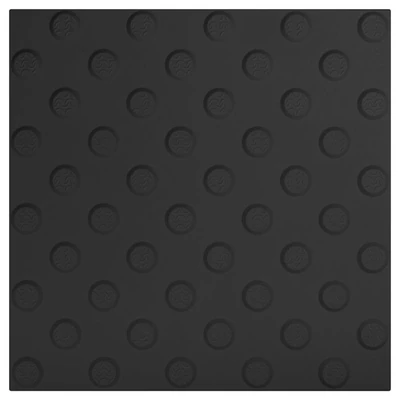
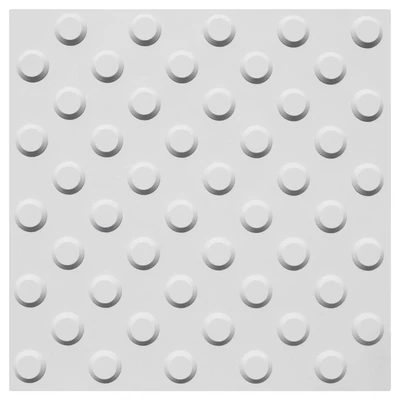
- touch points (bulins)
The correct use of both types creates a complete accessibility system.
How to choose the right tactile tags for your project
Key factors:
- type of space
- level of traffic
- Legal requirements
- Visual contrast
- architectural design
Ivory mark RAL 1014 P1 is the ideal choice when:
- you want functionality + aesthetics
- you have a premium space
- You want discreet integration
Maintenance and lifespan
- simple cleaning with standard solutions
- resistance to heavy wear
- does not require special treatment
Life expectancy is significantly higher compared to low-cost solutions.
FAQ – Frequently Asked Questions
What role does a tactile guidance mark have?
It helps blind people to move safely, indicating the right direction.
What's the difference to the warning markings?
Orientation markings indicate direction, warning markings indicate hazards or stops.
Can it be mounted outside?
Yes, the product is weather resistant and UV resistant.
Is it mandatory in public buildings?
Yes, in many cases it is required by accessibility legislation.
What surfaces support the montage?
Concrete, gravel, natural stone, industrial floors.
How visible is ivory to yellow?
It is more discreet but sufficiently visible in combination with the correct design of space.
Can it be combined with other touch markings?
Yes, for a complete guidance and warning system.