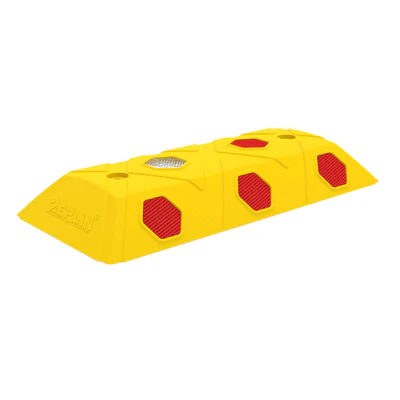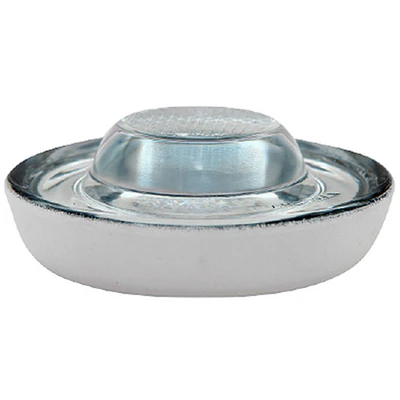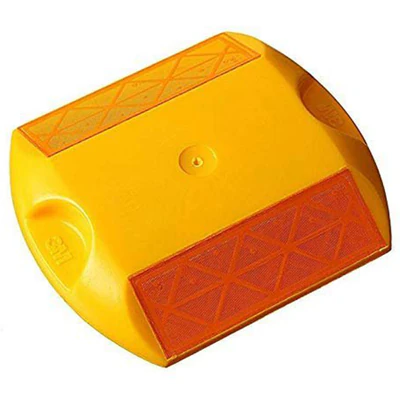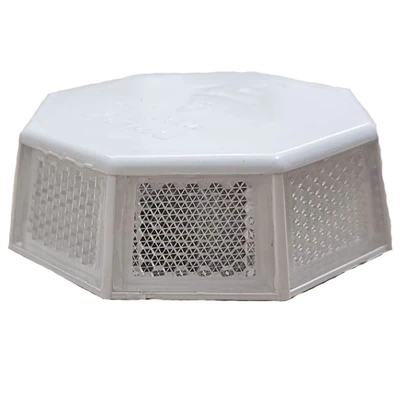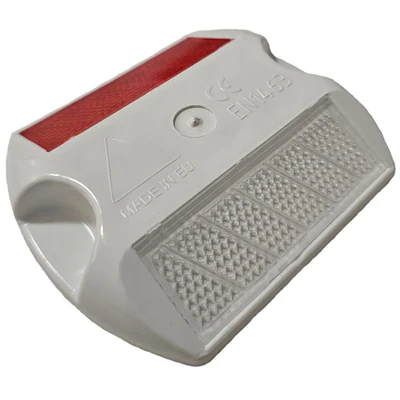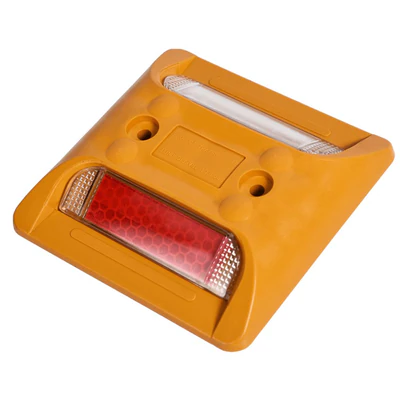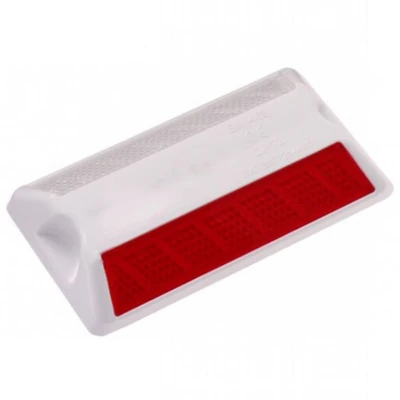
White-red plastic marker
21,00 lei
In stock at supplier
sup4 variant
Request a quote – White-red plastic marker See options – White-red plastic markerWe use strictly necessary cookies to run the site and, only with your consent, to remember viewed products, for visit statistics and for YouTube video playback. You can change your mind at any time from “Cookie settings” at the bottom of the page. Cookie policy
Technical advice: 021 450 60 70 · Fast delivery nationwide · Blog
Road buttons are reflective elements mounted on the roadway for driving and increasing visibility in traffic, especially at night.
21,00 lei
In stock at supplier
sup4 variant
Request a quote – White-red plastic marker See options – White-red plastic marker18,00 lei
In stock
in Request a quote – Zeplin ZT8002 street reflector button with 2 sides, red/white, 210x100x25 mm, PPC See options – Zeplin ZT8002 street reflector button with 2 sides, red/white, 210x100x25 mm, PPC75,00 lei
In stock at supplier
sup Request a quote – Glass street marker See options – Glass street marker34,99 lei
In stock at supplier
sup3 variant
Request a quote – White omnidirectional reflector button See options – White omnidirectional reflector button60,00 lei
In stock
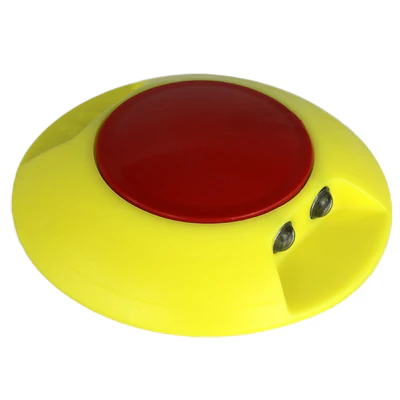
in Request a quote – Reflective button for delimiting traffic colours, diameter 110 mm, height 22 mm See options – Reflective button for delimiting traffic colours, diameter 110 mm, height 22 mm21,00 lei
In stock
in4 variant
Request a quote – Plastic Marker PVC White-red See options – Plastic Marker PVC White-redWe didn't find any products for the chosen filters.
The products in this category cover dimensions between 22 mm and 110 mm. You can compare PVC and Zeplin variants. Check the size, material and compatibility with your application in each product file.
In addition, for orders and questions, the TopTrafic.ro team offers delivery throughout the country and technical advice.
Road buttons are signalling devices mounted directly on the surface of the carousel, with the role of boundaries bands, walking directions, road edges or areas with special restrictions.
They are also known as the popular ‘cat eyes', due to their ability to reflect the light of the headlights strongly at night.
Their main role is simple, but essential:
The visibility of the route is increased
Helps guide drivers
• reduce the risk of accidental band leaving
• increase safety in difficult weather conditions
Although they seem small, their impact on safety is major.
In ideal conditions, road markings are sufficient. But the reality is different:
In such situations, the visibility of the marked lines decreases dramatically.
This is where the reflector devices mounted on the roadway intervene, which:
On highways, national roads, turning directions or parking lots, they contribute directly to reducing accidents.
Practically, wherever you need to clear and permanent visual guidance, these elements become an effective solution.
The principle is simple:
Inside they have prismatic inserts or reflector lenses that return light from the headlamps directly to the source.
The process is as follows:
Some models are passive (reflective) and others are active, solar-powered and equipped with LEDs.
Most commonly used variants.
Characteristics:
They are ideal for most urban applications.
Recommended for:
The major advantage is High mechanical strength.
Modern solutions with superior visibility.
Characteristics:
They are ideal for:
Used in:
They have easy mounting and dismantling.
An important criterion is the support capacity:
The choice must not be made solely on the basis of the price criterion.
Ask yourself:
In areas with:
it is essential to choose a model resistant to repeated cycles of dilation and contraction.
For unlit areas, LED solutions are clearly superior.
For lighted parking, the reflective version is sufficient.
A well-assembled product that is incorrectly assembled loses its efficiency.
The assembly requires:
Choosing a weak model for heavy traffic
Mounting on dirty surface
Use of improper adhesive
Incorrect distance between elements
Ignoring the technical rules
These errors reduce the life and efficiency of the system.
For road managers or parking lots, the investment is small in relation to impact.
In certain areas and configurations, yes, according to technical regulations.
Life expectancy depends on:
Average: 3–10 years.
Yes, if the surface is stable and properly prepared.
From practical experience:
Don't compromise on adhesive and mounting.
These devices do not require complex maintenance, but:
Annual control is sufficient in most cases.
Road buttons are an essential solution for visibility, guidance and safety in any type of infrastructure.
The right choice depends on traffic, medium and desired level of visibility.
The investment is reduced, and the benefits are significant in the long term — both for administrators and for traffic participants.
Get our offers and news once a month. You can unsubscribe at any time.