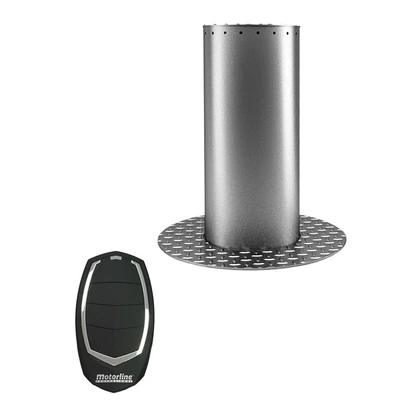
What the Bollards are and what their real role is
In modern cities, car access control is a constant challenge. Whether we are talking about crowded sidewalks, historic areas, private parking lots or industrial spaces, a simple and efficient solution is needed to clearly delineate the areas.
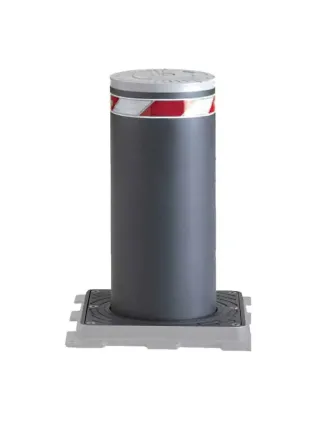
Bollards are ground-mounted vertical posts designed for:
- restriction of access to vehicles
- protection of buildings and infrastructure
- delimitation of pedestrian spaces
- prevention of unauthorised parking
- increasing safety in public areas
Although they may seem simple, they are in fact an essential system of Physical control of access.
Where they are most commonly used
Pedestrian areas
In the centres of cities, where car access is limited, the delimiting pillars:
- protect pedestrians
- prevent unauthorized access
- Keeping order in public space
Private and residential parks
In parking lots:
- prevents abusive occupation of seats
- clearly delimits spaces
- protect technical areas
Many owners are looking for solutions such as:
"how do I block a private parking space?
"What solution do they use to prevent illegal parking?
A retractable or retractable model is often the right choice.
Commercial buildings and offices
For the protection of glass faces or entrances:
- reduces the risk of accidental impact
- offers aesthetic delimitation
- contribute to the safety of employees and visitors
Industrial spaces
In hale and warehouses:
- protects industrial doors
- demarcates internal traffic zones
- defend sensitive equipment
Institutions and sensitive areas
In front of embassies, banks or public buildings, models with increased impact resistance are used.
How these delimitation systems work
The operation is simple in appearance: it creates a physical barrier.
Depending on the type, they may:
- complete block car access
- allows controlled access
- absorb the impact of a vehicle
There are models:
- fixed (permanently anchored in concrete)
- Detachable
- Folding
- manual retractable
- automatic retractable
Why are the bollards important
1. Protection against unauthorised access
Without a physical delimitation, signaling is not always sufficient.
2. Safety for pedestrians
Clear separation between the car and pedestrian zones reduces the risk of accidents.
3. Structural protection
A vehicle that is out of control can cause major damage.
Protective pillars can prevent direct impact with facades or windows.
4. Urban organisation and aesthetics
Modern models combine functionality with design.
Available types of bollards
Bollards fixed in concrete
Characteristics:
- permanent mounting
- high resistance
- minimum maintenance
Ideals for definitive delimitation.
Folding bollards
Allow:
- Temporary access
- blocking a parking space
They are commonly used in residential areas.
Hand retractable Bollards
Get up and come down manually.
Suitable for occasional access.
Automatic retractable bollards
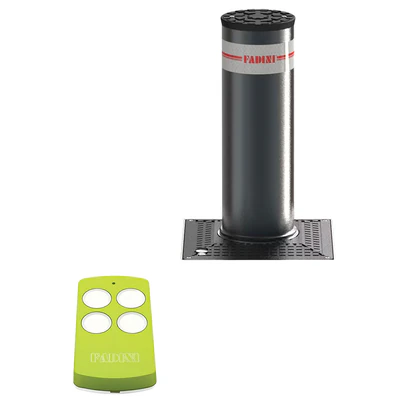
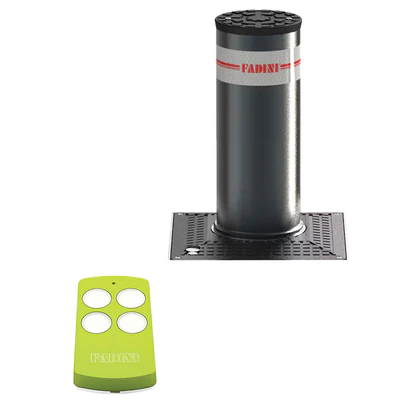
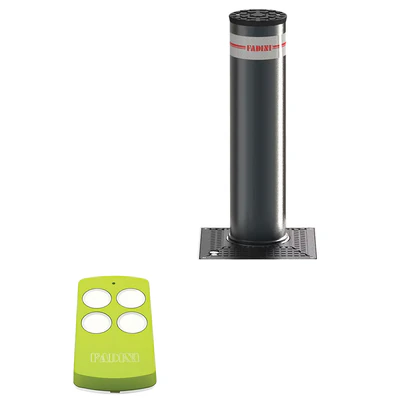
Control by remote control or automated system.
Use in:
- office buildings
- institutions
- Controlled parking
Flexible billings
Made from elastic materials, they return to the initial shape after easy impact.
Recommend for:
- visual delimitation
- Moderate urban traffic
Important differences between options
Fixed vs retractable
- Fix: permanent security
- Retractable: flexibility and control
Steel vs. flexible material
- Steel: high resistance to impact
- Flexible polymer: absorption and return to shape
Manual vs. Automatic
Automation brings comfort, but involves higher costs and periodic maintenance.
How to choose correctly
Analyze Main Purpose
- Simple delineation?
- Lock access?
- Anti-impact protection?
Assess risk level
For high-risk areas, certified solutions for impact resistance are required.
Consider access frequency
Daily access → automatic retractable.
Rare access → manual or foldable model.
Check the mounting conditions
- Type of soil
- Available space
- Existing infrastructure
Common errors
- Choosing an aesthetic model but not resistant
- Surface installation
- Ignore drainage in retractable variants
- Lack of maintenance on automatic models
Professional recommendations
Experience shows that maximum efficiency is achieved when:
- the system is adapted exactly to the level of risk
- the assembly is carried out correctly, with solid anchorage
- taking into account the actual traffic flow
In many situations, the combination of fixed and retractable models provides optimal flexibility.
Maintenance and good practice
For sustainability:
- periodically inspect the fixings
- check mobile mechanisms
- clean retractable systems
- apply anti-corrosive treatments as needed
Real Frequently Asked Questions
What kind of bills are suitable for a private parking lot?
Manual folding or retractable models are efficient and accessible solutions.
Is there any bollards that can withstand a strong impact?
Yes, there are variants of thick steel, anchored in concrete, designed for high resistance.
Can they be installed in already paved areas?
Yes, with controlled interventions for correct fixation.
Conclusion
Bollards are not just delimitation elements. There are strategic solutions for:
- Access control
- infrastructure protection
- safety of pedestrians
- Urban space organisation
Correct choice means balance between resistance, functionality and aesthetics.
A well-implemented system provides long-term safety and reduces operational risks.