What are road mirrors and why are essential
In traffic, visibility means prevention. In many intersections, exits from the courtyards, parks or industrial areas, drivers cannot fully see what is happening on the side because of buildings, fences, vegetation or level differences.
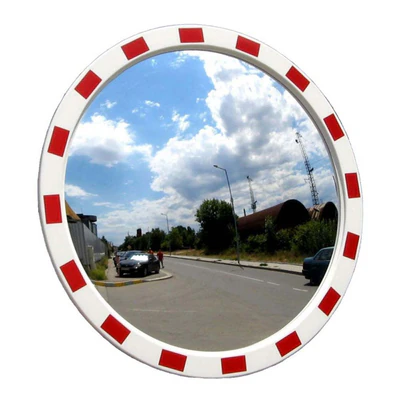
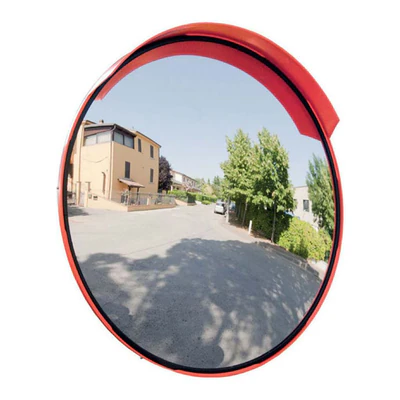
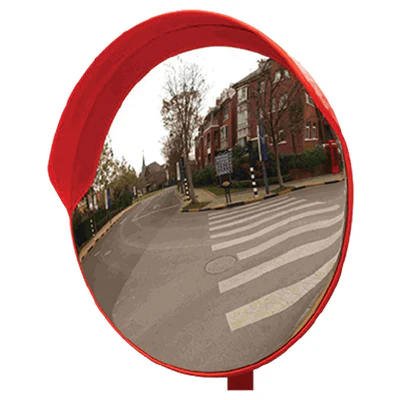
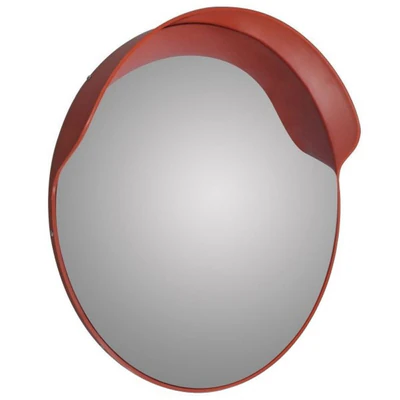
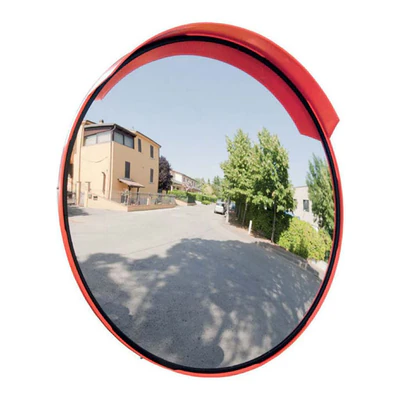
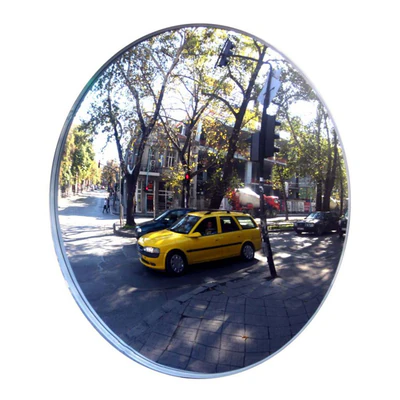
Here are the road mirrors – convex devices specially designed for outdoors, which widen the field of view and significantly reduce the risk of collision.
They are used for:
- delete dead angles
- increase in reaction time
- prevention of accidents at intersections without visibility
- security of access
Although they seem simple, these equipments are the result of well thought out optical and mechanical engineering.
Where to use most commonly
Intersects with reduced visibility
In crowded urban areas or on secondary roads, buildings can completely block side view. A properly mounted convex mirror allows the driver to observe traffic before entering the intersection.
Exits from the courtyards and private parking
A common situation: "I don't see anything when I drive out in the street
For such cases, mounting a dead-angle mirror provides an extended visual field without altering the existing infrastructure.
Public and underground parks
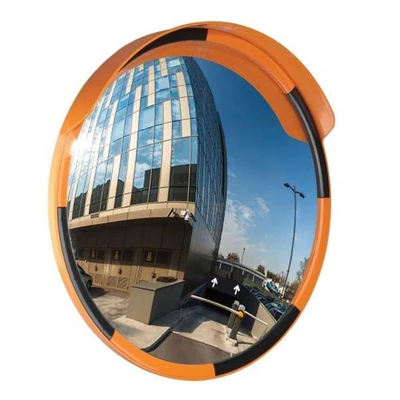
In intensive parking lots, the corners between ramps and walls are critical points. Strategicly mounted traffic mirrors reduce the risk of impact between vehicles.
Industrial and logistical areas
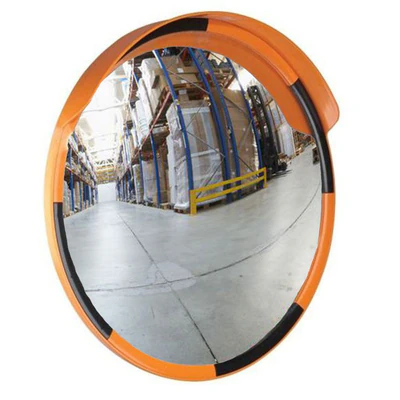
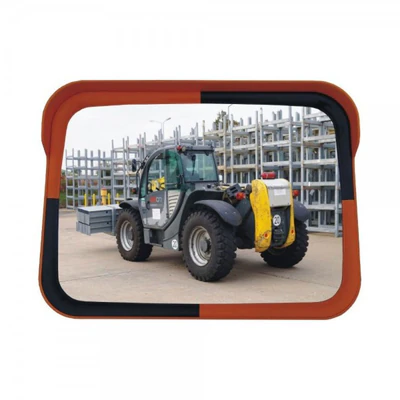
In warehouses, industrial platforms or logistics centres, the movement of machinery and trucks requires maximum visibility. Here, convex equipment contributes to the prevention of work accidents.
Short roads or in ramps
On mountain roads or very narrow streets, these additional visibility systems help to anticipate traffic in the opposite direction.
How a road mirror works
The principle is simple, but effective.
Convex surface:
- reflect the image on a wider area than a flat mirror
- Visually compresses the distances
- allows simultaneous observation of several directions
It is important to understand that the objects appear smaller and apparently more distant. Therefore, users should take this optical effect into account.
Extensive field of view is the main advantage.
The mirror diameter directly influences:
- the area covered
- optimal observation distance
- image clarity
Why correct installation is important
A wrong mounted mirror becomes useless.
For maximum efficiency:
- shall be positioned at the correct height
- must be oriented to the critical point
- shall be fixed steady to withstand the wind
The mounting angle is essential. A difference of a few degrees may affect the real visibility.
Real benefits for users
1. Accident reduction
The main advantage is prevention. Increased visibility means safer decisions.
2. Reduced costs compared to other solutions
Instead of costly infrastructure changes, a convex mirror provides a quick and efficient solution.
3. Simple installation
Most models include:
- Adjustable gripping system
- Collars for post
- resistant metal support
4. Durability outside
The quality models are resistant to:
- UV radiation
- Extreme temperatures
- rain and ice
Types of mirrors for traffic
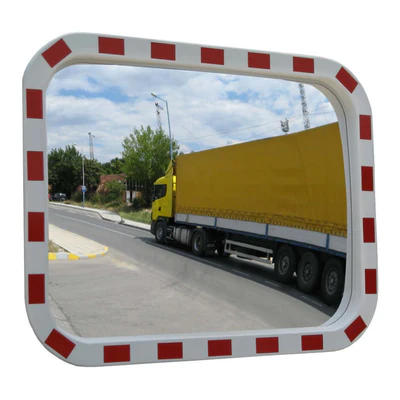
Reflective red-branch mirrors
Most used outdoors. Marking frame increases the visibility of the device.
Mirrors without reflective frame
Used more often in private or industrial spaces.
Polycarbonate mirrors
- very impact-resistant
- ideal for vandalizable areas
Acrylic mirrors
- clear image
- reduced weight
- suitable for areas with moderate traffic
Important differences between variants
Diameter
- 60 cm — for short distances
- 80 cm – use standard
- 100 cm+ – wide intersections
Material
- acryl = greater clarity
- polycarbonate = increased resistance
Fixing system
- post-metallic assembly
- wall grip
- multidirectional adjustable support
The choice depends on:
- distance to the observation point
- weather conditions
- level of traffic
How to choose the right mirror
Many are looking for: "What dimension of the road mirror do I need?
The answer depends on three factors:
1. Observation distance
The longer the distance, the greater the diameter.
2. The width of the monitored area
Wider intersections require greater reflective surface.
3. Installation environment
In areas at risk of impact or vandalism, polycarbonate is the right choice.
Common errors
- Choosing too small a diameter
- Mounting too high or too low
- Wrong orientation of the mirror
- Unstable fixation
- Ignore weather conditions
An incorrect mounted solution only gives a false feeling of safety.
Professional recommendations
From practical experience in road safety:
- Test visibility before definitive fixation.
- Choose models with certified UV protection.
- Use galvanized outdoor posts.
- Check the catch system periodically.
For public areas, it is recommended to consult local road signs regulations.
Maintenance and lifespan
Maintenance is minimal but necessary:
- Periodic cleaning with non-abrasive solutions
- Checking of locking screws
- Inspection for cracks or deformations
Under normal conditions, a quality road mirror can last for years without replacement.
Real Frequently Asked Questions
‘Is installation authorisation mandatory?
Depends on the location. In public spaces, approval of authorities is necessary.
"Does it work at night?
Yes, especially models with reflective frame and correct mounting in illuminated areas.
"Can they be mounted on any post?
Most systems are universal, but the pillar diameter needs to be checked.
Why this solution remains one of the most effective
In road safety, prevention is always cheaper than intervention.
Convex mirrors for traffic offer:
- immediate visibility
- reduced cost
- rapid implementation
- Demonstrated efficiency
I'm a clear example of simple, but extremely efficient technology.
Conclusion
In any area where visibility is limited, the installation of a road mirror is an intelligent and responsible measure.
The correct choice of size, material and position makes the difference between a simple accessory and a real accident prevention system.
If the objective is Real traffic safety, the solution must be chosen and mounted professionally.