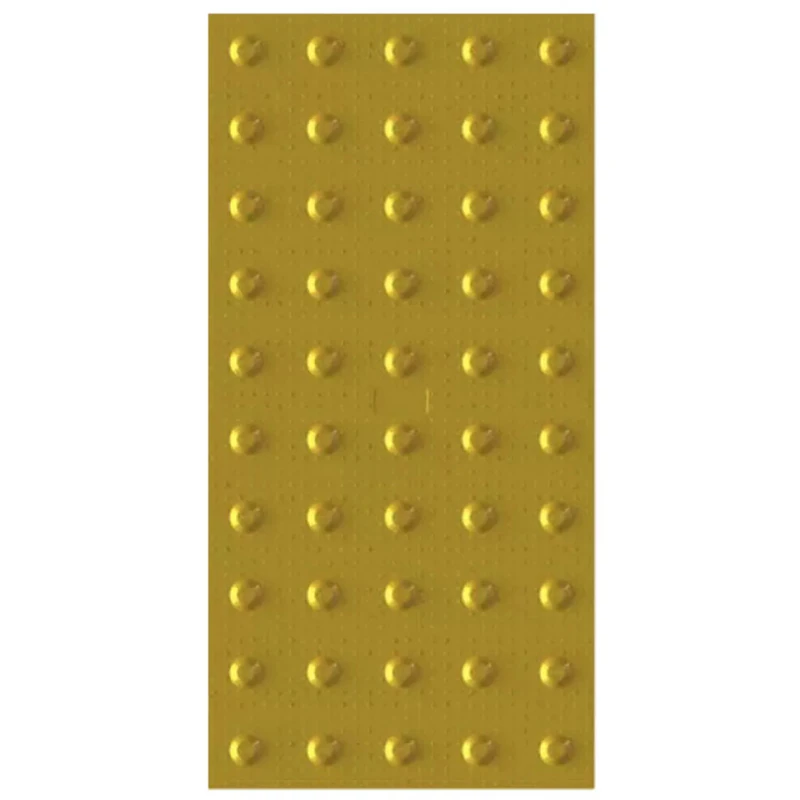
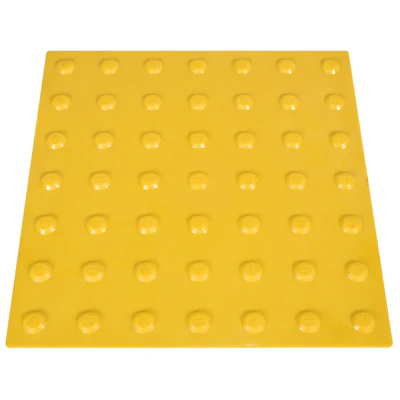
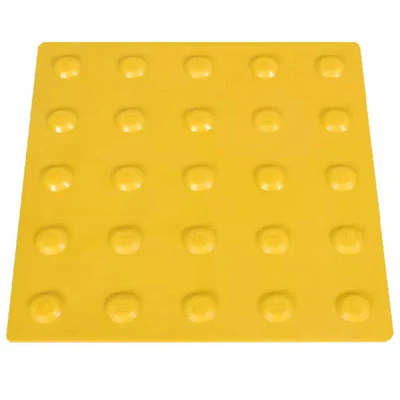
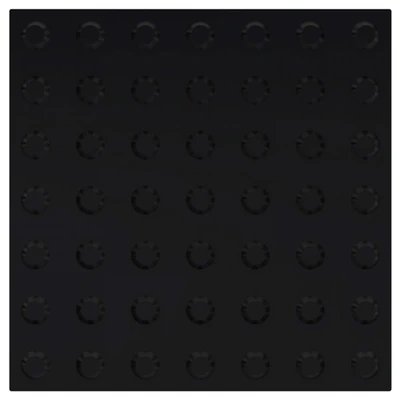
In an increasingly crowded urban environment, safety and accessibility They're not optional anymore. Touch mark for visually impaired people STOP 300x600 mm is an essential element of modern infrastructure designed to guide, warn and protect people with impaired vision in high-risk areas.
This type of STOP tactile paving transmits a clear text message: Stop and be careful. It is used strategically in the vicinity of pedestrian crossings, stairways, ramps, piers or dangerous areas, providing a safe and intuitive experience.
Why a STOP 300x600 mm touch mark is essential
Critical role in urban accessibility
Touch markings are not only recommended – in many cases they are mandatory according to accessibility rules. It contributes directly to:
- Integration of people with disabilities
- accident prevention
- Compliance with the legislation in force
Size of 300x600 mm is ideal for transition and warning areas, providing a sufficient surface area for clear tactical perception.
Intuitive tactical signaling
Surface area with Protuberances (type points) is recognised internationally as a symbol for STOP / WARNING. This allows for rapid identification:
- with a white stick
- by direct contact with the heel
Technical characteristics of the STOP 300x600 mm touch marking
Dimensions and optimised design
- Format: 300 x 600 mm
- Surface: textured with touch points
- Thickness: adapted for intense traffic
- Ergonomic design for rapid detection
Durable materials for intensive traffic
The marking shall be made from resistant materials such as:
- Industrial polyurethane
- PVC rigid or composite
- Polymer concrete (depending on model)
These materials offer:
- wear resistance
- stability in time
- excellent behavior outside
Anti-slip properties
The surface shall be treated to ensure:
- High adhesion even on rain or ice
- safety for all categories of users
Increased visibility
The contrasting colours (yellow, white, grey) ensure:
- visibility for persons with partial vision
- integration into urban design
Where to use STOP 300x600 mm touch tags
Public spaces and institutions
- city planning
- hospitals
- Schools and universities
- shopping malls
Transport and infrastructure
- metro stations
- CFR periods
- Bus stations and trams
- airports
High risk areas
- the edge of the stairs
- start of ramps
- pedestrian crossings
- industrial zone
How the STOP touch mark works
Direct tactile perception
The point model shall transmit the stop signal by:
- vibration in the cane
- distinct sensation under the sole
International standardisation
This type of marking complies with the principles used globally in:
- guidance of the blind
- smart city infrastructure
- Urban accessibility projects
Advantages of using the STOP 300x600 mm touch mark
Immediate safety
Reduces the risk of accidents in critical areas.
Legislative compliance
Helps to comply with accessibility rules.
Quick installation
It may be mounted:
- by adhesive
- by mechanical gripping
- by integrating into the floor
Reduced long-term cost
High durability eliminates the need for frequent replacement.
Commercial benefits for the customer
- ✔ Increases user safety
- ✔ Reduces the risk of litigation
- ✔ Meets accessibility standards
- ✔ Improves the image of the institution
- ✔ Fast and efficient installation
- ✔ Optimum long-term cost
- ✔ Adaptable to any type of surface
- ✔ Heavy traffic resistance
- ✔ Ideal for indoors and outdoors
- ✔ Aesthetic integration in modern spaces
Mounting Guide for STOP Touch Marking
Surface preparation
- complete cleaning
- degress
- verification of the planeity
Method of fixing
- Professional adhesive (for indoors)
- Dilutions/screws (for the outside)
- concrete casting (for new projects)
Professional recommendations
- assembly to be carried out in accordance with local rules
- the use of specialised teams is recommended
Difference between STOP marking and directional marking
- STOP (points) → Warning / Stop
- Directional (line) → track guide
Marking 300x600 mm STOP is strictly used for:
- hazard alerting
- change direction
- Delimitation of safe areas
Sustainability and maintenance
The marking is designed for:
- intensive pedestrian traffic
- extreme temperature variations
- UV exposure
Maintenance is minimum:
- regular cleaning
- check fix
FAQ – Frequently Asked Questions
What does the STOP touch mark mean?
It is a marking with points indicating the need for stopping or paying more attention.
Where does this type of marking stand?
In risk zones: stairs, pedestrian crossings, towers.
Is it legally binding?
In many cases, yes, according to accessibility rules.
Can it be mounted outside?
Yes, the materials are weather resistant.
How long is the assembly?
From a few minutes to a few hours, depending on the surface.
Is it visible to people with partial vision?
Yes, thanks to the contrasting colors.
How long does it last?
It may exceed 5–10 years under normal conditions of use.