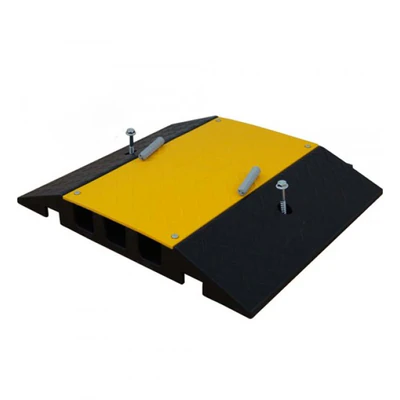
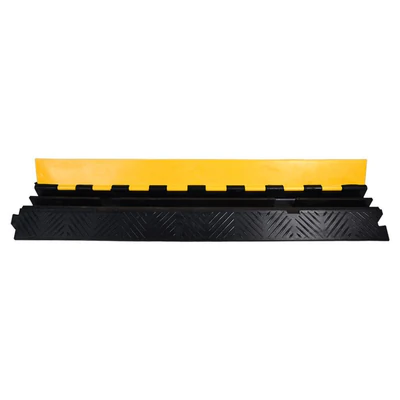
Cable bridge for 5 cables 900x500x55 mm, rubber, black
210,00 lei
In stock
in Request a quote – Cable bridge for 5 cables 900x500x55 mm, rubber, black See options – Cable bridge for 5 cables 900x500x55 mm, rubber, blackWe use strictly necessary cookies to run the site and, only with your consent, to remember viewed products, for visit statistics and for YouTube video playback. You can change your mind at any time from “Cookie settings” at the bottom of the page. Cookie policy
Technical advice: 021 450 60 70 · Fast delivery nationwide · Blog
Cable protections are solutions that prevent damage, accidents and interruptions by covering and organizing exposed cables.
210,00 lei
In stock
in Request a quote – Cable bridge for 5 cables 900x500x55 mm, rubber, black See options – Cable bridge for 5 cables 900x500x55 mm, rubber, black208,99 lei
In stock at supplier
sup Request a quote – Pod pentru 3 cabluri 500x600x75 mm, din PPC, negru See options – Pod pentru 3 cabluri 500x600x75 mm, din PPC, negruWe didn't find any products for the chosen filters.
The products in this category cover dimensions between 45 mm and 75 mm. Check the size, material and compatibility with your application in each product file.
In addition, for orders and questions, the TopTrafic.ro team offers delivery throughout the country and technical advice.
Cables are "the arteries of any modern infrastructure — whether we are talking about electricity, data, communications, or industrial equipment. Although essential, they are often exposed to factors that may damage them: pedestrian or auto traffic, wet, UV rays, chemicals, mechanical impact or even accidental handling.
Here are the solutions dedicated to the protection of electrical and data paths. They shall have the role of:
Without adequate protection, even a high-quality cable can become vulnerable in a very short time.
In industrial environments, cables are constantly exposed to:
In these situations, they are frequently used ramps for heavy traffic, resistant tubes or robust industrial ducts.
Event organizers know how important it is to prevent accidents. Sound, light or power cables must be protected quickly and effectively.
The common question is:
"How do I protect cables on foot at an event?
Answer: by using modular ramps with foldable cap, easy to mount and dismantle.
In the office environment, protection also has an aesthetic role. Prefer:
On construction sites, cables are often temporary, but extremely requested. Here are solutions that are resistant to:
The basic principle is simple: a physical barrier is created between the cable and the outside environment.
Depending on the type of protection, it may:
An important aspect is the compression resistance. In areas of intense traffic, the material must bear loads of hundreds or even thousands of kilograms.
Neglecting this aspect may lead to:
In addition, labour security legislation requires the prevention of risks arising from unprotected cables in circulating areas.
In the long term, investment in an appropriate solution is much lower than the cost of subsequent interventions.
A suitable solution offers:
For companies, that means efficiency and compliance.
For home users, it means order and safety.
These are ideal for cables temporarily placed on the ground. They may be:
They are made of hard rubber or polyurethane and may include visible safety markings.
Flexible or rigid, used for fixed routes. Provides mechanical protection and, in certain variants, fire resistance.
Mounted on the wall or floor, it ensures organization and aesthetics. They are frequently used in offices and commercial spaces.
Ideal for grouping more cables and protecting against friction.
For external installations, where cables must be protected from moisture and soil pressure.
For outdoors, water and dust resistance is important.
A key criterion in traffic areas.
Depending on route and application.
The right choice starts with a few simple questions:
Choose solutions with:
Choose for:
Check:
A common mistake is only dimensioning for the present, without taking into account the subsequent expansion.
Experience shows that proper initial planning reduces maintenance costs by up to 40%.
In industrial environments, the recommendation is monthly verification.
It uses specially designed ramps with tilted profile and anti-slip surface.
UV-resistant systems and water, with appropriate environmental protection.
Yes, there are models designed for industrial trucks and machinery.
An appropriate solution for the management and protection of cables is not a simple accessory, but a key component of the safety and sustainability of the installation.
Whether we're talking about an office, a construction site or a temporary event, the right choice is:
Investment in a suitable system not only protects cables, but protects people and equipment around them.
Get our offers and news once a month. You can unsubscribe at any time.