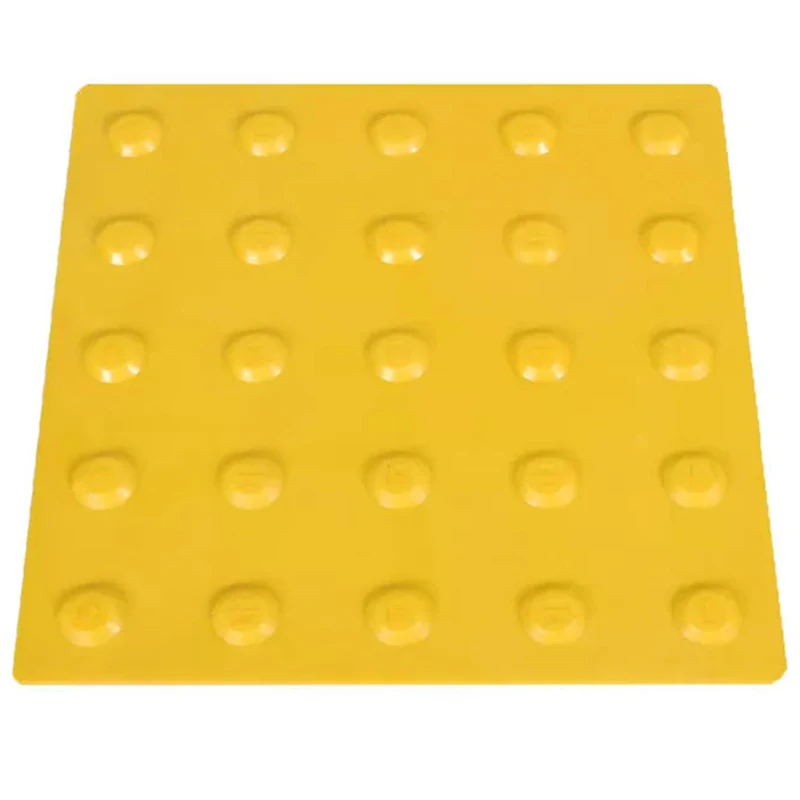
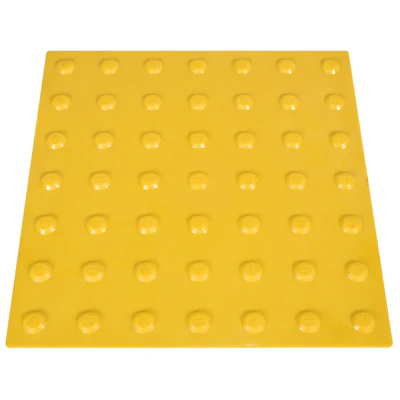
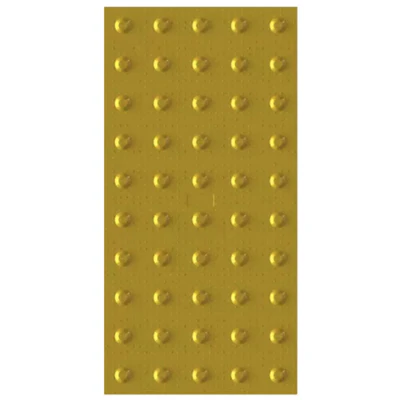
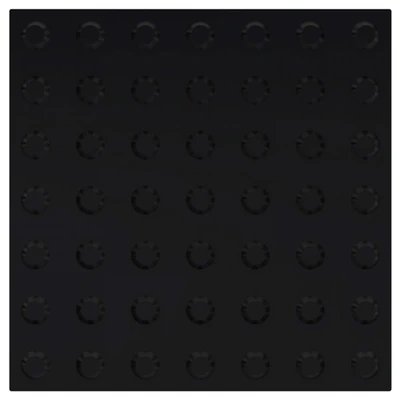
Touch mark for visually impaired people STOP 300x300 mm is an essential element in modern accessibility infrastructure. Designed to transmit clear stop and warning tactile signals, this type of touchplate is used in public, commercial and industrial spaces to guide people with impaired vision.
In a context where accessibility legislation is becoming more stringent and corporate social responsibility is growing, this product is no longer optional — it is a necessity.
What is a STOP tactile marking and how it works
The STOP 300x300 mm tactile marking is a special plate designed with Tactical relief pronounced (bombs or domes), which signal to users visually impaired people or weakly sighted the need to stop or be alert to a potential danger.
How it is perceived:
- By white stick (instant feedback)
- By heel (clear difference in texture)
- Visual (strong contrast for people with partial vision)
Where to use:
- Before pedestrian crossings
- At the edge of the peranels
- Close to the stairs or ramps
- At intersections or changes of direction
Technical specifications – professional standards
The STOP 300x300 mm touch marking complies with the technical requirements used in urban infrastructure projects and modern public buildings.
Dimensions and structure
- Standard size: 300 x 300 mm
- Optimum thickness for resistance and tactile perception
- Surface with relief type STOP domes
Material used
- Polyurethane / PVC industrial / stainless steel (depending on the variant)
- High resistance to heavy traffic
- UV and anti-slip protection
Performance
- Resistance to wear and abrasion
- Excellent behavior outside (ploaie, ice cream)
- Extended life span in applicant environments
Why is this tactile marking essential
Ignoring these solutions can lead not only to legal problems but also to real risks for users.
Critical roles:
- Prevents accidents in dangerous areas
- Provides autonomy to the blind
- Compliance with accessibility rules (including European standards)
- Improves user experience in public spaces
Real applications – where it makes a difference
The STOP 300x300 mm touch marking is used in various projects, from urban infrastructure to premium commercial spaces.
Areas of use:
- Stations, airports, metro stations
- Shopping centres and malls
- Office buildings and public institutions
- Hospitals and clinics
- Schools and universities
- Hotels and spaces HoReCa
Assembly and installation – simple and efficient
A major advantage of this product is versatility in installation.
Installation methods:
- Professional adhesive glue
- Mechanical fixing (screws/dilutions)
- Surface mounting: concrete, gravel, asphalt, metal
Recommendations:
- The surface must be clean and dry
- It is recommended to align in the modular system
- Installation must be carried out in accordance with the regulations
Difference between STOP marking and directional marking
Many customers confuse these two types of markings.
STOP marking (this product):
- Model: domes/bombs
- Role: warning, stop
Directional marking:
- Model: Lines / nerves
- Role: guidance on the path
For a complete infrastructure, both are necessary and complementary.
Commercial benefits – why choose this product
- ✔ Increases user safety
- ✔ Compliance with the legislation in force
- ✔ Reduces the risk of accidents
- ✔ Improve the image of the company
- ✔ Fast installation and efficient cost
- ✔ Long-term sustainability
- ✔ Adaptable to any type of project
- ✔ Standard solution in public projects
How to choose correctly a STOP tactile marking
Not all products on the market offer the same performance.
What you need to check:
- Material (resistance vs. price)
- Standards met
- Visibility and contrast
- Type of traffic (extensive versus moderate pedestrian)
- Compatibility with the mounting surface
Integration into modern accessibility projects
The STOP 300x300 mm touch mark is part of a wider solution system:
- Directional bands
- Touch maps
- Visual and audio signage
- Smart navigational systems
The correct implementation completely transforms the user's experience.
Maintenance and sustainability
The product is designed for intensive use, but proper maintenance prolongs its lifespan.
Recommendations:
- Periodic cleaning
- Verification of fixation
- Timely replacement if necessary
FAQ – Frequently Asked Questions
1. Where does the STOP touch mark stand?
In areas where there is risk or change of direction: passages, stairs, towers.
2. Is it legally binding?
Yes, in many public and commercial projects it is required by accessibility rules.
3. Can it be mounted outside?
Yes, it is weather resistant and traffic intensive.
4. What's the best material?
Depends on the application: stainless steel for maximum durability, polyurethane for flexibility.
5. How long does the assembly take?
Rapid – depending on the surface and method.
6. Can it be combined with other markings?
Yes, it is used together with directional markings.