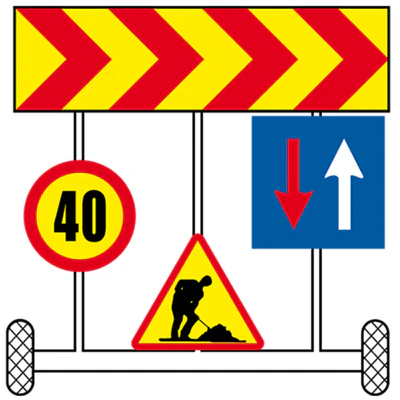
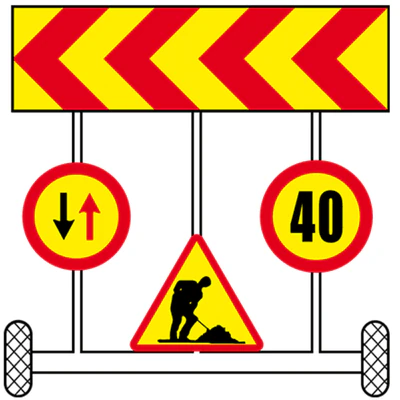
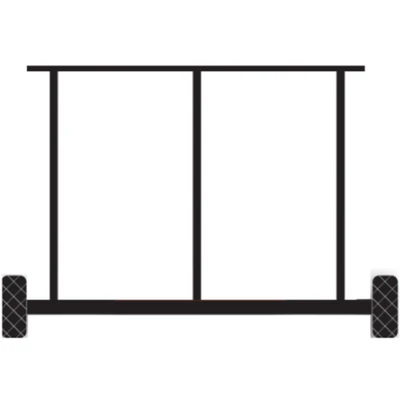
What are the portsignalization carriages
Portsignalization carriages are mobile devices specially designed for transport, storage and organisation of road signs and signs or construction sites. He allows rapid and safe transfer of signals, reducing the physical effort and risk of damage to the indicators.
These equipments are indispensable in yards, industrial areas and urban interventions, being built for resistance, stability and manoeuvrability.
Where it is used and in what context
Portsignalization carriages are useful in:
- Construction and road repairs – for the rapid mobilisation of warning signs;
- Temporary event – the delimitation of access areas and traffic flows;
- Urban or pedestal areas – safe transport of signals between locations;
- Efficient storage – keeping the indicators in order and protected from damage;
- Road maintenance companies – for the rapid distribution of multiple-track signals.
How it works
The operating principle is simple and effective:
- The signs and indicators shall be fixed on the wagon in an organised manner;
- The trolley moves easily thanks to the ergonomic wheel and structure;
- It can be used for internal transport between warehouse and yard or for temporary placement in different locations;
- The system reduces the risk of accidents or deterioration of the signaling;
- Integrating with Other safety equipment, such as posts and delimiting nets.
Why this solution is important
- Increased safety by correct handling of the signaling;
- Operational efficiency – allows rapid movement and the organisation of indicators;
- Equipment protection – reduces the risk of hit, fall or damage;
- Flexibility – ideal for temporary or rapid change projects;
- Easy storage and access – the indicators are handy and orderly.
Real benefits for users
- Fast and safe transport of signs and indicators;
- Reducing physical effort and handling time;
- Efficient organisation and compact storage;
- Adaptability to different types and sizes of signalling;
- Durability due to weather resistant materials;
- Increasing safety for workers and pedestrians.
Types and variants of carrier-signalisation
1. Wheelchairs for road signs
- Specially designed for vertical warning signs;
- Includes adjustable supports and secure fixings;
- Manoeuvrable on flat or deflated land.
2. Roadcars for signs of construction site
- Destination temporary warning plates;
- Easy to move on variable surfaces;
- May be integrated with Reflective bands and delineation nets.
3. Universal carriage
- Support multiple types of signals;
- Adjustable fixings for different dimensions;
- Ideal for companies that manage several projects simultaneously.
Relevant differences between options
- Transport capacity: small (some signs) vs. large (multiple rolls);
- Material: metal, aluminium, plastic resistant;
- Type of wheels: for indoors or outdoors;
- Fixing system: simple, with clamps or adjustable;
- Compatibility: foldable vs. fixed.
The choice depends on number of signs, frequency of movement and type of land.
How to choose correctly a portsignal cart
- Determine type of signs which you will transport;
- Check the capacity and size of the trolley;
- Choose Durable and weather resistant materials;
- Prioritize manoeuvrability and safety in use;
- Integrate with other signalling and protection solutions of the yard;
- Ensures compatibility with Storage space available.
Common mistakes and how to avoid them
- Overloading the wagon → risk of accidents and damage;
- Choosing a wrong cart for the type of signs → instability;
- Failure to maintain wheels and fastening systems → rapid wear;
- Ignoring compatibility with storage space → logistical difficulties;
- Lack of indicator organization → loss of installation time.
Professional recommendations
- Use carts with Adjustable and robust fixings;
- Plan sign transport in organized mode;
- Periodically check Wheel and support condition;
- Store carts in protected spaces, injuries of weather;
- Integrating in General safety and logistics plan of the yard or signalling project.
Maintenance and good practice
- Regularly clean wagons and check the stability of the fixings;
- Avoid overload and distribute uniform weight;
- Adjust the support for different sign sizes;
- Checks the functionality of the wheels and braking systems;
- Keep an inventory of signs for efficient transport and storage.