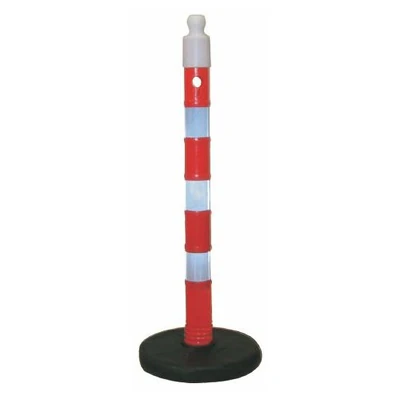
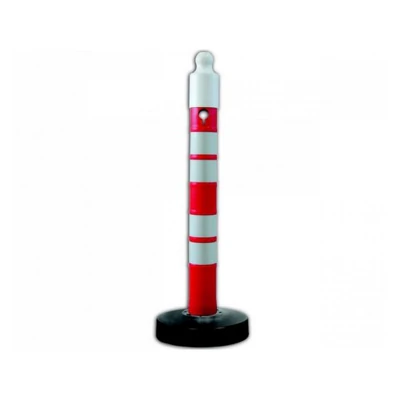
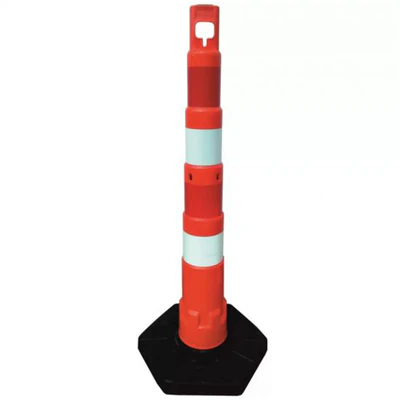
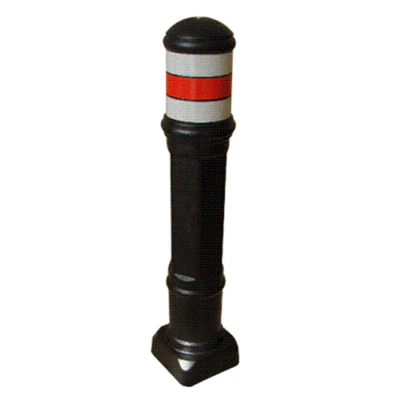
What rigid pillars are and what role they play
Access control and protection of sensitive areas are essential in the design of public and industrial spaces. Whether we're talking about sidewalks, parking lots, logistics areas or production halls, we need solid elements that can withstand over time and provide real safety.
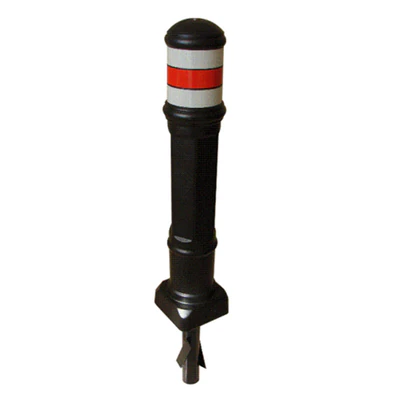
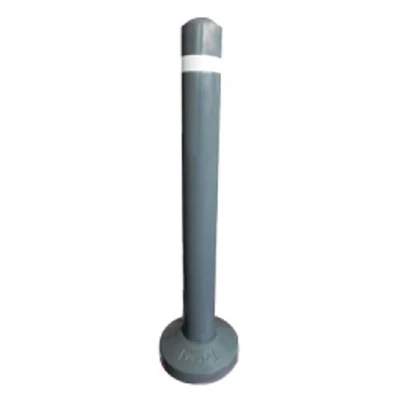
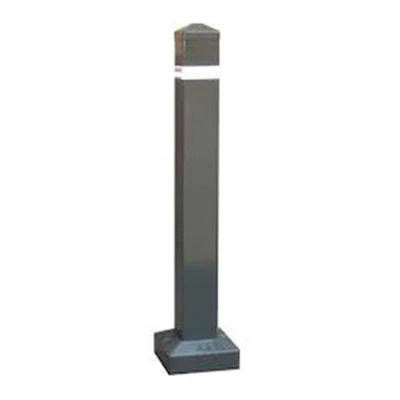
Rigid pillars are fixed structures, permanently anchored in the ground or concrete, designed to:
- Space boundary
- prevent unauthorized access
- protect buildings and equipment
- guide pedestrian and car traffic
- reduces the risk of accidents
Unlike flexible variants, they do not deform to impact, but act as a firm barrier, capable of stopping or redirecting vehicles.
Where to use most commonly
Parks and commercial areas
In parking lots, the main role is to protect:
- vitrines
- charging stations
- building corners
- trouser
Many administrators are looking for:
"What durable solution can I mount to protect the car window?
The answer, in most cases, is the installation of metal posts anchored in concrete.
Industrial and logistical spaces
In halls and warehouses, they shall protect:
- shelves
- machinery
- Industrial doors
- Electrical panels
The impact with stackers is frequent, and a solid structure can prevent costly damage.
Urban areas and sidewalks
Local authorities shall use them to:
- preventing illegal parking
- delimitation of pedestrian areas
- protection of bicycle tracks
Institutions and spaces with controlled access
Schools, hospitals, administrative buildings or strategic objectives use these solutions to restrict access to vehicles.
How they work and why they are efficient
The effectiveness of these elements is based on three key factors:
- Material – usually structural steel
- Foundation anchoring – direct fixing in concrete
- Wall diameter and thickness
In the event of an impact, energy is taken over by the structure and passed on to the foundation. Unlike flexible solutions, there is no absorption by controlled deformation, but direct blocking.
This rigidity is exactly what provides a high level of protection.
Why they are important in modern infrastructure
In the absence of robust delimitation systems, risks are increasing significantly:
- vehicles may enter pedestrian areas
- industrial equipment may be damaged
- costly accidents can occur
The installation of fixed protection elements contributes to:
- increasing public safety
- reduction of repair costs
- compliance with security rules
In many cases, these structures become an integral part of the risk management plan.
Real benefits for users
For building administrators
- protection against car impact
- long-term investment
- Low maintenance costs
For industrial companies
- protection of critical infrastructure
- reduction of production interruptions
- increasing employee safety
For authorities
- efficient traffic control
- clear urban organisation
- durability under conditions of intensive use
The main advantage remains high structural strength.
Types of solutions available
Metal posts directly anchored in concrete
They are permanently installed and offer the highest stability.
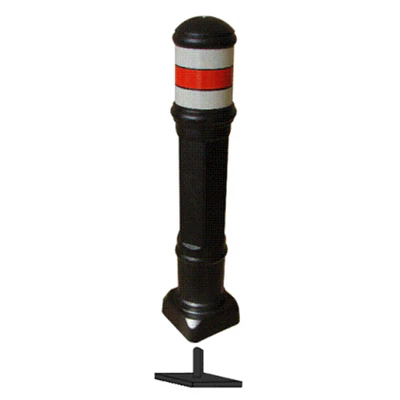
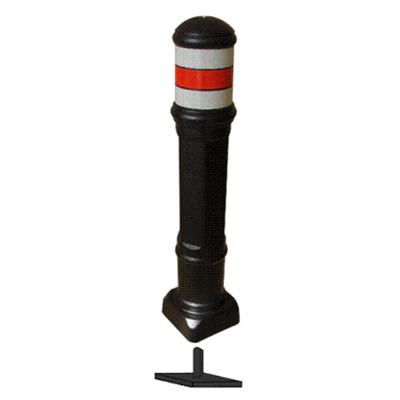
Versions with basic plate
It is fixed with mechanical or chemical anchors, being easier to mount on already concrete surfaces.
Models with anti-rorosive protection
They may be:
- Hot galvanized
- painted in electrostatic field
- coated with additional protective layer
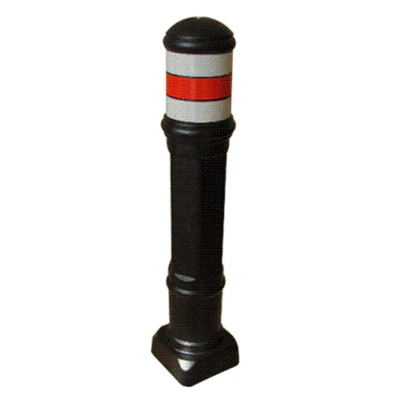
Posts with reflective elements
Useful in areas with reduced visibility.
Important differences between options
Diameter
A larger diameter offers increased impact resistance.
Wall thickness
Influence energy absorption capacity.
Type of assembly
- concrete recessing (more resistant)
- plate gripping (more flexible at installation)
Finishing
Choosing anti-corrosive treatment is essential for outdoor use.
How to choose right – practical guide
To make the right choice, consider:
- Type of traffic in the area
- Weight of potential vehicles involved
- Space available for mounting
- Climate conditions
- Legal or urban requirements
For areas at high risk of impact
Choose for:
- Steel with a large thickness
- Mounting embedded in concrete
- sufficient anchor depth
For simple delineation
A model with medium diameter and base plate may be sufficient.
Common errors
- Choosing an insufficient diameter
- Surface assembly in concrete
- Ignoring anti-rozotic protection
- Underestimation of real traffic in the area
One of the most common mistakes is price choice without technical analysis.
Professional recommendations
From experience, the safest solutions are:
- dimensioned over the estimated minimum requirement
- installed by specialised teams
- integrated into a general safety plan
It is important that the foundation is properly implemented. A highly resistant product that is incorrectly mounted loses its efficiency.
Maintenance and sustainability
Although minimum maintenance is required, it is recommended that:
- annual stability check
- Inspection of the protective layer
- revoking in case of deterioration
In industrial areas, inspection may be included in periodic safety procedures.
Frequently asked questions
What is the difference between rigid and flexible variants?
The first ones stop the vehicle by locking the farm, the other ones absorb the impact by deformation.
Are they suitable for heavy traffic?
Yes, if they are correctly dimensioned and anchored.
What lifespan do they have?
With adequate anti-corrosive protection, they can withstand more than 10–20 years.
Conclusion
Rigid pillars are one of the most effective solutions for permanent protection and delimitation. Through their solid construction and fixed assembly, they offer a high level of safety in parking lots, industrial areas and public spaces.
Correct choice means not only installing a metal element, but implementing a durable solution adapted to the real risks of the field.
A well-protected infrastructure is a safe, efficient and long-term, intensive infrastructure.