What are the delimitation chains
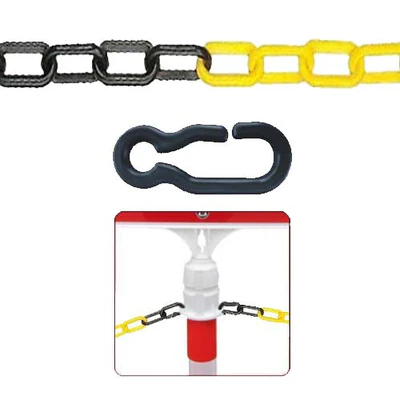
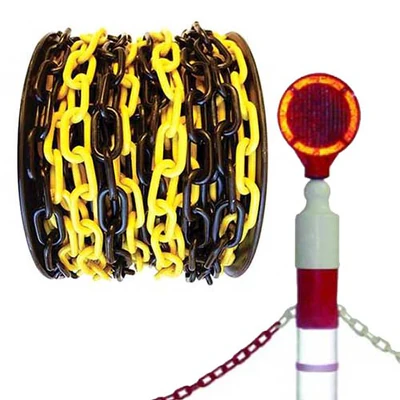
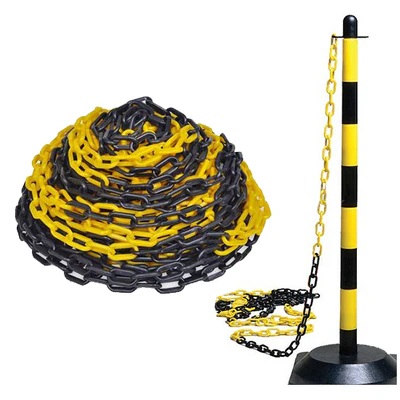
Delimitation chains are signalling and spatial organisation equipment used to separate working, pedestrian or restricted access areas. They may be manufactured from plastic, metal or reflecting material, for increased visibility and sustainability.
Their main purpose is to protection of persons, traffic guidance and accident prevention by clearly and visibly separating the areas.
Where it is used and in what context
Delimitation chains are indispensable in:
- Construction sites and areas, for the delimitation of the working perimeter;
- Events and exhibitions, for organising the flow of visitors;
- Parking spaces and temporary roads, for the signalling of reserved spaces or traffic;
- Institutions and public buildings, for pedestrian guidance or restricted access;
- Industrial areas and warehouses, for marking of access routes and hazardous work spaces.
These chains offer flexibility and speed in space configurationbeing easy to mount and move.
How it works
The operating principle is simple: creating a visual and physical barrier between zones.
- Quick mounting on posts or supports;
- Flexibility: easy to configure for different shapes and dimensions of space;
- Visibility: contrasting colours and, optionally, reflective strips;
- Can be used Inside or outside, adaptable to different weather conditions;
- Integration with other signalling equipment, such as panels or indicators.
Why They Are Important
- Increased safety for workers and visitors;
- Preventing unauthorised access in hazardous areas;
- Efficient organisation of temporary or permanent spaces;
- Flexibility and speed in configuration;
- Compliance with security rules and legislation on the delimitation of areas.
Without delineation chains, areas become chaotic and can create significant risks for participants.
Real benefits for users
- Fast and simple installation;
- Versatility for different types of spaces and events;
- High visibility, even at night if they are reflective;
- Durability and resistance the external conditions;
- Reduced cost compared to other fixed solutions;
- Portability and reuse on several projects.
Types and variants of delineation chains
1. Plastic chains
- Easy, flexible and coloured;
- Ideal for events, parking lots or temporary demarcations;
- Some models include reflector bands.
2. Metal chains
- Resistant and durable;
- Can be fixed on posts for permanent delimitations;
- Use in industrial zones and security perimeters.
3. Retractable or modular chains
- Allows quick adjustment of length;
- Ideal for spaces with frequent or temporary changes;
- Can be connected to posts or other modular supports.
4. Chains with additional visual elements
- Contrast colours or reflector bands;
- Use in areas with intense traffic or reduced visibility;
- May be integrated with Warning panels or indicators.
Relevant differences between options
- Material and sustainability: easy plastic vs. solid metal;
- Visibility: simple color vs. reflective;
- Portability: fixed vs. flexible mode;
- Cost and maintenance: durable metal, but more difficult to move; cheap and easy plastic;
- Applicability: indoors, outdoors, intense traffic or pedestrian areas.
The right choice depends on type of space, frequency of change and level of visibility required.
How to choose the right delimiting chains
- Determine type of space and purpose of delimitation;
- Choose the right material (plastic for mobility, metal for durability);
- Prioritize visibility (viable colours, reflective strips);
- Decide the length and configurability required;
- Check compatibility with Other signalling equipment;
- Ensure compliance with security rules and local legislation.
Common mistakes and how to avoid them
- Uneven assembly → creates confusion or accidents;
- Choosing the wrong chain for traffic → reduced visibility;
- Ignoring maintenance → reduces efficiency and sustainability;
- Lack of reflective markings → increased risk at night;
- Neglect of complementary signaling → Incomplete communication of restrictions.
Professional recommendations
- Use standardised colors for visibility;
- Ensure the correct connection and tension of the chains;
- Regularly monitor the integrity of chains and supports;
- Use reflector or LED for areas with visible low traffic;
- Integrate chains into the plan for the security and organisation of the flow of persons.
Maintenance and good practice
- Periodic cleaning of chains and pillars;
- Adjustment of position with space modification;
- Replacement of damaged or dirty chains;
- Verification of visibility at night;
- Keeping chains in a organised and accessible mode for reuse.