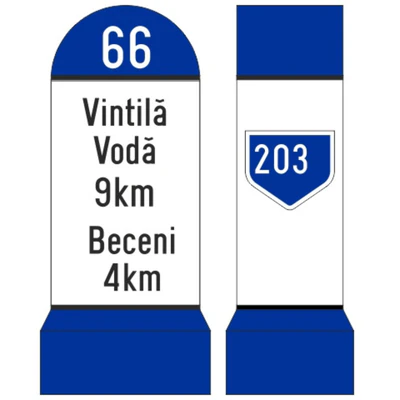
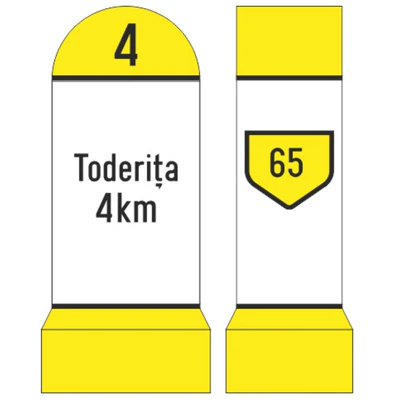
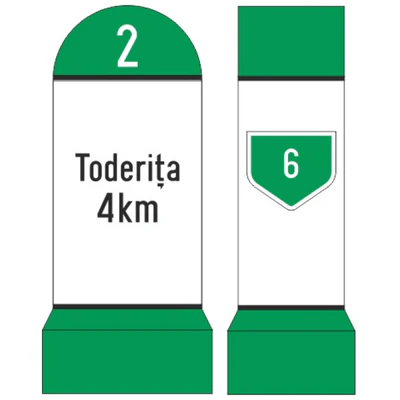
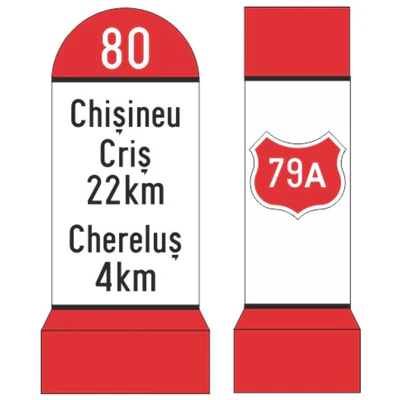
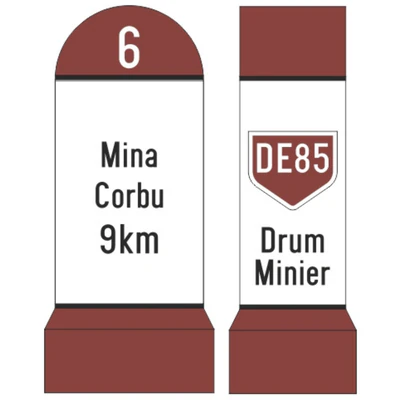
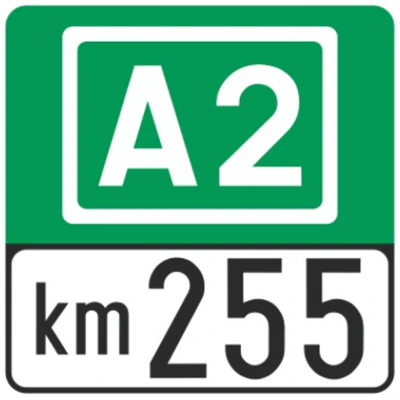
What are the mileage terminals
Kilometer terminals are physical markings placed along roads, highways or railways to indicate the distance travelled in kilometres from a reference point, usually the beginning of the route or the zero km.
These milestones are permanently visible and allow drivers, intervention teams and infrastructure managers to accurately identify a point on the route. They function as a ‘physical map' and complement digital navigation, being essential in areas without GPS signals or in emergency situations.
Synonyms and similar terms: Road terminals, Kilometric posts, km indicators, distance markings.
Where to use mileage terminals
The mileage terminals are used in multiple contexts:
- National and county roads – for driver guidance and coordination of work
- Roads and express roads – for safety and rapid intervention
- Isolated or mountainous areas – for visual orientation in the absence of natural landmarks
- Road infrastructure projects – for precise measurements and monitoring
- Emergency situations – rapid location of accidents or incidents
- Road administration and maintenance – planning, reporting and logistics
They are indispensable for technical teams, police, firefighters, ambulances and road maintenance companies.
How the mileage terminals work
Kilometer terminals indicate the exact position on the track:
- Number of the road
- Exactly Kilometer
- Other optional information, such as direction of walk or direction indicator
By reading the terminals, a point can be precisely located without digital equipment. They are usually placed every kilometer and can be integrated into the GIS systems of road infrastructure.
Why mileages are important
Orientation and safety
They help drivers estimate distance to destination and provide permanent visual cues.
Quick interventions
In the event of an accident, the point may be communicated exactly to the emergency services.
Road management
Administrators use them for maintenance, monitoring and planning of work.
Planning and logistics
They make precise measurements and allow the effective coordination of teams on the route.
Real benefits for users and infrastructure
- Fast and precise location
- Reduction of emergency response time
- Clarity for drivers and technical teams
- Standardisation in infrastructure
- Support for infrastructure projects and digital mapping
Types of km markers
Standard kilometre markers
Placed every kilometer, it offers a clear and visible landmark.
Reflectorizing terminals
For night visibility or adverse weather conditions.
Metal terminals, of concrete or plastic
The material influences sustainability and cost. The concrete is the most resistant, the most economical plastic.
Two-way terminals
Provides information for both directions.
Differences between marker kilometers and hectometric terminals
- Distance interval: kilometers vs. hundreds of meters
- Size and visibility: larger, more compact hectometre
- Role: kilometre for general orientation, hectometric for detailed precision
- Density and cost: Hectometric terminals are more numerous
How to choose the right mileage
1) Material
- Concrete: durable and durable
- Plastic: economic and easy to assemble
- Metal: robust for roads with intense traffic
2) Visibility
- Reflective material
- High contrast
- Compliance with road standards
3) Compliance with standards
Checks national and European road marking regulations.
4) Environmental conditions
- Severe climate zones: ice resistance and weather
- Urban roads: impact resistance and intensive traffic
- Highways: visibility at high speeds
Frequent mistakes and how to avoid them
- Improper location of the road axis
- Lack of visibility at night
- Non-compliant or degraded materials
- Incoherent number after modernisation work
- Lack of regular maintenance
Professional recommendations
- Use reflective and certified materials
- Integrate terminals into a GIS system
- Update numbering after path changes
- Standardize design and dimensions
- Performs regular maintenance
Maintenance and good practice
Cleaning and visibility
Keep the terminals clean to remain legible.
Structural verification
Make sure they're not damaged or inclined.
Update information
Road changes shall be reflected in the marking system.
Frequently asked questions about mileage terminals
What are the miles on the road?
Indicate the distance travelled in kilometres from a reference point.
Are the mileages mandatory?
Yes, they are standard in national and European road infrastructure for main roads.
How do you read the kilometers?
Read the number of the road and the mileage for the exact location of a point.
What's the difference from GPS?
The mileage terminals provide permanent, useful physical landmark even without digital signal.
Modern context: mileage and technology
Even in the age of GPS and navigation applications, mileage terminals remain critical for:
- Traffic surveillance and road maintenance
- Tracking incidents in real time
- Intelligent transport and digital mapping systems
Conclusion
Kilometer terminals are essential elements for safety, guidance and road infrastructure management. The correct choice of material, visibility and compliance with standards ensure durability, efficiency and precision in traffic. They are indispensable landmarks for drivers, intervention teams and road managers.