
Technical advice: 021 450 60 70 · Fast delivery nationwide · Blog

TopTrafic.ro
Offers
021 450 60 70 Contact

For companies and public institutions: purchasing via SEAP / SICAP details

Product categories
OffersSee discounts ›

Sign assemblies

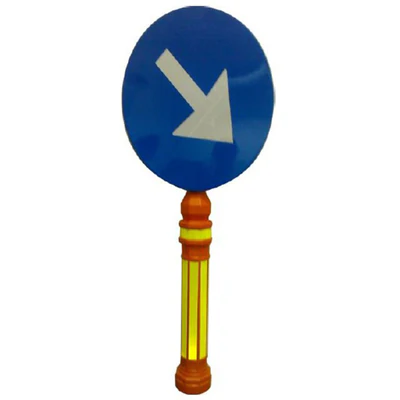
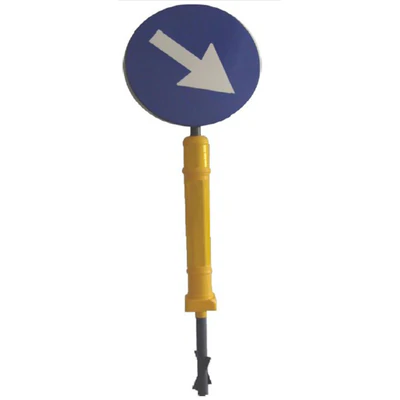
Indicator assemblies are combinations of road signs assembled together to convey clear and consistent more traffic information.

How to choose indicator sets

The products in this category cover dimensions between 700 mm and 900 mm. Check the size, material and compatibility with your application in each product file.

In addition, for orders and questions, the TopTrafic.ro team offers delivery throughout the country and technical advice.

What are indicator sets

The sets of indicators represent: logical groups of road signs mounted on the same support, designed to convey more information in a coherent, fast and easy-to-understand manner. They are not mere accumulations of signs, but Carefully thought out configurations, in which the order, position and distances between indicators have a key role.

Unlike a unique indicator, a set allows:

  • simultaneous transmission of several rules,
  • the context of the information,
  • reducing traffic ambiguity.

In practice, these systems are used where only one information is not sufficient to properly guide participants in traffic.


Why are there sets of indicators and what problem they solve

Modern traffic is complex. Intersects, dense urban areas, multiple restricted roads or temporary work areas cannot be effectively managed with isolated indicators.

The sets of indicators solve some real problems:

  • Overloading information transmitted chaotically,
  • misinterpretation of the rules,
  • delayed reactions of drivers,
  • lack of consistency between successive rules.

By grouping messages logically, they create a clear visual language, which can be processed quickly even at high speeds.


Where the sets of indicators are used

In urban road traffic

  • complex intersections
  • Rotating senses
  • areas with parking restrictions
  • Dedicated-band arteries

On national roads and motorways

  • Road exits and knots
  • zones with successive speed limits
  • Warning + Regulatory Sectors

In temporary areas

  • Roadway works
  • traffic diversions
  • Provisional restrictions

In private or semi-public spaces

  • Parking spaces
  • industrial zone
  • logistics centre
  • campuses or commercial premises

How a set of indicators works

An efficient set works after a few key principles:

Order of information

The information is read from top to bottom or from front to back, in a logical succession:

  1. warning
  2. Regulation
  3. report

This order helps the brain anticipate, understand and then act.

Consistency of messages

The indicators in a whole do not contradict and do not create confusion. Everyone fills out the message to each other.

Unit visibility

All elements must be:

  • legible from a distance
  • Positioned at correct height
  • Aligned for quick reading

Why indicator sets are important

Their importance is often underestimated, but the impact is major:

  • accident reduction
  • increase in traffic flow
  • decreased reaction time
  • prevention of interpretation errors
  • Improving driver experience

A well thought out set can make the difference between a safe and a dangerous maneuver.


Actual benefits for users

For drivers

  • clear information, in one point
  • less stress in crowded areas
  • fast and fair decisions

For road managers

  • efficient signalling with fewer elements
  • easier to control compliance
  • centralised maintenance

For pedestrians and cyclists

  • easy to understand rules
  • clear separation of flows
  • increased safety

Types of indicator assemblies

Warning assemblies + regulation

Typical example:

  • narrow road
  • speed limit
  • amended priority

 Multiple regulatory assemblies

  • access prohibited + exceptions
  • restrictions on categories of vehicles
  • hourly intervals

 Directional information assemblies

  • directions + distances
  • dedicated bands
  • Successive outputs

Temporary assemblies

  • works + deviation + speed limitation
  • warning + provisional traffic semaforisation

Relevant differences between sets

The differences not only relate to the number of indicators, but also to:

  • purpose of communication
  • type of road
  • average displacement speed
  • duration of use (permanent vs. temporary)
  • material and level of reflectivity

An urban complex is not designed as one for high-speed roads.


How to choose a set of indicators correctly

Practical guide, step by step

  1. Clearly define the traffic situation
  2. Sets the absolutely necessary information
  3. Eliminate redundancies
  4. Choose the logical order of messages
  5. Check remote readability
  6. Meets mounting and height standards
  7. Test from the perspective of the real user

A simple rule: if you have to "think to understand, the whole is not good.


Common mistakes and how to avoid them

too many indicators in one whole

→ Solution: prioritizes key messages

contradictory information

→ Solution: check logic, not just legality

mounting too low or too high

→ Solution: Meet standard heights

Lack of maintenance

→ Solution: periodic inspections


Experience-based professional recommendations

  • Fewer indicators, but clearer, are always more efficient
  • A good set is "reading from a glance"
  • Context is more important than quantity of information
  • Think of it as a user under pressure, not a designer

Maintenance and good practice

  • Periodical check of alignment
  • cleaning of reflecting surfaces
  • replacement of damaged items
  • adaptation of assemblies to traffic changes

Conclusion

The sets of indicators are an intelligent signaling solution, essential for safe, consistent and efficient traffic. They don't mean more signs, but more clarity.


Subscribe to our newsletter and never miss a promotion

Get our offers and news once a month. You can unsubscribe at any time.
Cookie settings

Choose which categories you accept. Strictly necessary cookies are always active; the others start only with your consent and you can change them at any time. Cookie policy

They make the site work: shopping cart, favourites, customer account sign-in, form security and remembering your cookie choice. They cannot be disabled.

What we store (5)
  • erp-consent · This site · Stores your cookie choice. Duration: 365 days.
  • erpShop.cart · This site · Products in your shopping cart. Duration: until the cart is emptied.
  • erpShop.fav · This site · Products you saved to favourites. Duration: until you delete them.
  • __Host-tt_sess · This site · Keeps you signed in to your customer account. Duration: session (12 hours) or 30 days with “Remember me”.
  • __Host-tt_csrf · This site · Security: protects account forms against forged requests. Duration: session.

Remembers recently viewed products so you can find them easily. The data stays only in your browser.

What we store (1)
  • erpShop.seen · This site · Recently viewed products. Duration: until you delete them.

Shows us which pages are visited and how the site is used, so we can improve it (Google Analytics).

What we store (2)
  • _ga · Google Ireland Ltd. (Google Analytics) (third party) · Distinguishes visitors for visit statistics. Duration: 2 years.
  • _ga_G7HRBPB99K · Google Ireland Ltd. (Google Analytics) (third party) · Keeps the state of the visit session. Duration: 2 years.

Video clips played directly on YouTube (Google). When playing, YouTube can store data in the browser.

What we store (1)
  • YSC, VISITOR_INFO1_LIVE, yt-remote-* · Google Ireland Ltd. (YouTube) (third party) · Video playback and YouTube statistics; only after you start a video. Duration: session – 6 months.
Third-party providers (2)

Operator: IMPOR GROUP SRL · gdpr@impor.ro