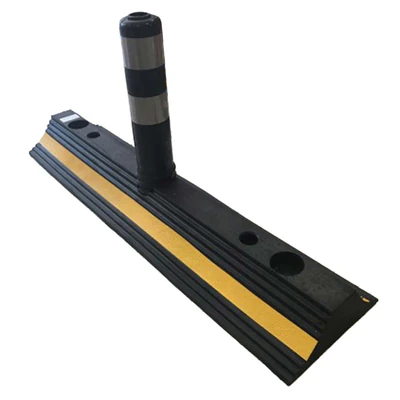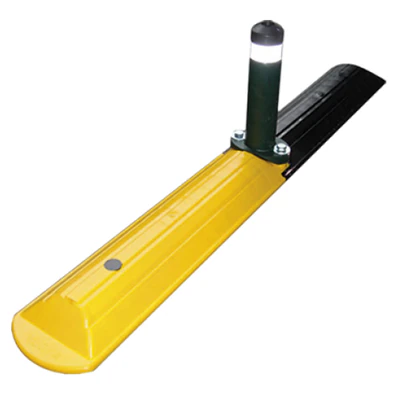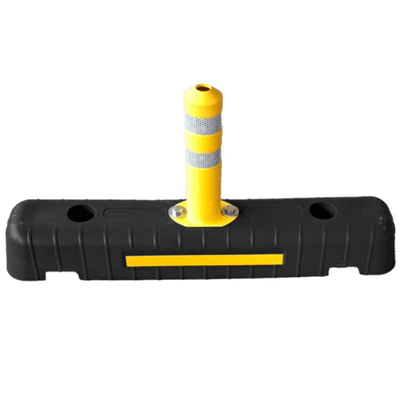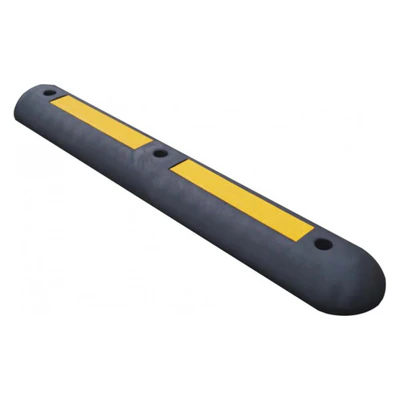
Rubber lane separator 1000x150x60 mm
118,00 lei
Made to order
ord Request a quote – Rubber lane separator 1000x150x60 mm See options – Rubber lane separator 1000x150x60 mmWe use strictly necessary cookies to run the site and, only with your consent, to remember viewed products, for visit statistics and for YouTube video playback. You can change your mind at any time from “Cookie settings” at the bottom of the page. Cookie policy
Technical advice: 021 450 60 70 · Fast delivery nationwide · Blog
Sensor separators are physical systems that delineate opposing car flows to prevent frontal collisions and increase road safety.
118,00 lei
Made to order
ord Request a quote – Rubber lane separator 1000x150x60 mm See options – Rubber lane separator 1000x150x60 mm197,00 lei
Made to order
ord Request a quote – Sensor separator 1000 mm with 450 mm flexible post, rubber See options – Sensor separator 1000 mm with 450 mm flexible post, rubber285,00 lei
In stock at supplier
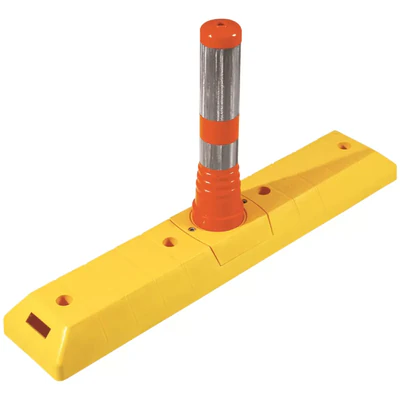
sup Request a quote – Sense separator 1200 mm with 240 mm flexible minibalise, plastic, yellow/black See options – Sense separator 1200 mm with 240 mm flexible minibalise, plastic, yellow/black305,00 lei
In stock at supplier
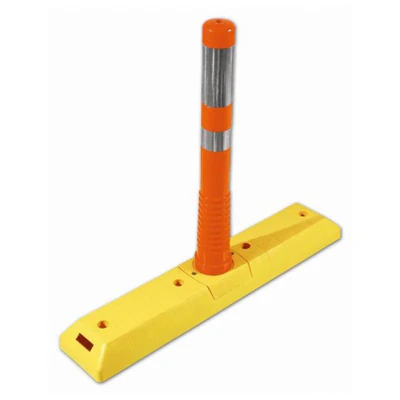
sup Request a quote – Sense separator 1200 mm with 240 mm flexible post, plastic, yellow/black See options – Sense separator 1200 mm with 240 mm flexible post, plastic, yellow/black254,99 lei
In stock at supplier
sup6 variant
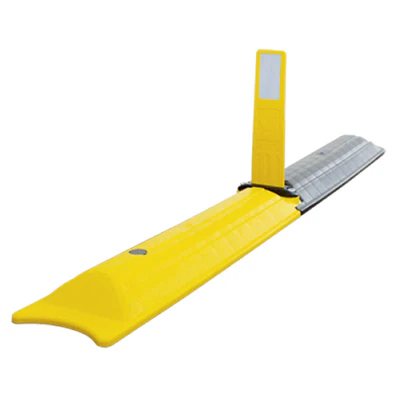
Request a quote – Rigid sensing separator 750x150x100 mm with 240 mm flexible post See options – Rigid sensing separator 750x150x100 mm with 240 mm flexible postWe didn't find any products for the chosen filters.
The products in this category cover dimensions between 60 mm and 1200 mm. You can compare OEM and PPC variants. Check the size, material and compatibility with your application in each product file.
In addition, for orders and questions, the TopTrafic.ro team offers delivery throughout the country and technical advice.
In any road with two-way traffic, the greatest risk is accidental entry in the opposite direction. Frontal collisions are among the most serious types of accidents. For this reason, modern infrastructure includes dedicated systems for physical separation of flows.
Sensor separators are elements installed on the axis of the road or between strips to prevent uncontrolled crossing from one direction to the other. They may be permanent or temporary and are designed to guide, restrict or protect.
In short, we're talking about a solution that turns a simple roadmark into a actual physical barriercapable of significantly reducing the risk of frontal impact.
Road markings are useful, but do not offer physical protection. Subject to:
a simple marking can be ignored or accidentally passed.
By installing a separation system:
In many cases, the installation of a physical delineation has led to significant falls in serious accidents.
In sectors with:
To prevent:
Many are looking for:
"How do the senses temporarily separate during the works?
The answer is to use modular, easy to install and relocated systems.
Especially in areas where traffic is temporarily reorganised.
The operation is simple but efficient:
Whether it's about a plastic element that's lenient, concrete or metal, the system prevents direct crossing.
Most models are:
Some models are designed to reduce the impact force and minimize the consequences on the vehicle.
Not all systems offer the same degree of impact resistance. The choice depends on:
A concrete system involves:
While modular variants can be manipulated manually or with easy machines.
Before purchasing or implementing, ask yourself the following questions:
For short projects, modular systems are more efficient.
An efficient separation system must be not only installed but integrated into a coherent traffic management plan.
From the experience of field implementation, some aspects make the difference:
In high-risk areas, the recommendation is to use a certified impact-resistant system.
For temporary solutions:
For permanent systems:
Yes, especially modular models are ideal for temporary or semi-permanent urban boundaries.
Depends on the chosen guy. The models certified for impact provide significant protection.
Leasable systems are designed just for quick relocation.
The physical separation of traffic flows is no longer a luxury, but a necessity in modern infrastructure. Sense separators contribute directly to the reduction of serious accidents, the efficient organisation of traffic and the protection of traffic participants.
The right choice involves analysis, planning and adaptation to the real context of the road. Implemented properly, these systems become a key element in road safety strategy, whether we are talking about temporary projects or permanent solutions.
Get our offers and news once a month. You can unsubscribe at any time.