Shut-off
The extinguisher is the equipment intended to extinguish fires in the early phase, when rapid intervention can make a difference. It is an essential measure of protection in homes, commercial spaces, public institutions and industrial units, where it can significantly reduce damage and risks to people.
In short: dust extinguishers, CO2, foam, water or clean agent, chosen after the fire class and the environment of use.
Do you need help choosing?
Tell us what you need and we'll send you the offer on the same working day.
The choice of the extinguisher depends on the type of space, the possible fire risks, capabilities and certifications, whether it is a house, an office, an industrial hall or a restaurant. A certified model must be checked periodically and correctly placed in order to be ready for use. The extinguisher shall be replaced when damaged, after use if it cannot be recharged or at the expiry of the recommended life-span, in accordance with the PSI rules.
A fire extinguisher is a fire extinguisher intended to extinguish fires in the early stages. The choice of the appropriate type depends on the class of fire, the environment in which it is used and the legal requirements for fire protection. A properly verified and located extinguisher can significantly reduce damage and risks to people.
Turn off – complete guide for correct choice and use
Shutter is one of the most important fire protection measures, whether we are talking about a home, a commercial space, a public institution or an industrial unit. In the first minutes of a fire, rapid intervention can make the difference between a minor incident and a disaster with significant damage.
In this guide you will find out what a extinguisher is, how it works, what types exist, how you choose it based on risks and what mistakes should be avoided. You will also discover practical recommendations for the proper maintenance and use of this essential safety equipment.
What's a fire extinguisher?
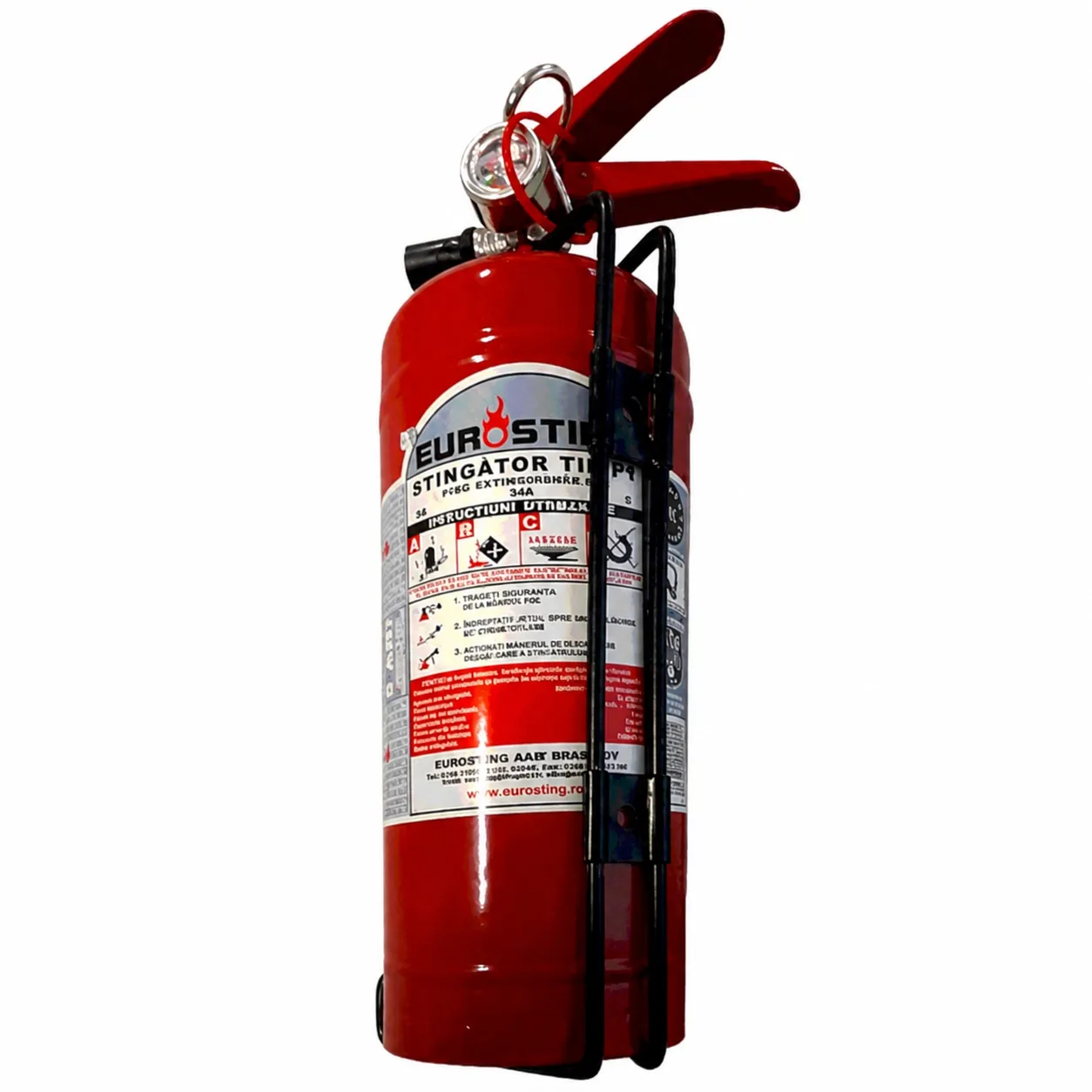
One fire extinguisher is portable or mobile equipment intended to extinguish fires in the early stages. It contains a pressurised extinguishing agent which is evacuated by means of a nozzle on the outbreak.
The main purpose of a extinguisher is:
- limiting the spread of the fire;
- the protection of persons;
- reduction of material damage;
- facilitate safe evacuation until firefighters arrive.
In many areas of activity, the existence of fire extinguishers is a legal obligation.
How does a fire extinguisher work?
The operation of a extinguisher is relatively simple.
After removal of the safety and operation of the dummy, the internal pressure shall evacuate the extinguishing agent to the outbreak.
Depending on the type of switch, it may act by:
- Cooling of fire;
- Oxygen removal;
- Discontinuation of the chemical reaction of burning;
- fuel material isolation.
For maximum efficiency, the jet shall be directed to the base of the flames and not to the top of the flames.
Why is a fire extinguisher important?
A fire can spread in just a few minutes. An available and functional extinguisher allows immediate intervention before the situation becomes impossible to control.
The main benefits are:
- protecting people's lives;
- limitation of material destruction;
- reduction of intervention time;
- compliance with the PSI legislation;
- increasing the safety level in any space.
Advantages of using a extinguisher
A fire extinguisher offers many practical benefits:
- rapid intervention in the event of fire;
- intuitive use;
- low cost compared to avoided damage;
- available in several dimensions;
- suitable for many types of fire;
- relatively simple maintenance;
- long duration of operation if checked periodically.
Types of extinguishers
The right choice depends on the type of fire that can occur.
Powder extinguisher (P)
The most widely used model.
It is recommended that:
- solid material;
- flammable liquid;
- flammable gas;
- electrical equipment.
Advantage:
- very versatile.
CO2 extinguisher
Commonly used in:
- technical chambers;
- serve;
- laboratories;
- birouri.
Advantage:
- does not leave residues;
- ideal for electrical equipment.
Foam extinguisher
According to:
- liquid fuels;
- solid material.
It is not recommended for electrical installations under voltage.
Water extinguisher
Used in particular for fires caused by:
- wood;
- paper;
- textile.
It should not be used on electrical equipment.
Dryer with clean agent
Used in:
- date centre;
- archive;
- museums;
- Sensitive cameras.
It does not cause damage to electronic equipment.
Fire classes
For the right choice it is important to know the classes of fires.
- Class A – solid material.
- Class B – flammable liquid.
- Class C – flammable gas.
- Class D – Fuel metals.
- Class F – food oils and fats.
Each extinguisher is approved for certain fire classes.
How do you choose a suitable extinguisher?
Several aspects should be considered at the choice.
Type of space
- housing;
- apartment;
- office;
- industrial hall;
- shop;
- public institution.
Risk type
Identify existing flammable materials.
Capacity
The most common variants:
- 1 kg;
- 2 kg;
- 6 kg;
- 9 kg;
- 50 kg (mobile).
Certifications
Checks the existence of markings and compliance with European standards.
Maintenance
Choose products for which periodic verification and reloading can be performed.
Differences between the main types of extinguishers
| Type | Advantage | Limitations |
|---|---|---|
| Powder | Universal | Leave residue |
| CO2 | Don't get dirty | Reduced efficiency in open spaces |
| Foam | Very good for liquids | Not for electrical installations |
| Water | Economic | Only for Class A |
| Clean agent | Protect the electronics | Higher cost |
Common errors
Many people use the fire extinguishers incorrectly.
The most common errors are:
- the choice of an inappropriate model;
- location in hard-to-reach places;
- failure to carry out periodic checks;
- the use of an expired extinguisher;
- directing the jet to flames and not to the base of fire;
- lack of training for staff.
Professional advice
Specialists recommend:
- periodic pressure check;
- carrying out authorised reviews;
- immediate replacement of damaged extinguishers;
- installation at the recommended height;
- the clear indication of their position;
- periodic training on use.
Real example of use
In the house
A 6 kg dust extinguisher can quickly limit a fire to the electrical board or garage.
Offices
A CO2 extinguisher is ideal for protecting computers and servers without damaging equipment.
In industry
Flammable spaces require fire extinguishers adapted to specific risks and intervention plans in accordance with the legislation.
In restaurants
Class F extinguishers are recommended for fires caused by food oils.
Recommendations
For effective protection:
- select certified extinguishers;
- comply with the manufacturer's recommendations;
- periodically verify the validity period;
- carry out maintenance in accordance with the legislation;
- adapt the type of extinguisher to the existing risks.
A well-chosen fire extinguisher can be the first and most effective line of defence against a fire.
Conclusion
Shutter is an essential equipment for the safety of persons and the protection of goods. The correct choice must be made according to the type of fires that may arise, the size of the space and the applicable legal requirements. Regular maintenance and user training are as important as the purchase of the product, as a functional extinguisher can make a difference in the first critical moments of a fire.
Commercial benefits
- Rapid protection against fires in the early stages.
- Compliance with PSI requirements and legal obligations.
- Reducing material damage by immediate intervention.
- Various range of models for housing, offices and industry.
- Certified products, in accordance with European standards.
- Possibility of periodic verification and reloading for an extended life span.
- Adapted solutions each type of risk and activity.
FAQ
Which extinguisher is recommended for housing?
In most cases, a 6 kg dust extinguisher is a versatile choice for homes.
What is the difference between a dust extinguisher and a CO2 extinguisher?
The dust extinguisher is more universal, while the CO2 extinguisher is preferred for electrical equipment because it leaves no residue.
How often does a fire extinguisher need to be checked?
Verifications and reviews shall be carried out in accordance with the laws and recommendations of the manufacturer, usually periodically by authorised personnel.
Can an expired extinguisher be used?
No, no. An expired or unverified extinguisher may not function properly and should be replaced or re-charged.
What does fire classes mean?
Classes indicate the type of material that burns (solids, liquids, gases, metals or food oils) and helps to choose the right extinguisher.
Where should a fire extinguisher be located?
In a visible, easily accessible place, close to the escape routes and away from excessive heat sources.
Can I use a water extinguisher in electric fires?
No, no. Water drives electricity and can create additional risks.
When should a fire extinguisher be replaced?
When damaged, after use if it cannot be recharged or at the end of the recommended life span.
Choosing a suitable extinguisher depends on the type of fire that can occur and the environment in which it is used. A certified, regularly verified and correctly located model provides effective protection, contributes to compliance with PSI rules and can significantly limit the effects of a fire at its earliest moments.