Post rigid
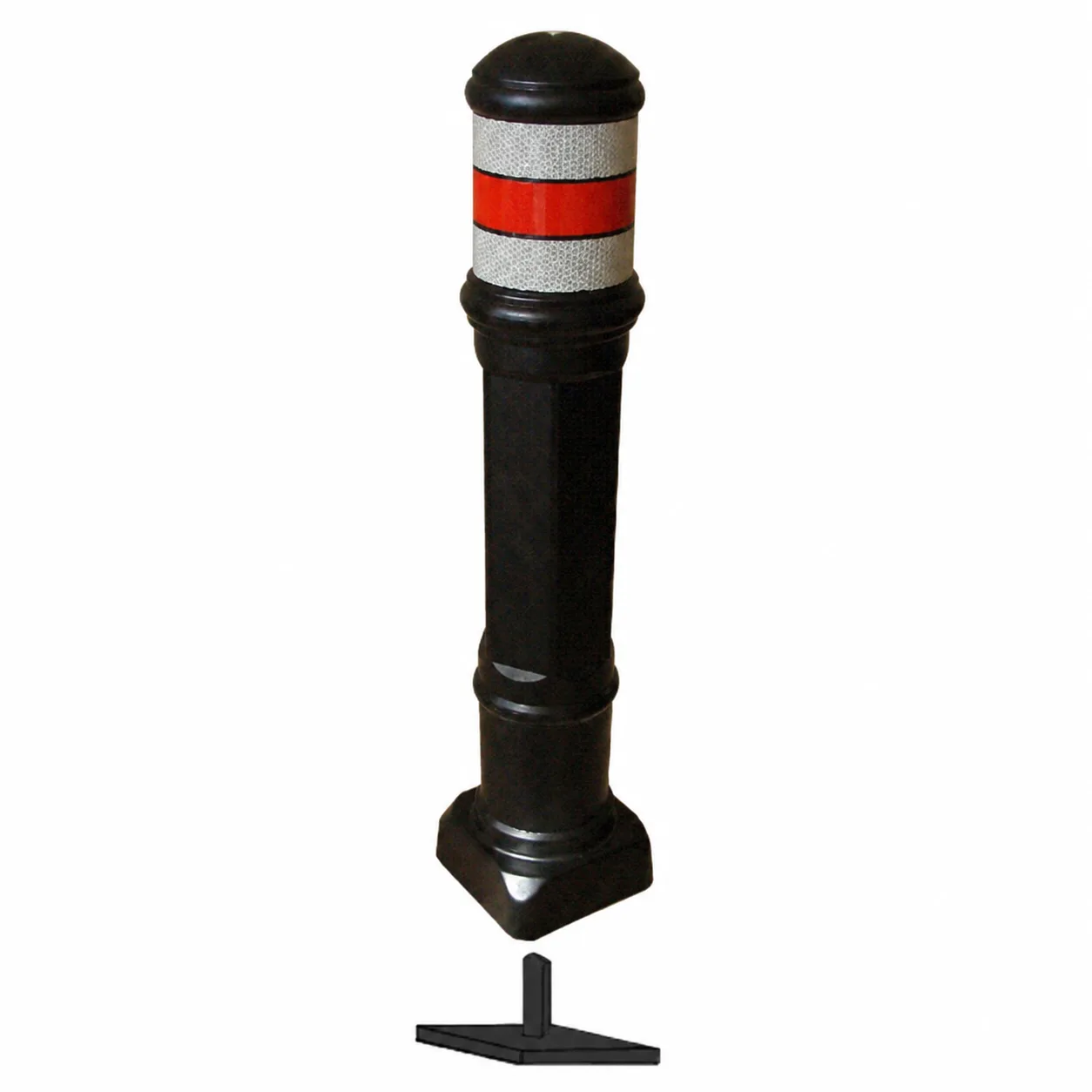
The rigid pillar is a structural element that takes charge and transmits it to the foundation, providing stability to buildings or surrounding systems. It is used for fences, industrial halls, infrastructure and special projects, where it must withstand its own weight, wind or vibration.
In short: rigid metal pillars, of concrete, aluminium or composite, chosen after the height of the structure, terrain and anti-rust protection.
Do you need help choosing?
Tell us what you need and we'll send you the offer on the same working day.
To choose a suitable rigid pillar, take into account the height of the structure, type of terrain, material, profile size and anti-rust protection. Chosen and mounted correctly, with corrosion protection, a rigid pillar may exceed several decades of use and require reduced maintenance. It is the recommended solution when the project requires high mechanical strength, stability and durability, in a construction or in a stencil system.
Stack rigid is a structural element designed to take over and transmit loads to the foundation, providing stability and resilience to constructions or congestion systems. The correct choice depends on the material, dimensions, assembly conditions and mechanical requirements of the project.
Stack rigid is one of the most important supporting elements used in many applications, from fences and spraying systems to industrial constructions, halls, infrastructure or special projects. Its main role is to ensure the stability of the structure and to take over the mechanical demands generated by its own weight, wind, vibrations or other external forces.
In choosing a rigid post, it matters more than the size or material of which it is made. Factors such as the type of land, structure height, fixation mode and operating conditions directly influence the performance and lifespan of the entire system.
In this guide you will find out what is a rigid post, how it works, what types exist, what are its advantages and what criteria need to be analyzed before purchase.
What is a rigid post?
Stack rigid is a bearing element designed to withstand deformations and to maintain the position of a structure even when it is subjected to significant loads.
Unlike flexible variants, it has a high resistance to hooves and torsion, reducing movements and contributing to the stability of the whole.
Depending on the scope of use, it may be achieved from:
- galvanized steel
- galvanized steel
- reinforced concrete
- Aluminium
- Compound materials
- special metal profiles
How does a rigid post work?
The operating principle is relatively simple.
The pillar takes over the forces acting on the structure and transmits them to the foundation or anchorage system.
It shall be simultaneously resistant to:
- vertical loads;
- side loads produced by the wind;
- dynamic requests;
- vibrations;
- stretch or compression forces.
High rigor limits deformation and reduces the risk of fissures, inclinations or collapses.
Why is a rigid post important?
In any project, stability is essential.
A well-sized rigid post contributes to:
- increasing safety;
- reduction of maintenance costs;
- the extension of the duration of operation;
- resistance to severe weather conditions;
- Predictable behaviour over time.
These features recommend it for both residential projects and industrial or infrastructure applications.
Advantages of using a rigid post
Compared to other constructive solutions, a rigid post offers many benefits.
High mechanical strength
It can withstand large loads without significant deformations.
Excellent stability
It reduces the movement of the structure and contributes to the proper functioning of the entire system.
Long lifespan
Modern materials and anti-corrosive treatments allow long-term use even in difficult environments.
Reduced maintenance
In most applications, only regular checks are required.
Adaptability
There are models for:
- Industrial feces;
- protective panels;
- Photovoltaic installations;
- hale;
- metal structures;
- public lighting;
- Road infrastructure.
Types of rigid posts
Depending on the application, there are several variants.
Post rigid metal
It's the most widespread solution.
Advantage:
- high resistance;
- Quick mounting;
- anti-rorosive protection;
- competitive cost.
Concrete rigid post
In particular, it shall be used for:
- infrastructure;
- electrical networks;
- lighted;
- applications with very high demands.
Aluminium rigid post
It is preferred when low weight is an advantage.
It has excellent corrosion resistance and requires minimal maintenance.
Post rigid composite
Modern materials offer:
- reduced weight;
- corrosion resistance;
- electrical insulation;
- long-term exploitation.
Difference between a rigid and a flexible post
Many users confuse these two solutions.
Stack rigid:
- is very little distorted;
- offer high stability;
- is recommended for permanent structures.
Flexible pillar:
- allows controlled deformations;
- better absorb shocks;
- is used in applications where elasticity is an advantage.
The choice always depends on the purpose of the project.
Frequent mistakes in choosing a rigid post
The most common errors are:
- the choice of an insufficient section;
- ignoring the load produced by wind;
- subsized foundations;
- lack of anti-corrosive protection;
- incorrect mounting;
- use of environmentally unsuitable material.
These errors can significantly reduce the life span of the entire structure.
How do you choose a rigid post correctly?
Before purchasing, it is recommended to analyse some important criteria.
Height of structure
The higher the height, the higher the demands.
Type of land
The strength of the foundation influences the stability of the whole.
Material
Choose according to:
- environment;
- humidity;
- corrosion;
- estimated workloads.
Profile size
The section should be calculated as required.
Anti-rosing protection
Outside are recommended:
- hot galvanisation;
- galvanising;
- Special coverage.
Professional advice
Specialists recommend:
- carrying out a structural calculation before the choice of the product;
- compliance with technical standards;
- use of compatible accessories;
- periodic verification of the fastening elements;
- selection of certified products.
An initial investment in a quality product significantly reduces subsequent costs.
Example of use
The rigid pillar is found in many areas:
- Industrial feces;
- security fencing;
- residential environment;
- Photovoltaic panels;
- Metal halo;
- parking spaces;
- road infrastructure;
- lighting systems;
- agricultural construction;
- Logistic platforms.
Versatility makes it a suitable choice for projects of very different dimensions.
Recommendations
For optimal results:
- choose the size according to the project;
- verify the certifications of the product;
- Mount as recommended by the manufacturer;
- use compatible catch systems;
- does not compromise on the quality of materials.
A well-chosen rigid post contributes directly to the safety, stability and durability of the entire construction.
Conclusion
The rigid pillar is an essential structural element in many applications, providing long-term strength, stability and reliability. The choice of material, correct size and professional assembly are decisive factors for the performance of the entire system. Regardless of whether it is used for environment, industrial construction or infrastructure, a high quality post-rigid contributes to lower maintenance costs and increased safety in operation.
Commercial benefits
- High structural stability for residential and industrial projects.
- Excellent resistance at mechanical loads and difficult weather conditions.
- Long duration of operation, with reduced maintenance.
- Anti-rosing protection for outdoor use.
- Compatibility with various trimming systems and constructions.
- Long-term reduced costs because of reliability.
- Efficient assembly and adaptability to multiple applications.
FAQ
What is a rigid post?
A rigid post is a structural element that supports and stabilizes a construction or a stencil system, taking over and transferring the loads to the foundation.
What materials can be made of?
The most common materials are galvanized steel, reinforced concrete, aluminium and composite materials.
What are the advantages of a rigid post?
Provides high mechanical strength, stability, long lifespan and low maintenance costs.
Where is it used most often?
In fences, industrial halls, photovoltaic parks, public lighting, infrastructure and metal constructions.
How do I choose the right size?
Depending on the height of the structure, the type of land, the estimated loads and recommendations of a specialist.
Is there a need for anti-corrosive protection?
Yeah. For external applications hot galvanisation or other anti-corrosive treatments is recommended.
What is the difference between a rigid post and a flexible post?
The rigid pole limits deformations and provides stability, while the flexible one allows a controlled deformation for shock absorption.
How long does a rigid post last?
The life span may exceed several decades if the product is chosen and properly assembled and is protected against corrosion.
Stack rigid is the recommended solution when stability, durability and durability are required in a construction or environment. The choice of material, size and assembly system ensures a safe, reliable and long-term operating structure.