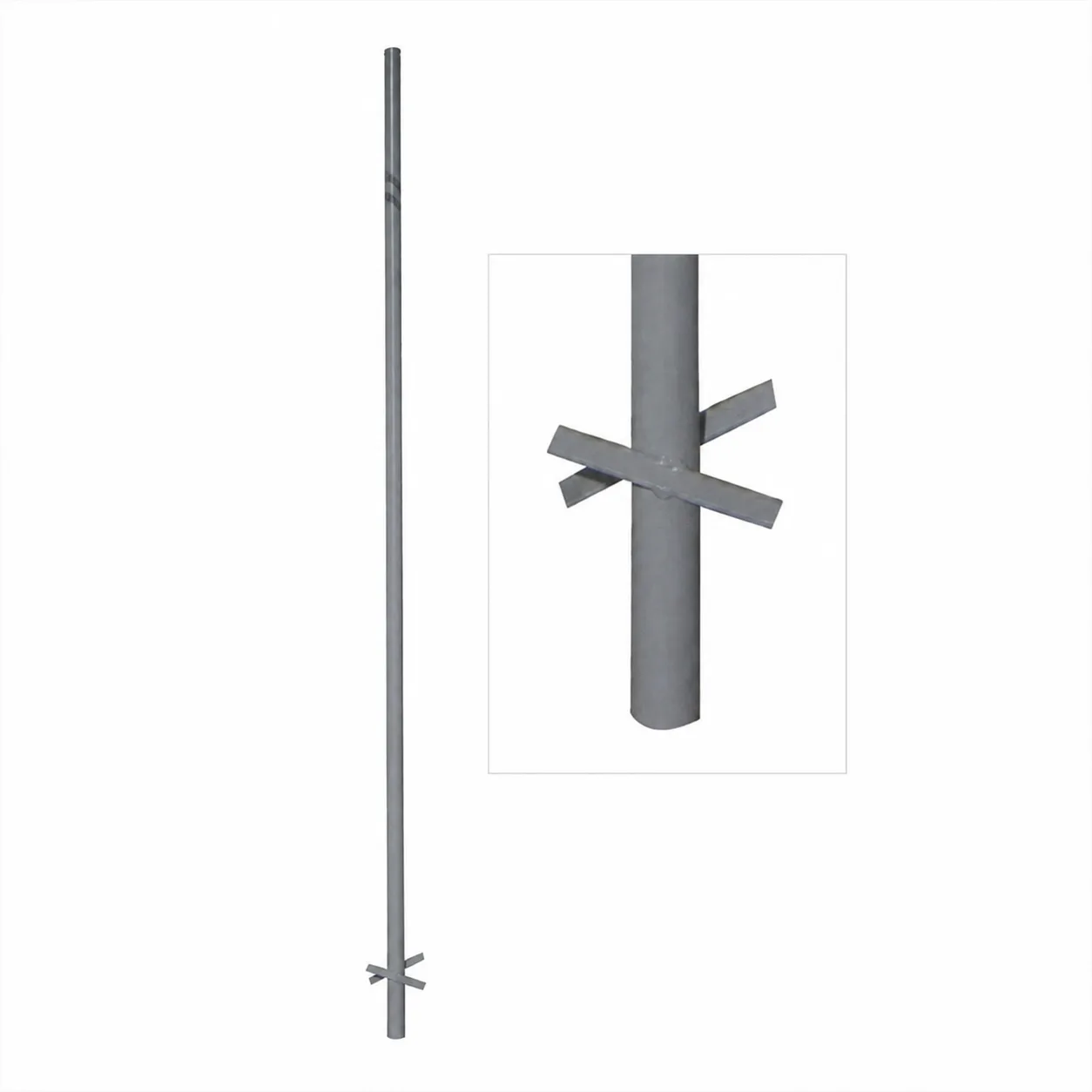
Position for indicator
The flag for the indicator is the support element that ensures safe mounting and visibility of road, information or signalling indicators. Although attention often goes to the indicator itself, a well-chosen support makes a decisive contribution to the stability and durability of signaling over time.
In short: galvanized steel, aluminium or detachable base pillars, chosen after the size of the indicator and the mounting environment.
Do you need help choosing?
Tell us what you need and we'll send you the offer on the same working day.
The selection of the pillar shall start from the size of the indicator, the installation environment, the material and the applicable technical requirements. The right diameter, the need for a foundation and attachments complete the decision. A well-mounted galvanised pillar can exceed several decades of operation, depending on the environment and maintenance, and for industrial areas there are models designed for mechanical demands and difficult conditions.
Step for indicator is the supporting element that ensures safe mounting and visibility of road, information or signalling indicators. The correct choice depends on the size of the indicator, the installation environment, the pillar material and the applicable technical requirements.
One position for indicator well chosen contributes to a safe mounting, time resistance and optimal visibility for any type of signalling.
Post for indicator – how to choose the right solution for a safe and sustainable signaling
Step for indicator is one of the essential elements of any signalling system. Although attention is often directed to the indicator itself, the mounting that fixes it directly influences the stability, safety and operating life of the entire facility.
Whether we are talking about public roads, parking lots, industrial spaces, shipyards, shopping centres or private properties, choosing a suitable position must be done according to the application, the size of the indicator and the conditions of operation.
In this guide you will find out what is a post for the indicator, what types exist, how it works, what materials are recommended and what criteria are worth analyzing before purchasing.
What is a position for the indicator?
One position for indicator is the supporting structure intended to fix a road sign, informational, directional or warning.
Its role is to:
- securely supports the indicator;
- maintain the correct position over time;
- resists wind, rain and temperature variations;
- allows optimal visibility for users.
Depending on the application, the pillars may have different heights, diameters and gripping systems.
How does a post work for the indicator?
The operation is simple, but extremely important.
The indicator shall be fixed on the spot by means of collars, flanges or special gripping systems, and the pole shall be anchored in the foundation or in a ground gripping system.
The whole package must bear:
- loads produced by the wind;
- the vibrations generated by traffic;
- corrosion caused by environmental factors;
- long-term mechanical demands.
A proper installation contributes to reducing maintenance costs and increasing safety.
Why is a position important for quality indicator?
The quality of the support directly influences the efficiency of the signalling system.
A product made of resistant materials offers:
- long lifespan;
- corrosion resistance;
- high stability;
- reduced maintenance costs;
- minimal risk of deformation.
Instead, a subsized or low material post may lead to the tilt of the indicator, deterioration of the catch system or even its detachment.
Advantages of using a quality indicator post
Among the most important benefits are:
- high weather resistance;
- quick and safe assembly;
- compatibility with numerous types of indicators;
- long duration of operation;
- reduced maintenance;
- professional aspect of the signalling system.
These advantages are important for both public administrations and private companies.
Types of posts for the indicator
There are several variants, each for specific applications.
Galvanized post
It is the most used solution.
Advantage:
- excellent protection against corrosion;
- long lifespan;
- low maintenance costs.
Steel post
It is recommended in areas with high mechanical demands.
Note by:
- structural resistance;
- stiffness;
- Excellent stability.
Aluminium post
The main advantages are:
- reduced weight;
- corrosion resistance;
- easy handling.
It is commonly used in urban spaces and special applications.
Post with detachable base
It allows rapid replacement in case of deterioration and simplifies maintenance work.
Differences between the main variants
Comparison of types of posts is useful before purchase.
| Type | Resistance | Weight | Anti-rosing protection | Use |
|---|---|---|---|---|
| Galvanized | Very good | Average | Excellent | Roads, parking spaces |
| Steel | Excellent | Sea | Hello | Industry |
| Aluminium | Hello | Decrease | Excellent | Urban areas |
The choice always depends on the environment and the size of the indicator.
Frequent errors in choosing a position for the indicator
Among the most popular are:
- choosing a diameter too small;
- ignoring the load produced by wind;
- the installation without a suitable foundation;
- the use of incompatible catch systems;
- choosing an inappropriate material for the outside environment.
These errors can significantly reduce the lifetime of the entire facility.
How do you choose a position for the indicator correctly?
Before buying, consider the following:
Indicator size
The larger the area of the indicator, the higher the demand on the pole.
Height required
It shall be adapted to the rules and to the assembly site.
Material
Outside, galvanised steel is one of the most reliable options.
Fixing system
Check compatibility with the flanges and collars used.
Operating environment
In areas with high humidity or intense exposure to corrosive agents, effective anti-corrosive protection is recommended.
Professional advice
Specialists recommend:
- the choice of certified products;
- use of compatible accessories;
- periodic verification of catch systems;
- compliance with assembly instructions;
- the use of properly sized foundations.
These measures contribute to increased safety and reduced maintenance costs.
Example of use
One position for indicator can be installed in many applications:
- public roads;
- commercial parking;
- industrial zone;
- construction site;
- Logistical storage;
- commercial spaces;
- public institutions;
- private property;
- logistics centre;
- production platform.
Recommendations
For optimal results:
- choose products made from resistant materials;
- check the thickness and diameter of the pole;
- use quality mounting accessories;
- comply with the applicable technical requirements and standards;
- request advice when the project involves large dimensions or special operating conditions.
Conclusion
Although it seems like a simple element, flag for indicator has a key role in the functioning and sustainability of the signalling system. Choosing a suitable model, made of quality materials and fitted in accordance with technical requirements, contributes to safety, visibility and low long-term costs. A well-documented investment means a reliable system and a smooth operation.
BENEFICII COMERCIALE
- Corrosion resistant materials and weather.
- It's a long time to operate.
- High stability for indicators.
- Compatibility with numerous catch systems.
- Reduced maintenance costs.
- Simple and fast assembly.
- Solutions for road, industrial and commercial applications
- Long-term reliability.
- Professional aspect of the signalling system.
- Efficient investment in safety.
FAQ
What is a position for the indicator?
It is the metal support used for mounting road, information or warning signs.
What materials are the pillars for the indicator made of?
The most widely used materials are galvanised steel, steel and aluminium.
What's the most resistant variant?
In most external applications, galvanised steel pillars offer an excellent balance between resistance and anti-rorosive protection.
How do I choose the right diameter?
The diameter shall be determined according to the size of the indicator, height and operating conditions.
Is a foundation necessary?
Yeah. A suitable foundation shall ensure the stability and safety of the system.
What accessories are needed?
Generally, collars, flanges, screws and fastening elements compatible with the size of the pole are used.
How long does a galvanized post last?
Under normal operating conditions, lifespan may exceed several decades, depending on the environment and maintenance.
Can they be used in industrial areas?
Yeah. There are specially designed models for environments with mechanical demands and difficult conditions.
One position for indicator the correct choice ensures stability, visibility and durability of the signalling system. The material, size, assembly method and conditions of use are essential factors for safe installation and long-term operation.