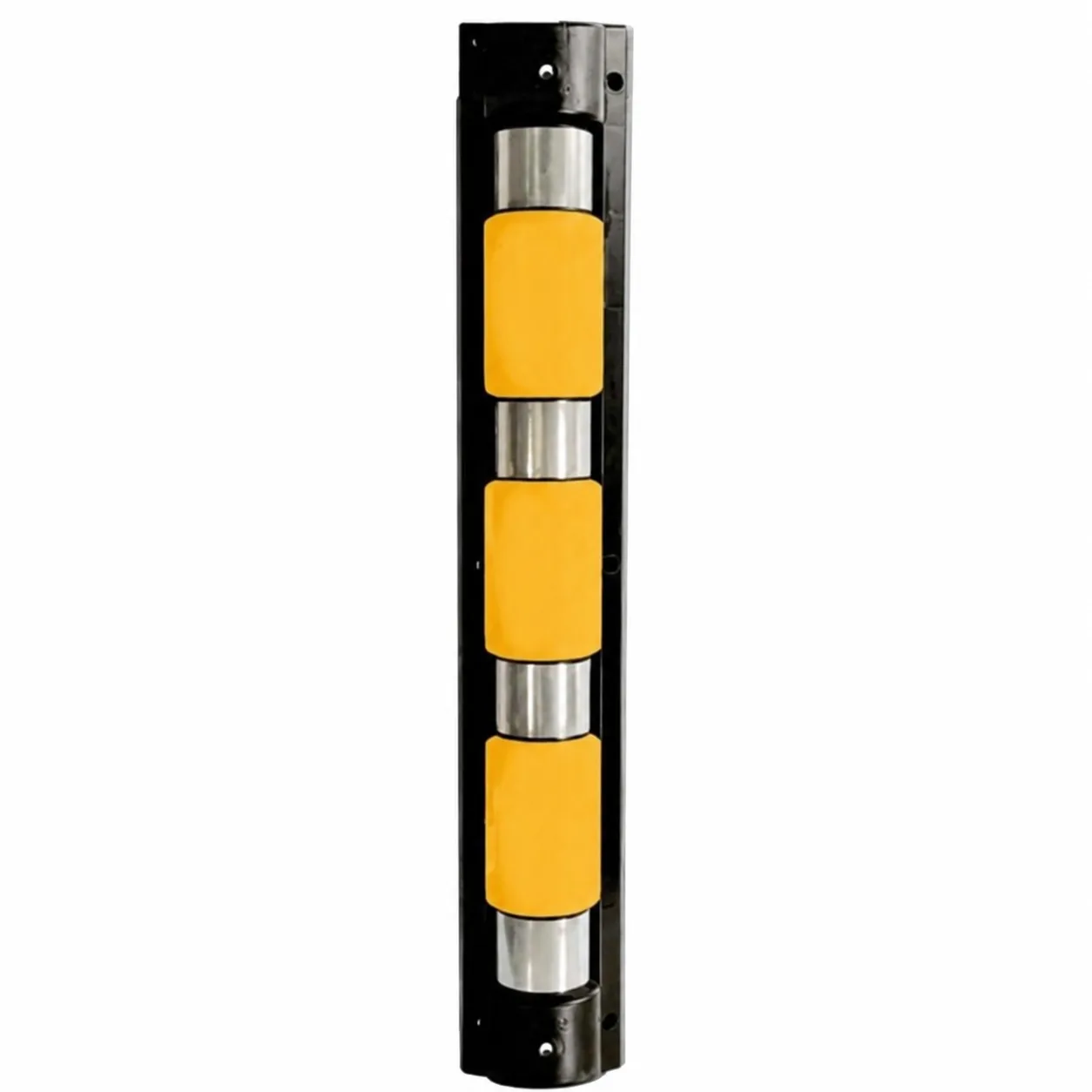
Protection for wall-solution for parking
Wall protection prevents damage to walls and cars in parking lots, garages and industrial spaces. Mounted in impact zones, it cushions manoeuvring, reduces repair costs and makes use of space safer, both in residential garages and in commercial parking.
In short: rubber, EVA or PVC foam and corner profiles, chosen after the type of parking, traffic and assembly area.
Do you need help choosing?
Tell us what you need and we'll send you the offer on the same working day.
The choice depends on the type of parking, traffic intensity and assembly area, and the material and visibility completes the criteria. The protection can also be mounted in the garage at home, and at the right height it protects not only the walls, but also the doors and bars of the vehicles. By absorbing the impact, it reduces repair costs, prolongs the life of finishes and contributes to a safer, more organized and easier to maintain space.
Wall protection is a solution to prevent the deterioration of walls and cars in parking lots, garages and industrial spaces. Mounted in impact zones, it cushions hits, reduces repair costs and increases the safety of space use.
Wall protection – the efficient solution for safe and non-damaged parking
In a crowded parking lot, even a seemingly simple manoeuvre can lead to scratches, hits or damage to walls and cars. Wall protection is one of the most effective solutions to prevent these incidents, being used in residential garages as well as commercial, industrial or institutional parking.
In addition to reducing the costs of repairs, wall protection contributes to increased safety and to maintaining a well-kept aspect of the parking space. In this guide you will find out what types of protections exist, how it works, what materials are recommended and how you choose the right option for your project.
What is wall protection?
Wall protection is a safety element mounted on vertical surfaces exposed to the risk of impact with cars, carriages, stackers or other equipment.
Its role is to absorb the energy of the blow and prevent damage:
- the walls;
- the corners;
- the doors;
- motor vehicles;
- equipment nearby.
These systems are made of wear-resistant materials and repeated shocks, such as industrial rubber, polyurethane, flexible PVC or combinations of materials with metal reinforcements.
How does wall protection work?
The principle is simple.
When a vehicle reaches the wall, the impact is not directly taken from the wall, but from the mounted protection.
Elastic material:
- amortize the shock;
- distribute pressure on a larger surface;
- reduces the force of impact;
- protect both the vehicle and the structure of the building.
In addition, many models include reflective markings or black-yellow bands for increased visibility.
Why is it important to protect the wall in the parking lot?
The costs of repeated repairs to walls or cars can be significant.
Mounting wall protection offers many advantages:
- reducing accidental damage;
- reduction of maintenance costs;
- the protection of finishes;
- prevention of fissures and wall heeling;
- the protection of car doors and bars;
- increase safety in areas with heavy traffic.
In underground parking, where space is limited, these accessories are considered almost indispensable.
Advantages of using wall protection
Among the most important benefits are:
Impact protection
Elastic materials absorb repeated shocks without losing their properties.
Reduction of repair costs
Investment in protection is much lower than the costs of repairing the walls or painting repeated.
Quick assembly
Most models can be installed in a few minutes using special coatings or adhesives.
Resistance in time
Professional products last for years under intense traffic conditions.
Professional aspect
A parking lot equipped with protections conveys safety and maintenance care.
Types of wall protections
There are several variants, each adapted to a particular type of use.
Rubber protection
Most popular.
Advantage:
- excellent absorption of shocks;
- resistance to extreme temperatures;
- long lifespan;
- minimum maintenance.
EVA foam protections
They are recommended for:
- residential garages;
- private parking;
- spaces with reduced traffic.
They are easy and effectively protect the doors.
PVC protections
It may be used in:
- hospitals;
- schools;
- administrative buildings;
- commercial parking.
It offers an aesthetic look and are easy to clean.
Corner guards
These are specially designed for impact-exposed mussels.
They usually have:
- colour black-yellow;
- reflector element;
- high resistance to repeated hits.
How do you choose the right wall protection?
The choice depends on several factors.
Type of parking
A residential parking lot requires different solutions to an industrial one.
Traffic volume
The higher the number of vehicles, the more resistant the material must be.
Assembly area
It is important to establish whether you are protecting:
- walls;
- columns;
- corners;
- ramp;
- Loading areas.
Material
For intensive use, industrial rubber remains the best choice.
Visibility
The projected models with reflective strips increase safety in poorly lit parking spaces.
Wall protection vs. corner protection
Although often confused, the two products have different purposes.
| Wall protection | Corner protection |
|---|---|
| protect the flat surface | protect the muchials |
| mount on wall | Mounted on the corners |
| ideal for parking | ideal for posts and columns |
| cover extended areas | protect vulnerable points |
In many projects, the two systems are used together for complete protection.
Common errors
The most common errors are:
- the choice of an inappropriate material;
- the assembly at an incorrect height;
- the use of low quality products;
- insufficient fixation;
- ignoring areas at high risk of impact.
Installation recommendations
For optimal results:
- montează protecțiile la nivelul barelor autoturismelor;
- clean the surface well before installation;
- use manufacturer-recommended catch systems;
- check periodically their fixation;
- replace the damaged items.
Example of use
Wall protections are found in many areas:
- residential parking spaces;
- underground parking;
- commercial centres;
- office buildings;
- industrial halo;
- Logistical storage;
- hospitals;
- hotels;
- Auto showrooms;
- public institutions.
In all these locations, their role is the same: to reduce damage and increase safety.
Final recommendations
If you want a durable solution, choose products made from certified materials, resistant to shocks and temperature variations.
Industrial rubber protections are recommended for heavy-duty parking, and for residential garages the variants of EVA or PVC foam may be sufficient.
A relatively small investment may prevent considerable expenditure generated by repeated repairs to walls or cars.
BENEFICII COMERCIALE
- Protects walls against accidental hits.
- Reduce maintenance and repair costs.
- Reduces the risk of scratches and car deformations.
- Increases safety in intensive traffic parking.
- Mount quickly and require minimum maintenance.
- It resists shock, wetness and temperature variations.
- Improves the appearance and organisation of the parking lot.
- Available in sizes and materials adapted to each project.
- It offers a long duration of operation and an excellent relationship between cost and benefits.
FAQ
What is wall protection?
It is a protective element that cushions the impact between cars and walls, reducing damage.
Where does the wall protection stand?
In parking lots, garages, warehouses, industrial halls, shopping centres and other areas with a risk of impact.
What's the most resistant material?
Industrial rubber is one of the most sustainable and efficient options.
Can he get into the garage at home?
Yeah. There are compact models, ideal for residential garages.
How do they fixate?
By means of industrial dibs, screws or adhesives, depending on the model and the support surface.
How long does a wall protection stand?
Quality products may be used for more than 10 years, depending on the intensity of the traffic and operating conditions.
Is it also recommended for underground parking?
Yeah. In these areas, where manoeuvres are more difficult, protections contribute significantly to the reduction of minor accidents.
Protect the car door?
Yeah. If fitted to the right height, protect both the walls and the doors and bars of the vehicles.
Wall protection is a practical investment for any parking lot or garage. By absorbing the impact between vehicles and walls, it reduces repair costs, prolongs the life of finishes and contributes to a safer, more organized and easier to maintain space.