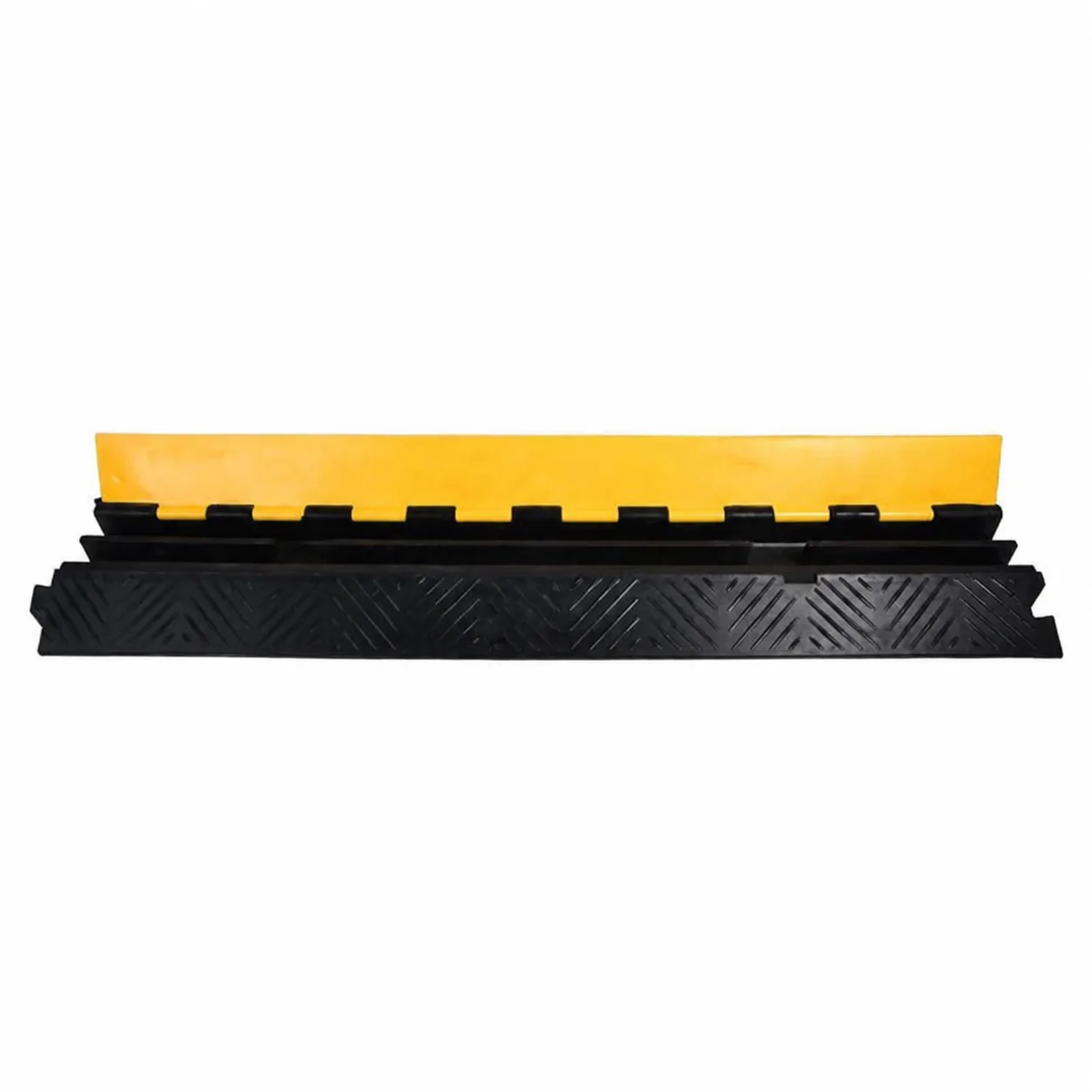
Cable protection
Cable protection brings together solutions that prevent mechanical, chemical or thermal damage to electrical and communications cables. It is necessary in houses, offices, factories or yards, where a correct choice prolongs the life of the installation and reduces maintenance costs.
In short: flexible tubes, rigid PVC or metal, channels, jgs and handles, chosen after environment, type of cable and the necessary protection.
Do you need help choosing?
Tell us what you need and we'll send you the offer on the same working day.
Start from the installation environment and cable type, then set the required level of protection and whether the installation will be extended thereafter. Cable channels allow efficient route organization, fast access for maintenance and aesthetics, and for the requesting media there are metal tubes and metal jgjabs. A solution adapted to housing, commercial building, industry or telecommunications network reduces the risk of damage and prolongs the duration of operation.
Cable protection extends the life of installations and reduces the risk of damage. Discover the right solution for each application.
Cable protection is the whole of the solutions used to prevent mechanical, chemical or thermal damage to electrical and communications cables. The correct choice of the protection system increases the lifetime of the installation, reduces maintenance costs and improves in-use safety.
Cable protection is an essential element in any electrical, industrial or telecommunications installation. Whether we are talking about a house, office building, factory or construction site, the cables are constantly exposed to factors that can damage them: blows, wetness, extreme temperatures, UV radiation or chemicals.
Adequate protection not only extends the duration of the use of cables but also contributes to the safety of the entire installation. A damaged cable can cause power interruptions, costly defects or even serious incidents.
In this guide you will discover what cable protection means, what variants exist, when it is to be used, and how you choose the right solution depending on the installation environment and project requirements.
What is cable protection?
Cable protection is any system designed to protect cables against external factors that may affect their functioning or integrity.
This may have a protective role:
- mechanical, against impact and compression;
- Thermal, in mediums with high temperatures;
- Chemical, against oils and corrosive substances;
- UV, for external installations;
- against moisture and dust, in difficult spaces.
Depending on the application, the protection can be made with tubes, copex, metal tubes, cable channels, jgheabs or special handles.
How does cable protection work?
The main role of protection systems is to create a barrier between cable and the environment.
This barrier:
- reduces mechanical demands;
- prevents damage to the insulation;
- limit the penetration of water and impurities;
- protect against UV radiation;
- facilitate the organisation of the installation.
In addition, many systems allow for the replacement or subsequent expansion of cables without complex works.
Why is cable protection important?
Neglecting cable protection can lead to costly problems.
Among the most important benefits are:
- short-circuit risk reduction;
- increase in the duration of operation;
- reduction of maintenance costs;
- compliance with safety rules;
- the protection of investment in facilities.
In the industrial environment, where cables are exposed daily to vibrations and mechanical shocks, the use of adequate protection is essential for the continuity of production processes.
Advantages of using cable protection
A well-chosen protection solution offers many benefits:
- Longer life for cables.
- Reduction of service interventions.
- Safer installations.
- Organised and professional aspect.
- Protection against accidental damage.
- Simplified maintenance.
- Compliance with technical standards.
In the long term, investment in a protection system is significantly lower than the costs of replacing damaged cables.
Types of cable protection
There are many solutions, each for specific applications.
Flexible tube (copex)
Very used in residential and commercial electrical installations.
Advantage:
- High flexibility;
- Quick mounting;
- good mechanical protection;
- Low cost.
PVC rigid tube
Ideal for fixed routes.
It is recommended that:
- buried installations;
- walls;
- ceilings;
- Technical spaces.
Metal tube
Used in applicant industrial environments.
Ensures:
- excellent mechanical strength;
- protection of impact;
- protection against rodents.
Cable channels
They are suitable for offices, commercial buildings and spaces where easy access to cables is important.
Offer:
- organise;
- easy maintenance;
- aesthetic look.
Jgheaburi metalice
Preferred in industrial halls and logistics centers.
Allow:
- complex route;
- Cooling of cables;
- rapid expansion of the installation.
Textile and spiral handles
Recommended for:
- IT equipment;
- automation;
- electric panels;
- protection of cable bundles.
Differences between the main solutions
| Type | Flexibility | Mechanical resistance | Use |
|---|---|---|---|
| Copy | Very large | Average | Residential installations |
| PVC tube | Decrease | Hello | Fixed path |
| Metal tube | Average | Very large | Industry |
| Cable Channel | Decrease | Average | Offices |
| Metal Jgheab | Average | Sea | Industrial Hale |
Common errors
Many problems arise from the wrong choice of the protection system.
The most common mistakes are:
- choosing a diameter too small;
- the use of indoor products outside;
- ignoring working temperature;
- lack of UV protection;
- Over-reasoning of tubes;
- assembly without respect for the minimum curvature ratio;
- Lack of watertightness in wet areas.
How do you choose cable protection correctly?
When choosing a protection system, consider the following:
Installation environment
- interior;
- outside;
- underground;
- industrial;
- seafaring;
- areas with high humidity.
Type of cable
- electric cable;
- optical fibre;
- data cable;
- control cable;
- Power cable.
The degree of protection required
Depending on the application it may be necessary:
- protection of impact;
- UV resistance;
- Chemical resistance;
- IP sealing;
- fire resistance.
Possibility of extension of the installation
The use of systems allowing the subsequent introduction of additional cables is recommended for ongoing projects.
Professional advice
Specialists recommend:
- the choice of a diameter greater than the minimum required;
- use of compatible accessories;
- compliance with the manufacturer's recommendations;
- verification of product certifications;
- avoid excessive duplication;
- additional protection of exposed routes.
It shall also be indicated that the installation is periodically checked to identify any deterioration before it affects the functioning of the system.
Real example of use
Homes
Flexible pipes and cable channels protect electrical installations in walls, ceilings and floors.
Industry
Metal tubes and jgheabs are used to protect cables in factories, where there are intense vibrations and mechanical demands.
Commercial buildings
Cable channels allow the efficient organisation of electrical and network cables, facilitating subsequent interventions.
Telecommunications
Dedicated optical fibre protection reduces the risk of deterioration of sensitive cables and ensures the stable functioning of networks.
Recommendations
For a reliable and safe installation:
- select certified products;
- size the route correctly;
- use original accessories;
- comply with the assembly rules;
- consult the technical documentation before installation;
- seek the advice of a specialist for complex applications.
A well-designed solution will significantly reduce operating costs and increase the reliability of the entire system.
Conclusion
Cable protection It is not just an accessory, but an essential component for the safety and durability of any electrical or communications installation. The right choice depends on the environment, the type of cable and the level of protection required. By investing in an appropriate system, you reduce the risk of damage, optimize maintenance costs and ensure the long-term efficient operation of the facility.
Commercial benefits
- Protects cables against mechanical shocks and wear.
- Reduce costs with repairs and replacements.
- Increases the life of electrical installations.
- It ensures an organised and professional aspect of cable routes.
- It shall comply with safety requirements and technical standards.
- Simplify maintenance and expansion operations.
- Suitable for residential, commercial and industrial applications.
- Available in a variety of materials and dimensions.
FAQ
What is cable protection?
It is a system designed to protect cables against mechanical deterioration, humidity, extreme temperatures and other external factors.
When is cable protection necessary?
Whenever cables are exposed to impact, traffic, UV rays, chemicals or difficult conditions of operation.
What is the difference between the flexible tube and the rigid tube?
Flexible tube allows assembly on complex routes, and rigid tube provides greater mechanical strength for fixed routes.
What protection is recommended for the outside?
UV-resistant products, moisture and temperature variations are recommended.
How do I choose the right diameter?
The diameter shall allow the insertion and replacement of non-voltage cables, with sufficient ventilation space.
Are certified products necessary?
Yeah. Certified products provide verified performance and comply with applicable safety standards.
Can I use the same protection for electrical and data cables?
Depends on the application. In many cases, separation is recommended to reduce electromagnetic interference and to comply with technical rules.
What are the advantages of cable channels?
The canals allow efficient route organisation, rapid access to maintenance and an aesthetic aspect of the installation.
Cable protection is essential for the safety and reliability of electrical installations. Choosing a solution adapted to the environment and the type of cable reduces the risk of damage, prolongs operating life and contributes to compliance with safety and quality standards.