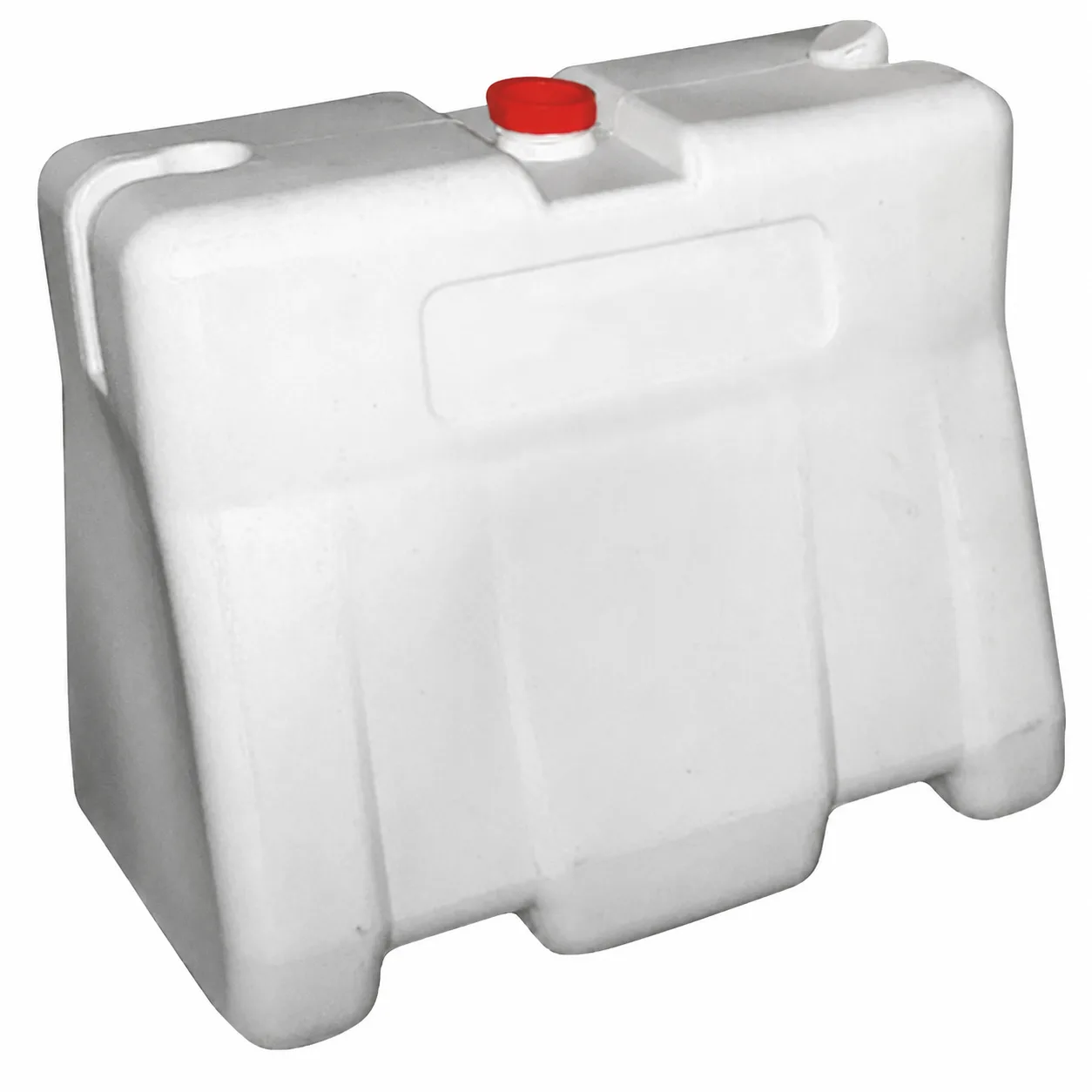
Leasable parapet
The lashes shall be a collective protection system for flat roofs and technical terraces, which prevents falls from height without perforating the hydroisolation. Stability is ensured by counter-weights, which makes it a quick, safe and easy to install solution.
In short: straight, tilted, modular or roofs with photovoltaic panels, mounted without hole in the roof.
Do you need help choosing?
Tell us what you need and we'll send you the offer on the same working day.
There are straight, inclined and modular parapets as well as models for roofs with photovoltaic panels, so that the system can adapt to the building configuration. The main advantage is that hydroisolation remains intact, which protects long-term investment. Choose a certified and correctly sized system to comply with security rules, and plan periodic inspections, with verification of components and positioning of the ballasts.
The portable parapet is a collective protection system used on roofs and terraces, which ensures the safety of people without requiring perforation of the hydroisolation. Stability is achieved by counter-weights, which makes it a quick, safe and easy to install solution.
Leasable parapet – complete guide on operation, advantages and choice of the right solution
Leasing parapet is one of the most effective solutions for protection against falls from height on flat roofs and technical terraces. More and more commercial, industrial and residential buildings choose this type of system because it eliminates the need to perforate the roof and reduces the risk of deterioration of the hydroisolation.
Whether it is maintenance, installation of HVAC equipment, installation of photovoltaic panels or periodic maintenance work, a well-chosen collective protection system contributes both to the safety of staff and to compliance with legal requirements on labour security.
In this guide you will find out how a portable parapet works, which are its advantages, what variants exist and what aspects need to be considered before purchase.
What's a leasable parapet?
Leasing parapet is a collective protection system designed to prevent falls from a height. Unlike mechanically fixed parapets in the structure of the building, it uses Counterweight (reading) to ensure the stability of the whole package.
Thus, the assembly shall be made without hole in the hydroisolation membrane or roof structure.
This type of parapet is used in particular on:
- flat roofs;
- circulable terases;
- industrial halo;
- office buildings;
- logistics centre;
- commercial spaces;
- Public buildings.
How does a leasable parapet work?
The principle is simple.
The weights at the base of the system generate the force necessary to prevent the movement of the parapet in the event of an accidental impact.
Depending on the manufacturer and roof configuration, the system may include:
- metal posts;
- horizontal crossings;
- current hand;
- intermediate bar;
- protected;
- bases of steel or aluminium;
- concrete counterweights or composite materials.
The assembly is fast and the system can be dismantled or relocated when the roof configuration changes.
Why is it important to have a portable parapet?
The work carried out at the height implies major risks.
A portable parapet contributes to:
- accident prevention;
- the protection of maintenance personnel;
- compliance with labour security legislation;
- reducing the costs of incidents;
- protection of existing hydroisolation.
In many situations, collective protection is recommended before the use of individual equipment, as it provides safety for all people working in the area.
Advantages of a Leasing Parapet
Among the most important benefits are:
- without roof perforation;
- Quick mounting;
- reduced maintenance;
- possibility of relocation;
- adaptability for different types of roofs;
- Reduced installation costs;
- compatibility with photovoltaic panels and technical equipment;
- protection of the hydroisolate layer;
- long life;
- compliance with security rules.
Types of leasable headgear
Depending on the application, there are several variants.
Right-hand latched parapet
It is the most used solution and is mounted on the edge of the roof.
It is recommended for flat surfaces and areas with regular traffic.
Leasable tilted parapet
Allows the angle to be adjusted and is used when the roof configuration requires this solution.
Modular parapet
It can be extended or modified very easily depending on the changes of the project.
Parapet for roof with photovoltaic panels
Designed to allow safe access around solar installations without affecting them.
Leasable parapet vs. fixed parapet
| Leasable parapet | Fixed parapet |
|---|---|
| No need for drilling | Mechanical anchorage required |
| Quick installation | More complex installation |
| Can move | Permanent |
| Protects hydrozolation | May affect hydrocollation |
| Ideal for existing buildings | According to new constructions |
The choice depends on the particularities of the project and the technical requirements.
Common errors
When choosing a portable parapet, many beneficiaries miss out on a few essential aspects.
The most common mistakes are:
- exclusive choice on the basis of the price criterion;
- ignoring the loads produced by the wind;
- assembly without complying with the manufacturer's instructions;
- use of a system incompatible with the roof structure;
- Lack of regular checks.
How do you choose a leasable parapet correctly?
Before purchasing it is recommended to analyse:
- the type of roof;
- the height of the building;
- the wind zone;
- the frequency of access to the roof;
- the material used;
- compliance with European standards;
- the possibility of extending the system.
It is also indicated that a specialist in protection against falls is consulted.
Professional advice
For optimal results:
- require a calculation of the loads;
- verify the technical documentation;
- select certified systems;
- use the original component;
- schedule periodic inspections;
- comply with assembly and maintenance instructions.
Investment in a certified system is more advantageous in the long term than frequent replacement of low quality solutions.
Real example of use
Leasable parapets are used in a variety of projects:
- industrial halo;
- factories;
- logistics centre;
- administrative buildings;
- hospitals;
- schools;
- hotels;
- commercial centres;
- residential assemblies;
- roofs with photovoltaic panels.
In all these situations, the objective is the same: to increase the level of safety without intervention on hydroisolation.
Recommendations
If the project involves frequent work on the roof, a portable parapet is one of the most effective investments in collective protection.
Always choose products made from corrosion resistant materials certified to the applicable standards and designed for the climatic conditions in the area where the building is located.
A properly sized system will provide long-term protection and reduce maintenance costs.
Conclusion
Leasing parapet is a modern and efficient solution for protection against falls from height. Mounting without roof drilling, flexibility and reduced maintenance recommends it for many industrial, commercial and residential applications.
Choosing a certified and building-specific system contributes to compliance with security rules and to the protection of long-term investment.
Commercial benefits
- Protects the staff working at the height.
- Does not affect the hydrocollation of the roof.
- Reduces costs of assembly and maintenance.
- It installs quickly, without complex interventions.
- It may be relocated according to the modifications of the project.
- It shall comply with the requirements of labour security.
- It has a long duration of exploitation.
- It adapts easily to the different roof configurations.
- Contributing to reducing the risk of accidents.
- It represents an effective long-term investment.
FAQ
What's a leasable parapet?
It is a collective protection system that prevents falls from height using counterweights instead of mechanical anchoring.
Where does a leasable parapet stand?
On flat roofs, technical terraces, industrial halls and buildings where periodic maintenance work is required.
Is it necessary to pierce the roof?
No, no. The system is designed for mounting without perforating the hydroisolation.
What materials is it made of?
The most common variants use aluminum, galvanized steel or stainless steel, together with concrete or composite materials.
Can it be moved later?
Yeah. Most of the mobile systems are modular and allow for relocation when the roof configuration changes.
Do they respect safety rules?
Yes, if designed, installed and used in accordance with European standards and manufacturer's instructions.
Is it suitable for photovoltaic panels?
Yeah. It is one of the most widely used solutions to protect areas with photovoltaic installations.
What maintenance does it require?
Periodic inspections, verification of components and positioning of the ballasts are recommended, as per the maintenance plan.
A portable parapet is the ideal solution for collective protection on roofs and terraces, as it provides safety without perforating the hydrocoil. Choosing a certified and properly sized system contributes to compliance with security rules and to protecting long-term investment.