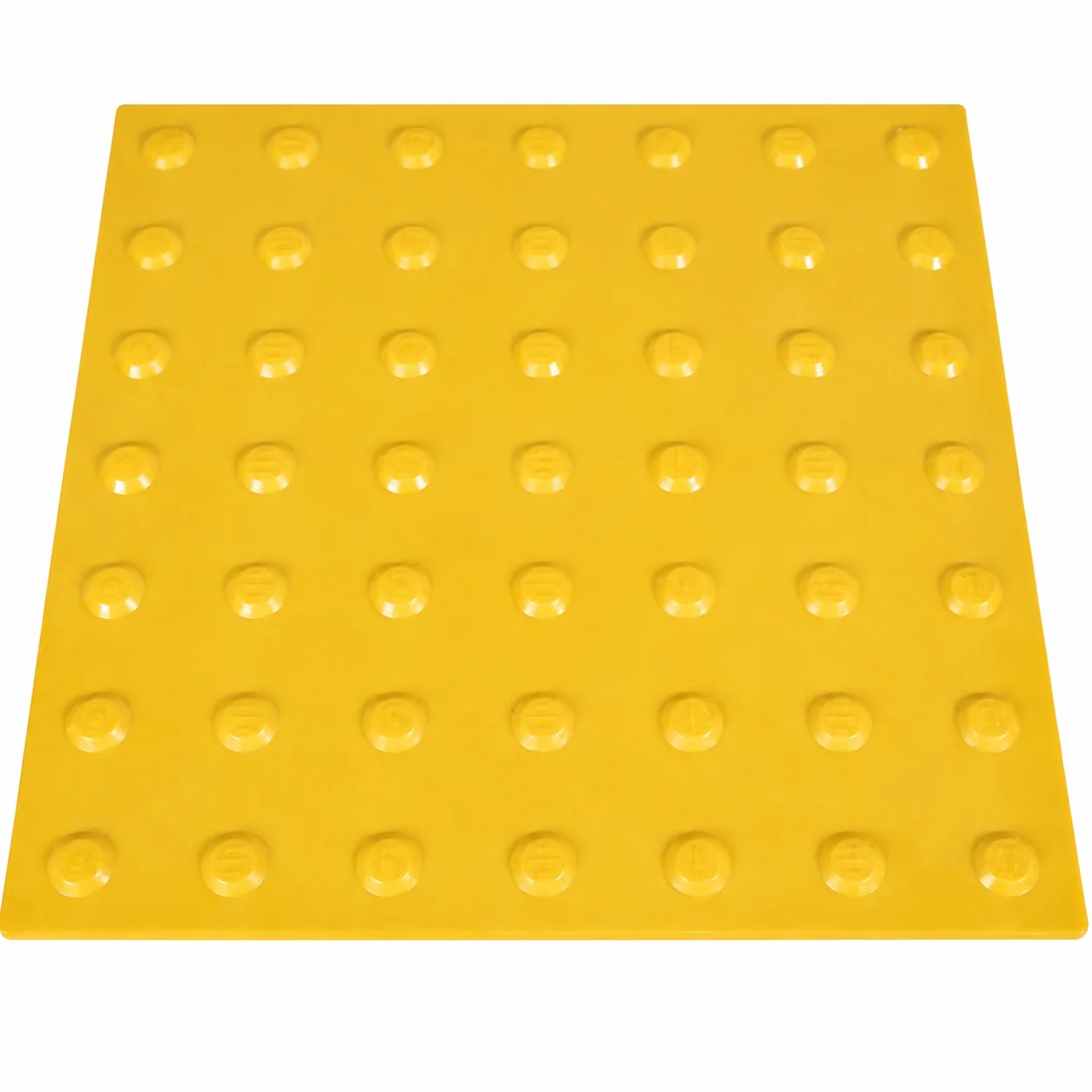
Touch mark
The tactile marking is a signaling system mounted on traffic surfaces to guide and warn people with impaired vision. It is used in office buildings, public institutions, shopping centres, hospitals, railway stations and transport stations, where accessibility and safety increase.
In short: directional or warning markings, of stainless steel, polyurethane or ceramic, chosen after space, traffic and type of flooring.
Do you need help choosing?
Tell us what you need and we'll send you the offer on the same working day.
Before choosing, analyse the type of space, the level of traffic, the material of the flooring, the environmental conditions and the requirements of the project. Directional markings guide the movement, and warning markings point to points that require attention. The material, either stainless steel, polyurethane or ceramic, influences the durability and the assembly mode. The correct assembly and compliance with accessibility standards ensure a safe, functional and easy-to-use space for all.
The tactile marking improves accessibility and orientation of people with impaired vision. Discover its types, advantages and uses.
Tactile marking is a signaling system mounted on traffic surfaces to guide and warn people with impaired vision. It contributes to increasing accessibility, safety and compliance with mobility standards in public and private spaces.
Tactile marking has become an essential element in designing modern spaces accessible to all. Whether we are talking about office buildings, public institutions, shopping centres, hospitals, railways or transport stations, these guidance systems facilitate the movement of people with impaired vision and reduce the risk of accidents.
In addition to its practical role, tactile marking contributes to compliance with accessibility rules and demonstrates owners' concern for inclusion and safety. In this guide you will find out what is the tactile marking, how it works, what types exist, where it is mounted, what materials are available and how you can choose the right solution for each project.
What is the touch mark?
Tactile marking is a system of floor mounted touch elements designed to transmit information by touching the white stick or by direct contact with the sole of the shoe.
The main aim is to provide safe guidance to blind or visually impaired persons.
These markings provide information on:
- the direction of movement;
- the approach to a danger;
- the change of route;
- the existence of obstacles;
- access to inputs or outputs.
In many countries, their use is recommended or imposed by public space accessibility standards.
How does tactile marking work?
The principle is simple: the raised surface transmits a touch message that is easy to identify.
There are two main categories of signalling:
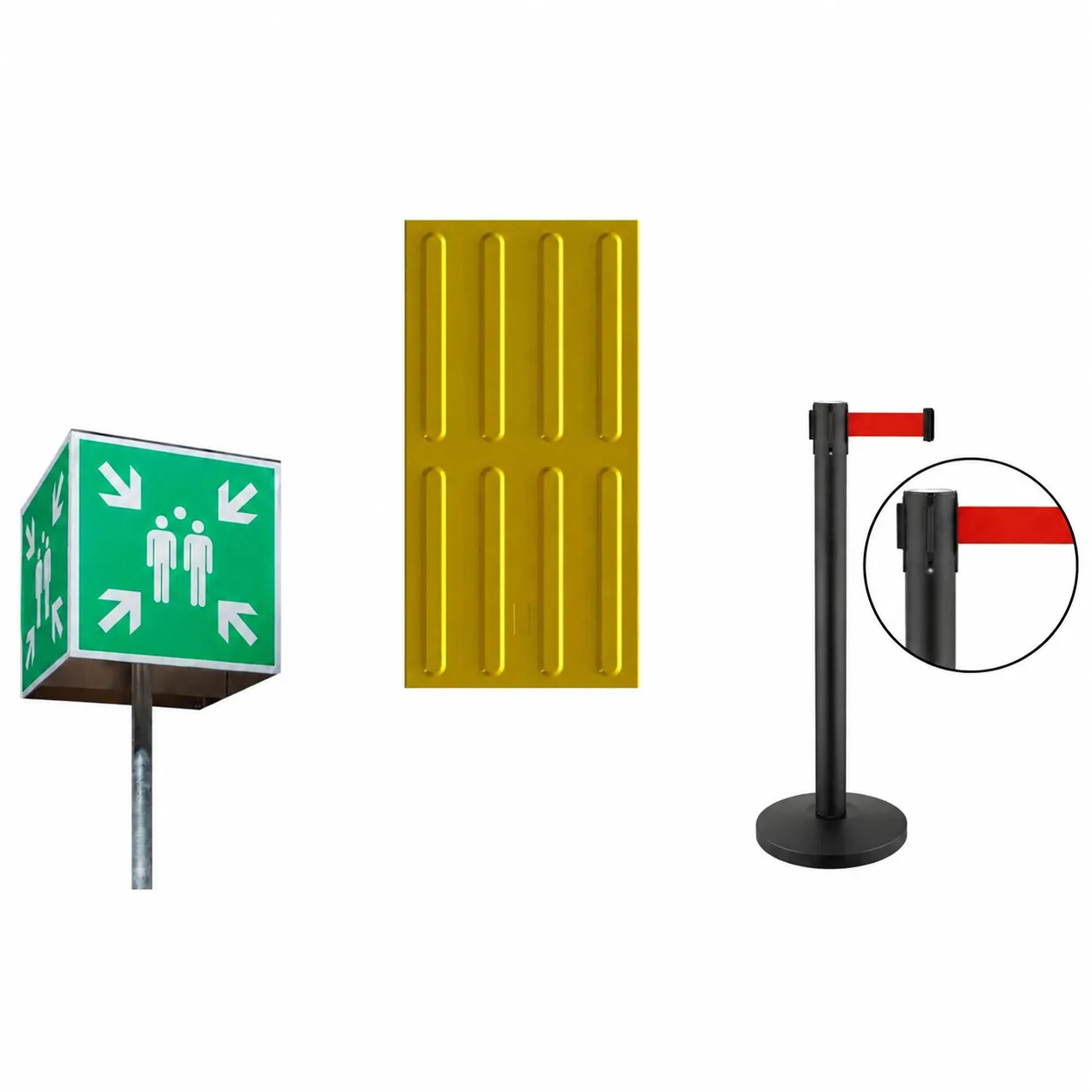
Directional markings – consisting of longitudinal ribs indicating the path to follow.
Warning markings - consisting of points of relief indicating the proximity of a danger or the need to stop.
People with visual impairments identify the differences in relief by means of the cane or by direct contact with the footwear, which allows them to move safer and more independently.
Why is tactile marking important?
The importance of tactile marking exceeds simply compliance with the legislation.
It offers many benefits:
- increase the autonomy of persons with visual disabilities;
- reduces the risk of accidents;
- facilitate orientation in complex spaces;
- contribute to the accessibility of buildings;
- improves user experience;
- Demonstrate social responsibility.
For public institutions and companies, the implementation of tactile markings can be an important step towards respecting the principles of universal design.
Advantages of tactile marking
Implementation of a system of tactile marking It brings multiple benefits.
Increased safety
Markings shall warn before stairs, ramps, pedestrian crossings or dangerous areas.
Intuitive orientation
Unseen persons may follow routes without permanent assistance.
Increased accessibility
Spaces become easier to use by all categories of people.
Durability
Modern materials resist intense traffic, humidity and temperature variations.
Aesthetic integration
Touch markings are available in numerous colors and finishes, adapting to the architectural design.
Type of tactile marking
There are several variants, depending on the application and material.
Directional tactile marking
It is used to guide people on safe routes.
Mount in:
- lobbying;
- to walk;
- stations;
- passage;
- shopping centers.
Tactical warning marking
Signalling the proximity of a risk zone:
- steps;
- elevators;
- percussion;
- the intersections;
- pedestrian crossings.
Stainless steel touch markings
Recommended for:
- Premium buildings;
- intense traffic;
- commercial spaces;
- aeroporturi.
The advantages include high resistance and elegant appearance.
Touch markings of polyurethane
Offer:
- flexibility;
- Quick mounting;
- low cost;
- Good grip.
Ceramic touch markings
They are frequently used in public spaces and in intensive traffic projects due to wear resistance.
Differences between tactile markings
Choosing the right solution depends on several factors.
| Type | Use | Advantage |
|---|---|---|
| Directorate | Guide | Indicate the route |
| Warning | Hazard reporting | Increases safety |
| Inox | Interior and exterior | Very high durability |
| Polyurethane | Interior | Quick assembly |
| Ceramic | Public areas | High resistance |
Common errors
Improper implementation can reduce system efficiency.
The most common mistakes are:
- location in the wrong position;
- the choice of an inappropriate model;
- lack of visual contrast;
- the use of an incorrect adhesive;
- the assembly on damaged surfaces;
- non-compliance with accessibility standards.
A well-planned project avoids these problems and ensures long-term functionality.
How do you choose the right tactile marking?
Before purchasing it is recommended to analyse:
Place of assembly
Inside or outside.
Traffic level
Highly circulated areas require more resistant materials.
Type of surface
Concrete, granite, gravel, asphalt or industrial flooring.
Climate conditions
The exterior requires UV resistance and humidity.
Applicable standards
Compliance with accessibility requirements is essential for public institutions and many commercial projects.
Professional advice
Specialists recommend:
- the choice of certified materials;
- the assembly carried out in accordance with the manufacturer's instructions;
- periodic check of the status of the markings;
- use of appropriate visual contrast;
- the integration of the tactile markings from the design phase.
These measures contribute to an increase in life expectancy and a safe experience for users.
Real example of use
Touch markings are found in many locations:
- airports;
- rails;
- metro stations;
- public institutions;
- universities;
- hospitals;
- commercial centres;
- hotels;
- office buildings;
- sidewalks and pedestrian areas.
In all of these areas, they facilitate orientation and increase the safety of people with impaired vision.
Recommendations
For an efficient project:
- establish the travel paths from the design phase;
- use certified and resistant products;
- comply with applicable accessibility standards;
- cooperate with experienced suppliers and assemblers;
- periodically check the status of the markings and replace the damaged items.
A well-designed system offers long-term benefits and contributes to the creation of a safe and inclusive space.
Conclusion
Tactile marking is a key solution for accessibility, orientation and safety. Choosing the right type, using sustainable materials and correct assembly contributes to creating friendly spaces for all users. Whether it is a public institution, a company or a commercial building, investment in tactile markings is an important step towards an accessible environment and in accordance with modern good practice.
Commercial benefits
- Increase accessibility for all categories of users.
- Improves safety in risk areas.
- Meets requirements and standards on accessibility.
- Reduce the risk of accidents and incidents.
- Resisting heavy traffic and long-term use.
- Adapt different types of flooring.
- Contribution to the professional image of the organisation.
- Minimum maintenance required when mounted correctly.
FAQ
What is the touch mark?
The tactile marking is a guidance and warning system for persons with impaired vision, mounted on the circulation surfaces.
Where do the tactile markings stand?
In public institutions, hospitals, schools, stations, airports, shopping centres, office buildings and on the sidewalk.
What is the difference between directional and warning markings?
Directional markings indicate the path to follow, and warning markings indicate the proximity of a danger or change of direction.
What materials are the tactile markings made of?
The most commonly used materials are stainless steel, polyurethane, ceramics and other wear-resistant composite materials.
Are tactile markings mandatory?
In many public and commercial projects, their installation is necessary to comply with accessibility and inclusive design requirements.
How do tactile markings maintain?
By regular cleaning and checking the state of the elements to maintain their visibility and efficiency.
How long does a tactile marking last?
The lifespan depends on the material, the quality of assembly and the intensity of traffic, but quality products can function efficiently for many years.
How do I choose the right tactile marking?
Analyses the type of space, level of traffic, the material of the flooring, the environmental conditions and the requirements of the project before the product is chosen.
Tactile marking is a signalling solution that improves the orientation and safety of people with impaired vision. The choice of the right material, the correct assembly and compliance with accessibility standards ensure a safe, functional and user-friendly space for all users.