Tourist indicator
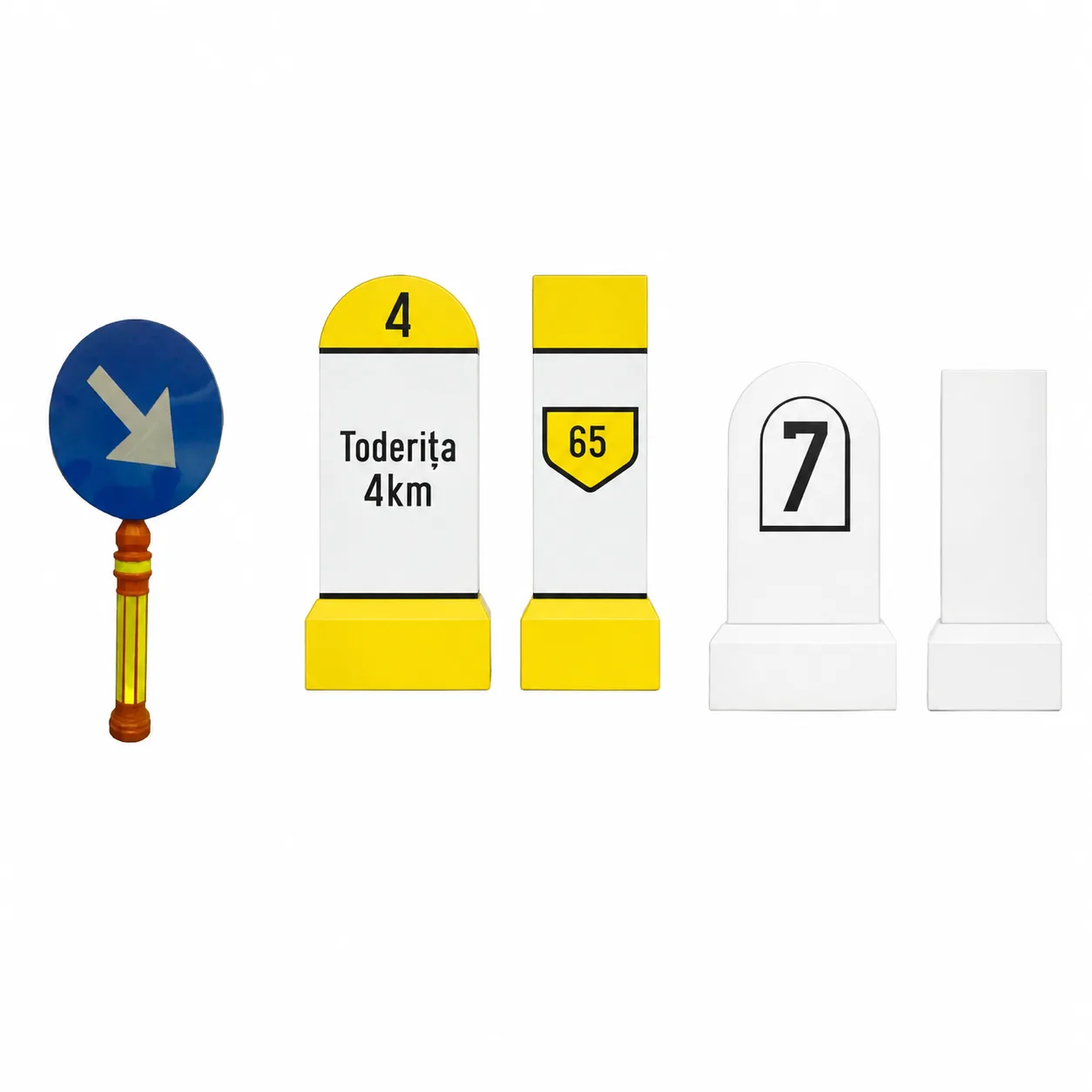
The tourist indicator provides information about the direction, distance or location of the tourist objectives. Facilitates the orientation of visitors to cities, mountain trails or near historical and natural objectives, increases the safety of travel and contributes to the efficient promotion of destinations.
In short: directional indicators, informative, tourist signs, indicators for mountain or thematic routes, according to the type of target indicated.
Do you need help choosing?
Tell us what you need and we'll send you the offer on the same working day.
An efficient tourist signalling system starts with the needs of visitors and area managers. Choose the type of indicator after the information transmitted, either direction, distance or description of the lens, and after the mounting place, urban or natural. The materials that are resistant to outside use keep their legibility in time, and the clear location at the decision points of the route helps tourists to reach their destination easily and improves their travel experience.
The tourist indicator provides essential information for orientation and access to objectives. See the types, role and recommendations for use.
Tourist indicator
A tourist indicator is a signaling element that provides information about the direction, distance or location of the tourist objectives. It facilitates the orientation of visitors, contributes to safe travel and improves travel experience in urban and natural areas.
Tourist indicator – full guide about role, types and importance
Tourist indicator is one of the most important elements of the infrastructure dedicated to visitors. Whether we are talking about a mountain route, a historical objective, a nature reserve or a museum, correct signaling helps tourists to get to their destination quickly and safely.
A well-designed system of tourist indicators reduces the time spent on guidance, limits the risk of wandering, and provides useful information about the attractions in the area. At the same time, it contributes to the promotion of local heritage and the development of tourism.
In this guide you will discover what is a tourist indicator, how it works, what types exist, what are its advantages and how it can be chosen according to the project.
What is a tourist indicator?
Tourist indicator is an information or guidance board located in public spaces to guide tourists towards objectives of interest.
It may provide information such as:
- the direction towards tourist objectives;
- distance to destination;
- the name of the objective;
- international symbols;
- maps and guidance plans;
- information on routes;
- rules of access;
- historical or cultural data.
The main aim is to facilitate guidance and improve the experience of visitors.
How does a tourist indicator work?
The operation is simple and efficient.
The indicator shall transmit the information quickly and easily, using:
- directional arrows;
- Standardised pictograms;
- concise text;
- specific colours;
- internationally recognized symbols.
In many modern tourist locations, the indicators are filled with QR codes that allow access to:
- digital guides;
- interactive maps;
- historical information;
- visiting programme;
- Audio tours.
Why is a tourist indicator important?
A well-organized signalling system benefits both tourists and destination administrators.
Among the most important advantages are:
- rapid orientation;
- reducing confusion;
- increasing safety;
- promoting local objectives;
- the flow of traffic;
- improving the image of the destination;
- easier access for visitors.
In the absence of proper alerts, even important tourist objectives may be difficult to find.
Advantages of using tourist indicators
The implementation of quality indicators offers many benefits.
For tourists
- intuitive guidance;
- time savings;
- easy access to objectives;
- reduction of stress during travel;
- more enjoyable visitation experience.
For authorities and administrators
- promotion of heritage;
- increasing tourist attractiveness;
- reduction of requests for information;
- efficient organisation of visitor flows;
- development of the image of the destination.
Types of tourist indicators
There are several categories of indicators, each having a well-defined role.
Directional indicator
It shows the direction towards the tourist objectives.
Example:
- the castles;
- museums;
- monasteries;
- natural parks;
- plaje.
Informative indicator
Provides information on:
- historical monument;
- important buildings;
- travel;
- natural attractions;
- Belvedere points.
Tourism panels
They are located in the main points and contain:
- maps;
- description;
- photographs;
- recommendations for routes.
Indicator for mountain trails
These include:
- tourist markings;
- the level of difficulty;
- the duration of the route;
- altitude;
- the refuge points.
Thematic indicator
I can highlight:
- cultural routes;
- gastronomic routes;
- ecotourism routes;
- religious circuits;
- historical objectives.
Tourist indicator vs. road sign
Although they may seem similar, the two categories have different purposes.
| Tourist indicator | Road sign |
|---|---|
| Orienting tourists | Regulates circulation |
| Highlighting objectives | Provides traffic rules |
| Promote destinations | Ensures road safety |
| Includes tourist information | Includes traffic information |
The two systems are complementary and contribute together to effective mobility.
Frequent errors in the design of tourist indicators
A bad indicator can create confusion.
The most common mistakes are:
- too small text;
- inappropriate location;
- reduced contrast between text and background;
- lack of international symbols;
- outdated information;
- low-strength materials;
- insufficient lighting.
Avoiding these problems contributes to a better experience for visitors.
How do you choose a tourist indicator correctly?
The choice depends on several factors.
It is recommended that you consider:
- the type of tourist objective;
- the estimated flow of visitors;
- climate conditions;
- the material used;
- the visibility;
- the size;
- signalling standards;
- the possibility of updating the information.
Materials such as aluminium, galvanised steel or composites are appreciated for their durability over time.
Professional advice
For an efficient tourist signalling system:
- use standardised pictograms;
- maintain a unitary design;
- use legible characters;
- place the indicators in visible locations;
- regularly update the information;
- integrate QR codes for digital content;
- use UV-resistant materials and weather.
A coherent signaling contributes to a professional image of the destination.
Real example of use
Tourist indicators are used in many locations:
- historical centre;
- tourist resorts;
- mountain trails;
- natural parks;
- reservations;
- UNESCO sites;
- museums;
- botanical gardens;
- leisure area;
- cultural circuit.
In each of these contexts, their role is to simplify guidance and provide useful information.
Recommendations
For optimal results:
- select sustainable materials;
- comply with the rules on alerting;
- adapt the size to the viewing distance;
- use a clear and easy-to-understand design;
- plan the location according to the actual routes of the visitors.
An investment in a well-designed indicator system can significantly improve tourist experience and contribute to the sustainable development of a destination.
Conclusion
Tourist indicator is an essential element of modern tourist infrastructure. Through clear information, strategic location and well thought out design, it facilitates orientation, promotes local objectives and increases the level of satisfaction of visitors. Regardless of the type of destination, an efficient signaling contributes to a safe and enjoyable experience, being an investment with long-term benefits.
Commercial benefits
- Increases the visibility of tourist objectives.
- Improves the experience of visitors.
- Reduces the time needed for guidance.
- Contributes to the development of the image of the destination.
- Promote local attractions in a professional way.
- Decrease requests for additional information.
- It resists in time when made of quality materials.
- It can integrate digital solutions such as QR codes and interactive maps.
FAQ
What is a tourist indicator?
It is a signpost that guides tourists to objectives and provides useful information about them.
What is the role of a tourist indicator?
It helps to orient, increases safety and facilitates access to tourist attractions.
What information can a tourist indicator contain?
Directions, distances, names, symbols, maps, access rules and cultural information.
What are the main types of tourist indicators?
Directional, informative, for mountain routes, guidance panels and thematic indicators.
What materials are the tourist signs made of?
Most commonly aluminium, galvanized steel, composite materials or other weather resistant materials.
Where do the tourist signs stand?
Close to the tourist attractions, on routes, at intersections, in historic centres and in areas of interest to visitors.
Can I include digital technology?
Yeah. Many modern indicators include QR codes that provide access to additional information and digital guides.
Why is tourist signaling important?
Because it facilitates orientation, improves the experience of visitors and contributes to the efficient promotion of destinations.
The tourist indicator is an essential means of guidance indicating the direction, distance and information about the tourist objectives. A clear and well-placed signage improves visitor experience, increases safety and contributes to the efficient promotion of tourist destinations.