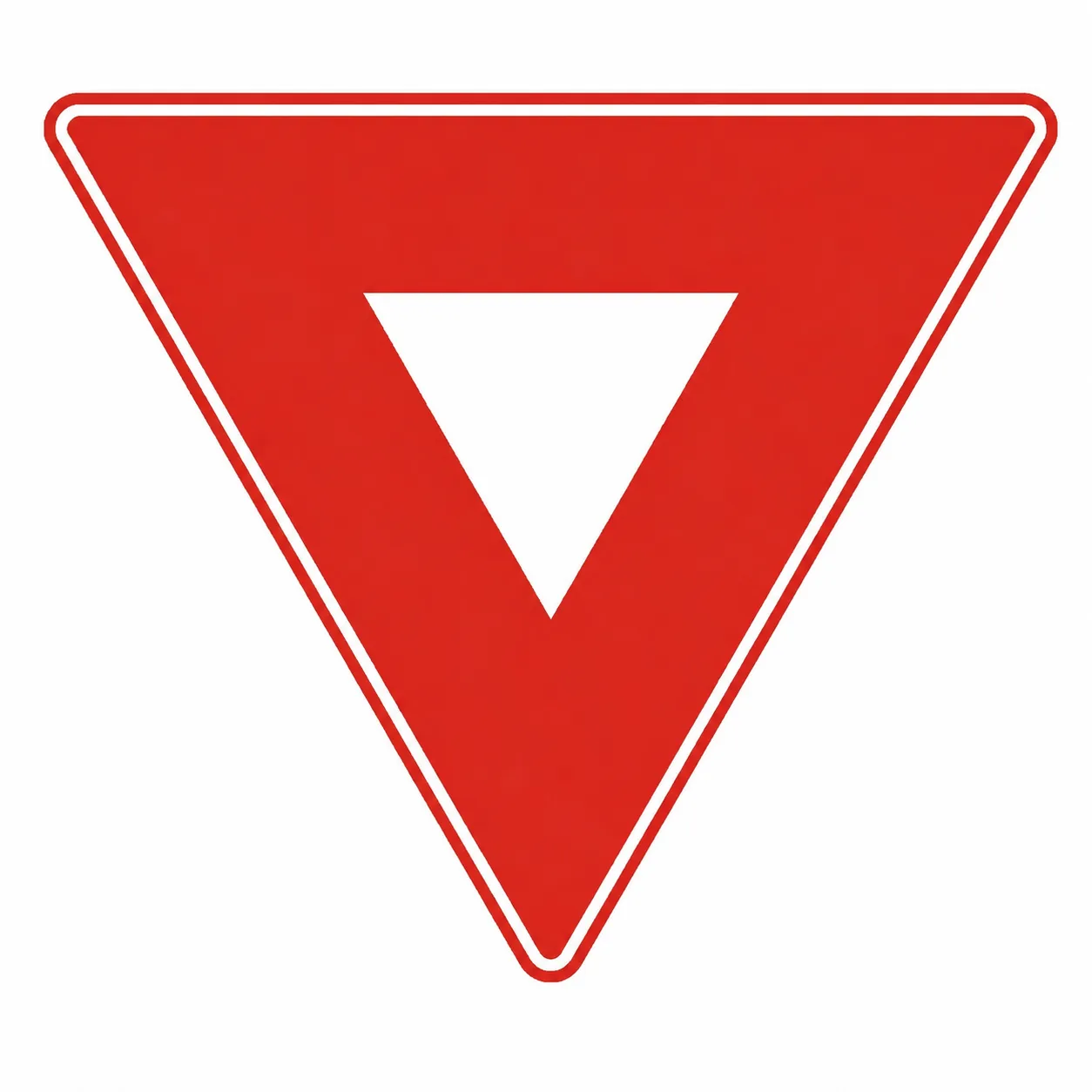
Priority indicator
The priority indicator is a road sign that sets the order of passage at an intersection. It shows the driver if he is given priority or if he has to give in, which fluidizes traffic and prevents accidents. Its knowledge is essential for both beginners and experienced drivers.
In short: the road with priority, the end of the road with priority, gives way, STOP and priority to the reverse.
Do you need help choosing?
Tell us what you need and we'll send you the offer on the same working day.
For a correct interpretation, follow both the indicator and the signal that completes it, such as other indicators or markings. Where the signal is missing, the right-hand priority applies, and the indicator ‘Ceases the pass' or ‘Stop change the pass' order. If you are not sure who has priority, reduce speed, analyze the intersection and give priority, to avoid an incident and to circulate according to road legislation.
The priority indicator shall establish the order of passage in the intersections. Discover the rules, exceptions and practical examples for a safe driving.
Priority indicator is a road sign that sets the order of passage at an intersection. It shall inform drivers if it is of priority or if it has to give way, contributing to traffic flow and accident prevention.
Priority indicator – what it is, how it works and why it is essential in traffic
Priority indicator is one of the most important road signs. Whether you are a beginner or have many years of experience, knowing the meaning and correct application of this is essential for the safety of all traffic participants.
In this guide you will find out what the priority indicator is, how it is interpreted in different traffic situations, what types exist, which are the most common mistakes and how you can move safely in accordance with traffic rules.
What is the priority indicator
Priority indicator is a road sign that establishes the right of passage in an intersection or in an area where two or more traffic flows intersect.
Its main role is to eliminate ambiguities and reduce the risk of accidents by clearly establishing the order in which vehicles can continue to move.
These indicators are regulated by road legislation and must be respected regardless of the category of vehicle.
How the priority indicator works
Priority indicators shall provide rapid information on the right of passage.
Depending on the indicator, a driver may:
- continue to move without giving priority;
- reduce speed and give priority to other participants;
- stop completely before entering the intersection;
- Follow the path of a priority road.
The correct interpretation shall be done together with:
- Road markings;
- traffic lights;
- additional indicators;
- the general rules of movement.
Why the priority indicator is important
Compliance with the priority indicator shall contribute to:
- Road accident prevention;
- traffic fluidisation;
- avoiding conflicts between traffic participants;
- compliance with road legislation;
- increasing safety at intersections.
Without these indicators, many intersections would be difficult to manage, especially in crowded urban areas.
Main types of priority indicators
Road with priority
This indicator shows that vehicles on that road have priority over those entering the side roads.
It's one of the most common signs on the main roads.
When you meet him
- on national roads;
- on main boulevard;
- before important intersections.
End of the road with priority
Signify the end of the priority.
After this indicator, the driver must pay attention to the new priority rules existing at the next intersection.
Pass the pass
This indicator obliges the driver to allow vehicles to pass on the priority road.
It does not require complete stopping if the intersection is free and visibility is good.
Stop (STOP)
The STOP indicator requires:
- complete stop;
- traffic verification;
- prioritisation of all vehicles on the priority road.
Failure to comply with the directive is one of the most serious road accidents.
Priority for reverse circulation
This indicator shall be used in particular:
- on narrow bridges;
- in the passage;
- on roads where simultaneous movement is not possible.
Priority over reverse traffic
It indicates that the vehicle has the right to cross the first narrow sector.
Advantages of complying with the priority indicator
Compliance offers many benefits:
- increased safety;
- reduction of collision risk;
- more fluent traffic;
- avoiding fines;
- Predictable driving;
- less traffic stress.
Priority indicator versus rule of right priorities
Many drivers confuse the two situations.
Priority indicator
- establish explicitly who passes first;
- It's worth more than the general rule.
Right priority
It shall only apply when:
- there are no indicators;
- the traffic light does not work;
- The road cop doesn't drive the traffic.
Therefore, where there is a priority indicator, it prevails.
Common errors
The most common errors are:
- ignoring the STOP indicator;
- misinterpretation of additional panels;
- non-observation of the end of the road with priority;
- the assumption that the main road continues without verification;
- the lack of speed reduction when approaching an intersection.
These errors may lead to serious accidents and penalties.
How to choose the right direction in a priority intersection
To correctly interpret the situation:
- observe all the indicators;
- track road markings;
- verify the existence of the traffic light;
- identify the additional panels;
- adjust the speed before the intersection;
- set the path of the road with priority.
Additional attention is needed when the route of the priority road changes direction.
Practical example
Example 1
Circles on a main road marked with the indicator Road with priority.
A vehicle enters from a side street where the indicator is located Pass the pass.
In this situation, the vehicle on the side road must give priority.
Example 2
Get to an intersection where the indicator is located STOP.
Even if you do not notice other vehicles, the law requires complete stop before further movement.
Example 3
The additional indicator shows that the priority road turns left.
If you go ahead, you may lose priority, even if you're previously on the main road.
Recommendations for safe driving
In order to avoid dangerous situations:
- the time indicators;
- reduce speed before intersections;
- does not assume that the other participants comply with the rules;
- check all directions continuously;
- adapt the driving style to weather conditions;
- comply with the markings and road signs.
Experience shows that anticipation and attention are as important as compliance.
Conclusion
Priority indicator is one of the most important elements of road signs. Understanding how it works and compliance with associated rules contributes directly to accident prevention and safe and efficient traffic.
Whether you meet an indicator Road with priority, Pass the pass or STOPthe correct interpretation of the signaling and the adaptation of the behaviour to traffic conditions remains essential for each participant in the traffic.
BENEFICII COMERCIALE
- Increase the level of safety in traffic.
- You quickly understand the priority rules in the intersections.
- Reduce the risk of accidents and road accidents.
- Avoid fines and penalties for non-compliance with the alert.
- You're improving your training for the car exam.
- You have confidence in the interpretation of road indicators.
- More efficient and predictable circulation under any traffic conditions.
FAQ SEO
What is the priority indicator?
It is a road sign that establishes the order of passage between vehicles in an intersection or in a conflict zone.
What does the "Road with priority" sign mean?
It shows that vehicles travelling on that road have priority over vehicles entering the side roads.
Does the STOP indicator require full shutdown?
Yeah. Full stop is mandatory, even if the intersection seems free.
When does the rule of right priority apply?
Only in the absence of priority indicators, traffic lights and driving by a road policeman.
What happens if I ignore the priority indicator?
You can cause an accident and risk sanctions, including fines and suspension of the permit in certain situations.
How do I recognize a priority road?
By the specific road sign and sometimes by additional panels indicating the route of the priority road.
Is the priority indicator valid at all intersections?
No, no. It produces effects according to its location and can be supplemented by other indicators or markings.
What do I have to do if I'm not sure who has priority?
Reduce speed, analyse signaling and give priority when the situation is unclear to avoid an incident.
Priority indicator establishes the legal order of crossing at intersections and contributes to accident prevention. Knowledge of the meaning of each indicator and compliance with traffic rules are essential for safe, smooth traffic and in accordance with road law.