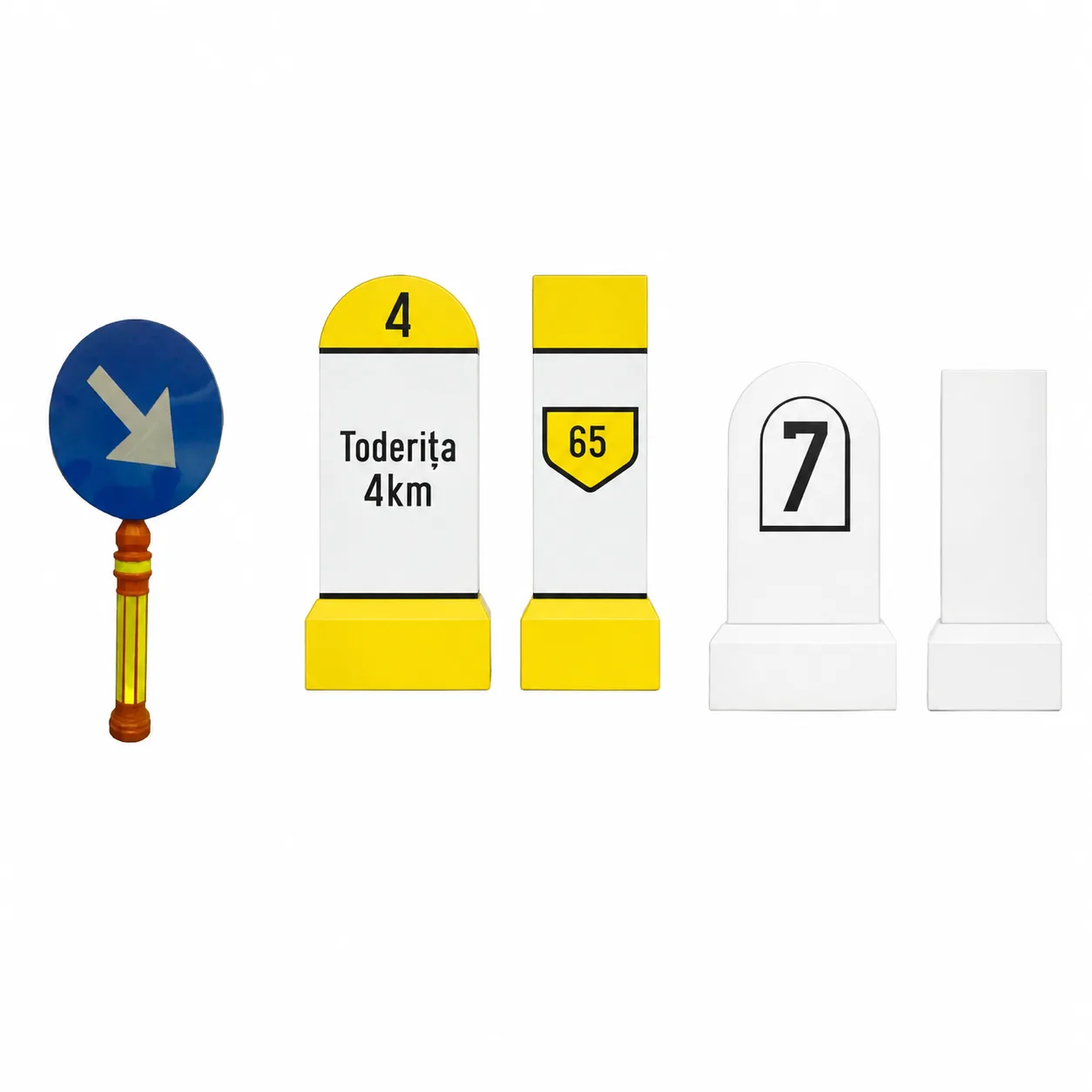
Binding indicator
The obligation indicator is a road sign which imposes on participants a mandatory action or direction. Unlike the indicators that prohibit, it shows what needs to be done, contributing to traffic safety, traffic flow and accident prevention.
In short: mandatory direction, mandatory turn, obviating the obstacle, rotating direction and mandatory tracks for bicycles or pedestrians.
Do you need help choosing?
Tell us what you need and we'll send you the offer on the same working day.
Correct recognition of the mandatory indicators shall avoid sanctions and situations which are confused in traffic. It notes that some obligations cease at the first intersection and others remain valid until the end of the obligation. Practical examples, the study of the Road Code, the car tests and the practice in traffic help to learn them, and the application without exception of these rules makes the circulation more fluid and safer.
Obligation indicator is a road sign requiring traffic participants to comply with a mandatory action or direction. It contributes to traffic safety, traffic flow and accident prevention, and its non-compliance can attract penalties under road law.
The obligation indicator shall establish binding rules for traffic participants. Discover the types of indicators, their meaning and the correct way of interpreting them.
Obligation indicator – what it means and how to interpret
Obligation indicator is part of the category of road indicators which transmit a clear obligation to traffic participants. Unlike warning or information indicators, they not only offer recommendations but also set out rules to be followed without exception.
Whether you are a beginner driver, experienced driver, motorcyclist or biker, the correct understanding of these indicators is essential for road safety and to avoid sanctions. In this article you will find out what the obligation indicator represents, how it works, what are the main types and what mistakes should be avoided in traffic.
What is a mandatory indicator?
One mandatory indicator is a road sign establishing a mandatory action for traffic participants. It shall indicate the direction of movement, the route of movement or other obligations to be fulfilled immediately after the indicator has been met.
In Romania, mandatory indicators are regulated by road legislation and comply with international conventions on road signs.
Main characteristics
- have, in general, round shape;
- I'm predominantly blue;
- use easily recognized white symbols;
- I call for a binding rule to be observed.
How does the obligation indicator work?
This type of indicator transmits a rule to be followed from the location and, depending on the situation, until its effects cease.
Example:
- the obligation to turn right;
- the obligation to go forward;
- the obligation to use a particular band;
- the obligation of special equipment under certain conditions.
Ignoring these indicators may lead to:
- fines;
- penalty points;
- the occurrence of accidents;
- traffic jam.
Why are compulsory indicators important?
The main role of these indicators is the efficient and secure organisation of traffic.
Their benefits include:
- reducing the risk of accidents;
- flow of circulation;
- clarification of mandatory routes;
- Delete misinterpretations;
- increasing the safety of all traffic participants.
In crowded areas or close to complex intersections, compliance with a mandatory indicator helps to avoid conflict between vehicles.
Types of obligor indicators
There are numerous variants, each of which has a precise meaning.
Mandatory direction ahead
Force the driver to continue the move just before.
Mandatory right turn
Allows the change of direction to the right only.
Mandatory left turn
Indicates that the movement should be made only to the left.
Obstacle avoidance
It may cause vehicles to overcome an obstacle by the indicated part.
Rotational direction
It shall indicate the entry in a rotating direction and the direction of movement within it.
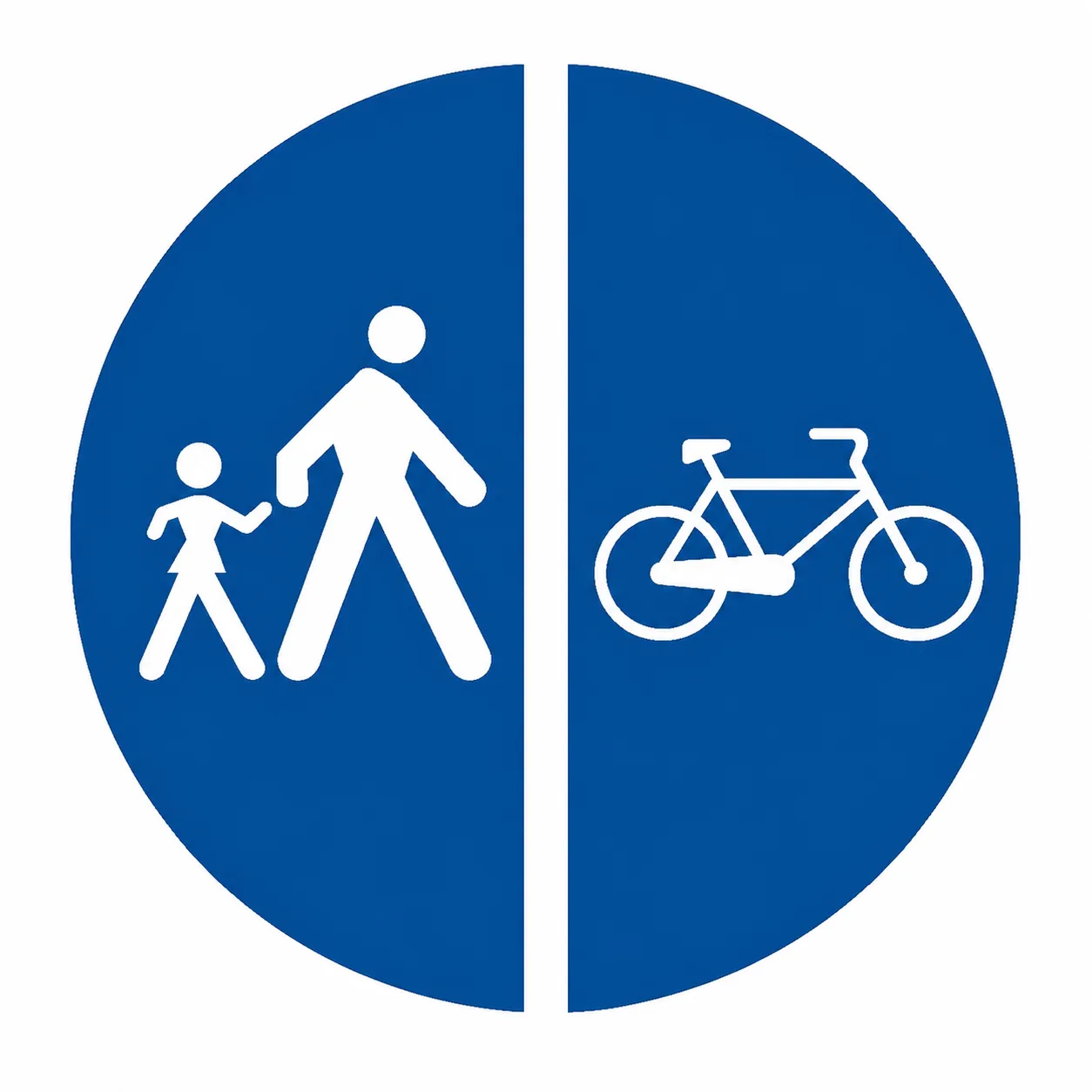
Mandatory track for bicycles
For cyclists, indicate the exclusive use of the arranged track.
Mandatory pedestrian trail
Indicates the route reserved exclusively for pedestrian traffic.
Binding indicator versus prohibition indicator
These two categories are often confused.
| Binding indicator | Prohibition indicator |
|---|---|
| Imposes mandatory action | Prohibits certain actions |
| Blue background | White background with red margin |
| Indicate what needs to be done | Indicate what is not allowed |
Example:
- Mandatory before = you have to go ahead.
- Access prohibited = you're not allowed in.
Common errors in interpreting the obligation indicator
Many traffic participants make mistakes due to the lack of attention or ignorance of the rules.
The most common are:
- confusion with the information indicators;
- ignoring the mandatory direction;
- changing the band after the indicator;
- misinterpretation in the direction of the rotor;
- the assumption that the indicator is only a recommendation.
These errors can lead to dangerous situations and cross-border sanctions.
How do you correctly interpret a mandatory indicator?
To avoid errors, it is recommended that:
- observe the time indicator;
- adjust the speed before the intersection;
- track associated road markings;
- verification of additional panels;
- you respect all traffic rules in the area.
In many situations, the indicator is supplemented by traffic lights, markings or other road signs.
Practical example
Example 1
Get to an intersection where the indicator is located Mandatory to right.
You can't go ahead and neither turn left.
Example 2
Meet indicator Rotational direction.
You must follow the established sense of movement and respect the rules on priority.
Example 3
On an urban road the indicator appears Mandatory track for bicycles.
Bicycles are required to use the arranged track when it is available.
Useful recommendations
For safe driving:
- familiarize yourself with all road signs;
- periodically review road legislation;
- adjust the speed close to the intersections;
- pay attention to temporary indicators in work areas;
- does not assume that all intersections work the same.
Traffic experience is important, but compliance with road signs remains essential.
Conclusion
Obligation indicator is one of the most important elements of road signs. Its role is to impose clear rules, which contribute to the safe and efficient conduct of traffic. Understanding the meaning of each indicator and compliance with its obligations reduce the risk of accidents and help maintain organised traffic.
Commercial benefits
- It quickly clarifies the applicable traffic rules.
- Reduces the risk of fines and sanctions.
- Contributing to increased traffic safety.
- Support the preparation for the car exam.
- Provides current and easily understandable information.
- Improves confidence in driving by knowing the legislation correctly.
FAQ
What is the mandatory indicator?
It is a road sign that requires mandatory action, such as a travel direction or use of a band.
What color do the binding indicators have?
In most cases they have blue background and white symbols.
What is the difference between the obligation and prohibition indicators?
The obligation indicator sets what needs to be done, and the prohibition indicates what is not allowed.
What if I don't respect a mandatory indicator?
You can get fines, penalty points and, in certain situations, you can cause accidents.
Are they mandatory for bikers as well?
Yes, where the indicator is intended for that category of traffic participants.
Is the obligation indicator valid until the first intersection?
Depends on the type of indicator and any additional panels. Some obligations shall cease at the first intersection and others shall remain valid until an end-of-obligation indicator.
How can I learn road signs more easily?
By studying the Code Rutier, use of auto tests and practice in traffic.
Obligation indicator lay down rules that traffic participants must comply with without exception. The correct recognition of these signs and their application in traffic contributes to road safety, avoidance of sanctions and the smooth running of traffic.