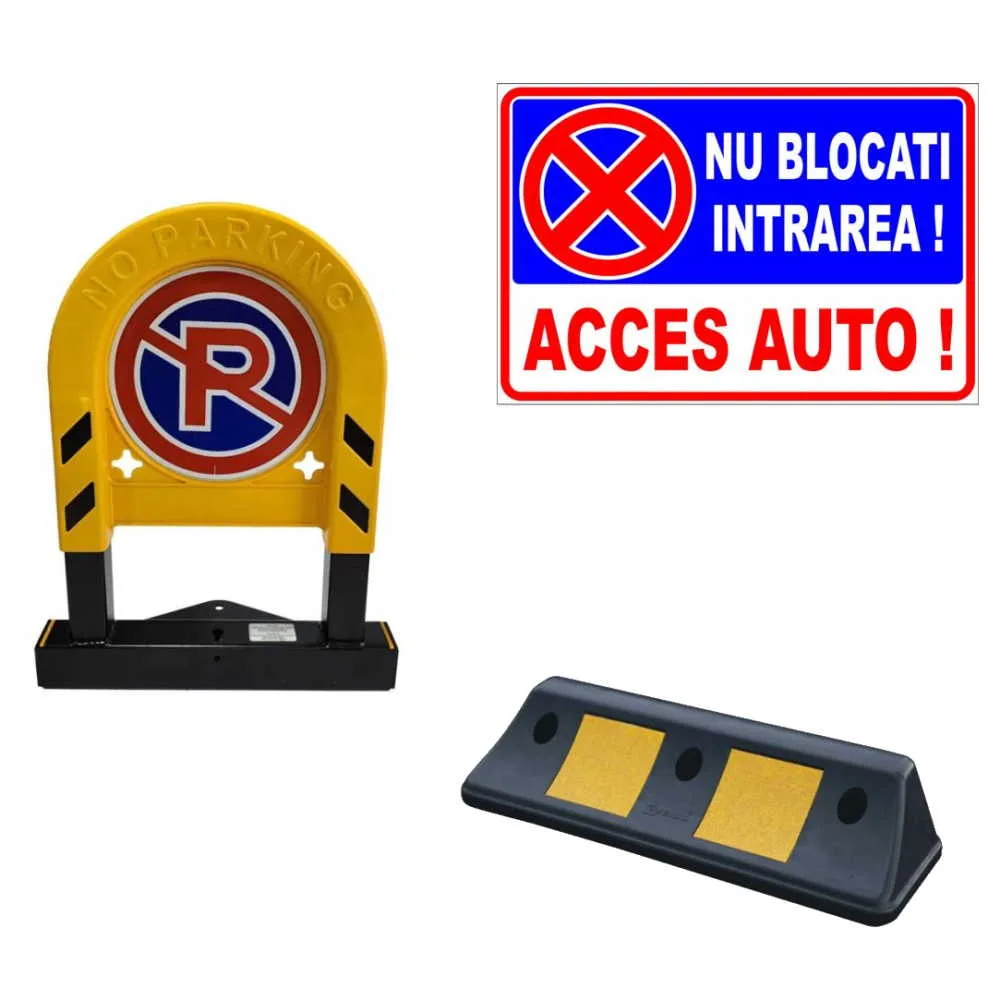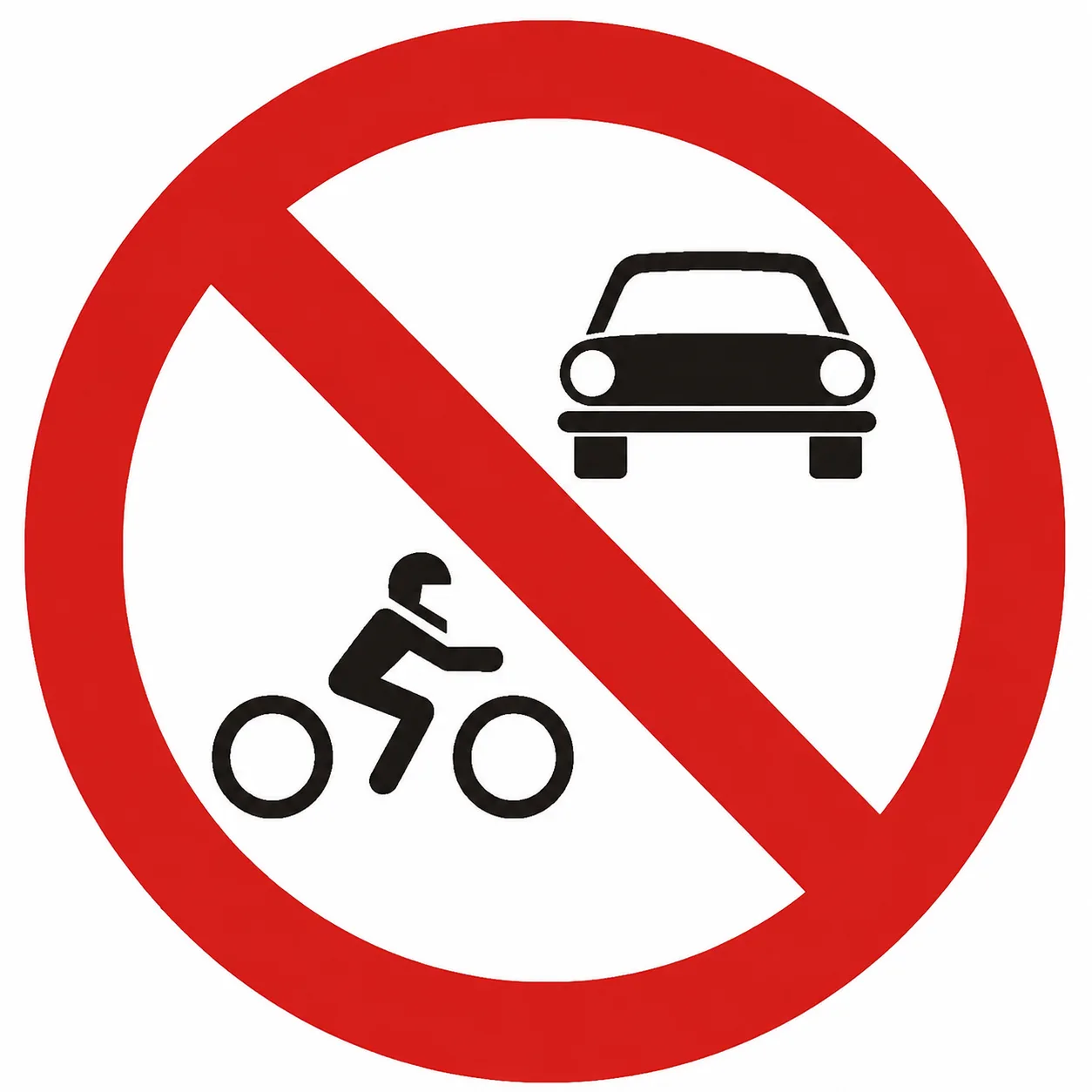
Prohibition indicator
The prohibition indicator shall establish restrictions for traffic participants such as prohibited access, prohibited exceedance or speed limitation. It is addressed to drivers, motorcyclists, cyclists and other participants, and its compliance contributes to road safety and prevents penalties under the law.
In short: prohibited access, prohibited exceedance, speed limits, mass or height and turn or return bans.
Do you need help choosing?
Tell us what you need and we'll send you the offer on the same working day.
For a correct interpretation, always read the additional panels: they specify the duration, distance or categories of vehicles for which the restriction applies. Not all prohibitions concern all vehicles, some indicators being dedicated to certain categories, such as table or height limits. Knowing these signs helps prevent accidents, avoid fines and ensure safe and efficient traffic.
The prohibition indicator shall establish clear traffic restrictions. Discover the meaning, types and rules to be followed for a safe circulation.
The prohibition indicator is a road sign that sets restrictions for traffic participants such as prohibited access, prohibited exceedance or speed limitation. Compliance with this Directive contributes to road safety and prevents penalties provided for in the legislation in force.
Prohibition indicator – what it means, how it is interpreted and why it is important
Prohibition indicator is one of the most important categories of road signs, as it informs drivers, motorcyclists, cyclists and other traffic participants about actions that are not allowed in a given area.
These indicators are located to reduce the risk of accidents, to smooth traffic and to protect both road traffic participants and road infrastructure. Knowledge of the meaning of each prohibition indicator is essential both for experienced drivers and for those at the beginning of the road.
In this guide you will find out what the prohibition indicator represents, how it works, what types exist and how you interpret it correctly in different traffic situations.
What is the prohibition indicator?
Prohibition indicator is a road sign which introduces a restriction or prohibits the conduct of certain manoeuvres or access to an area.
As a rule, these indicators have:
- circular shape;
- red contour;
- white background;
- Black or red symbol inside.
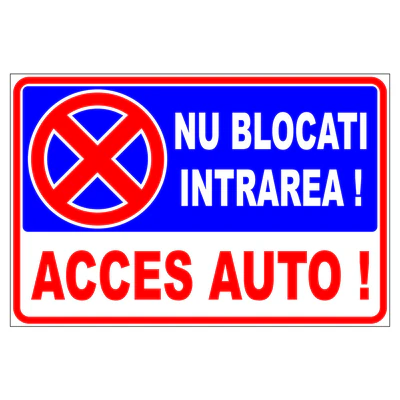
There are also a few exceptions, such as the indicator Access prohibited, which uses a red background and a white horizontal band.
Their aim is to quickly transmit clear, easy-to-recognize information even at higher speeds.
How does the prohibition indicator work?
A prohibition indicator shall have effects from the place where it is located, except in situations where there are additional panels specifying:
- distance to the application of the restriction;
- the length of the restricted sector;
- the category of the vehicles concerned;
- the time intervals at which it applies.
In some cases, the restriction ceases:
- the first stop sign;
- at the next intersection;
- an indicator that cancels the restriction;
- on exit of the locality, depending on the regulation.
The correct interpretation of this information is essential to the avoidance of infringements.
Why is the prohibition indicator important?
Compliance with these indicators shall contribute to:
- traffic safety;
- reduction of accidents;
- protection of pedestrians;
- traffic fluidisation;
- preventing blockages;
- protection of roads and bridges against oversized vehicles.
In addition, ignoring a prohibition indicator may lead to:
- fines;
- penalty points;
- suspension of the permit in certain situations;
- causing serious accidents.
The most common types of prohibition indicators
There are many indicators in this category. Among the best known are:
Access prohibited
It prohibits the entry of all vehicles in that direction.
Overcoming prohibited
It shall prohibit the operation of the overrun on that road sector.
Speed limitation
Set the maximum allowed speed.
Access to motor vehicles not permitted
Allows access only to certain categories of traffic participants.
No left turn
Drivers may not make the left turn at that intersection.
No right turn
It is frequently used in crowded areas or where visibility is reduced.
No return
It prevents return maneuvering in places where it can become dangerous.
Table limitations
Restricts access to vehicles exceeding the maximum permissible mass.
Height limitation
Protect bridges, passages and tunnels.
Prohibiting indicator versus binding indicator
The two categories are often confused.
| Prohibition indicator | Binding indicator |
|---|---|
| Prohibits action | Imposing an action |
| Red contour | Blue background |
| Restrict access or manoeuvres | Force to comply with a direction or rule |
For example:
- Overcoming prohibited means you're not allowed to get over it.
- Mandatory direction ahead means you have to go ahead.
Frequent errors in interpretation of the prohibition indicator
Many drivers make mistakes such as:
- I assume that the restriction is only valid for a few metres;
- ignore the additional panels;
- confuses the prohibited access with the single sense;
- does not observe the stop sign;
- considers that the restriction does not apply if the traffic is reduced.
These misinterpretations may lead to sanctions and dangerous situations.
How do you correctly interpret a prohibition indicator?
For a correct interpretation:
- Observe the shape and symbol of the indicator.
- Checks the existence of additional panels.
- Identify whether the restriction applies to all vehicles or only to certain categories.
- Be careful with the indicators marking the end of the restriction.
- They always respect traffic rules, even if the road seems clear.
Practical example
Example 1
Meet indicator Overcoming prohibited before a curve.
You are not allowed to exceed until the restriction is lifted, even if the visibility seems sufficient.
Example 2
Indicator Speed limitation 50 km/h is located at entry into a locality.
The speed shall be adjusted immediately after passing the indicator.
Example 3
Indicator Access to vehicles above 3.5 tonnes Protect a bridge.
Motor vehicles exceeding this limit shall use an alternative route.
Professional advice
Road safety specialists recommend:
- observation of time indicators;
- adaptation of the speed before the restricted zone;
- avoiding sudden manoeuvres;
- periodic verification of amendments to the Road Code;
- attention should be given to temporary indicators in working areas.
Compliance with these recommendations significantly reduces the risk of incidents.
Recommendations
To drive safely:
- learn the meaning of all road indicators;
- exercise their interpretation in the real context;
- comply with restrictions regardless of traffic conditions;
- permanently adapts the speed and driving style;
- gives priority to safety before the time economy.
Conclusion
Prohibition indicator It is an essential element of road signs and has the role of preventing accidents, organising traffic and protecting traffic participants. Understanding the meaning of each indicator and compliance with the restrictions imposed contribute to safer, more seamless traffic and to avoiding penalties under the legislation.
Commercial benefits
- ✔ Increasing the level of traffic safety.
- ✔ Reducing the risk of fines and penalty points.
- ✔ Correct interpretation of road signs.
- ✔ Compliance with existing legislation.
- ✔ Improving the preparation for the car exam.
- ✔ More responsible and predictable driving.
- ✔ Rapid adaptation to different traffic situations.
- ✔ Reducing the risk of accidents.
FAQ SEO
What is a prohibition indicator?
It's a road sign that prohibits certain maneuvers or access in an area.
How do I recognize a prohibition indicator?
Most are circular, with red outline and white background.
When does it start to produce effects?
From where it is located, if there are no other details.
When does the restriction stop?
At the stop sign, at the intersection or according to the additional panels.
What if I don't respect the indicator?
You can receive fines, penalty points or other penalties provided for in the Code Rutier.
Is the speed limitation indicator a prohibition indicator?
Yeah. It prohibits exceeding the maximum speed recorded on the indicator.
Does the prohibition indicator apply to all vehicles?
Not always. Some indicators are dedicated to certain categories of vehicles.
Why are additional panels important?
They shall specify the duration, distance or categories of vehicles for which the restriction applies.
The prohibition indicator imposes clear restrictions on road traffic and must be respected by all traffic participants. The correct interpretation of these signs contributes to the prevention of accidents, the avoidance of sanctions and the conduct of safe and efficient traffic.