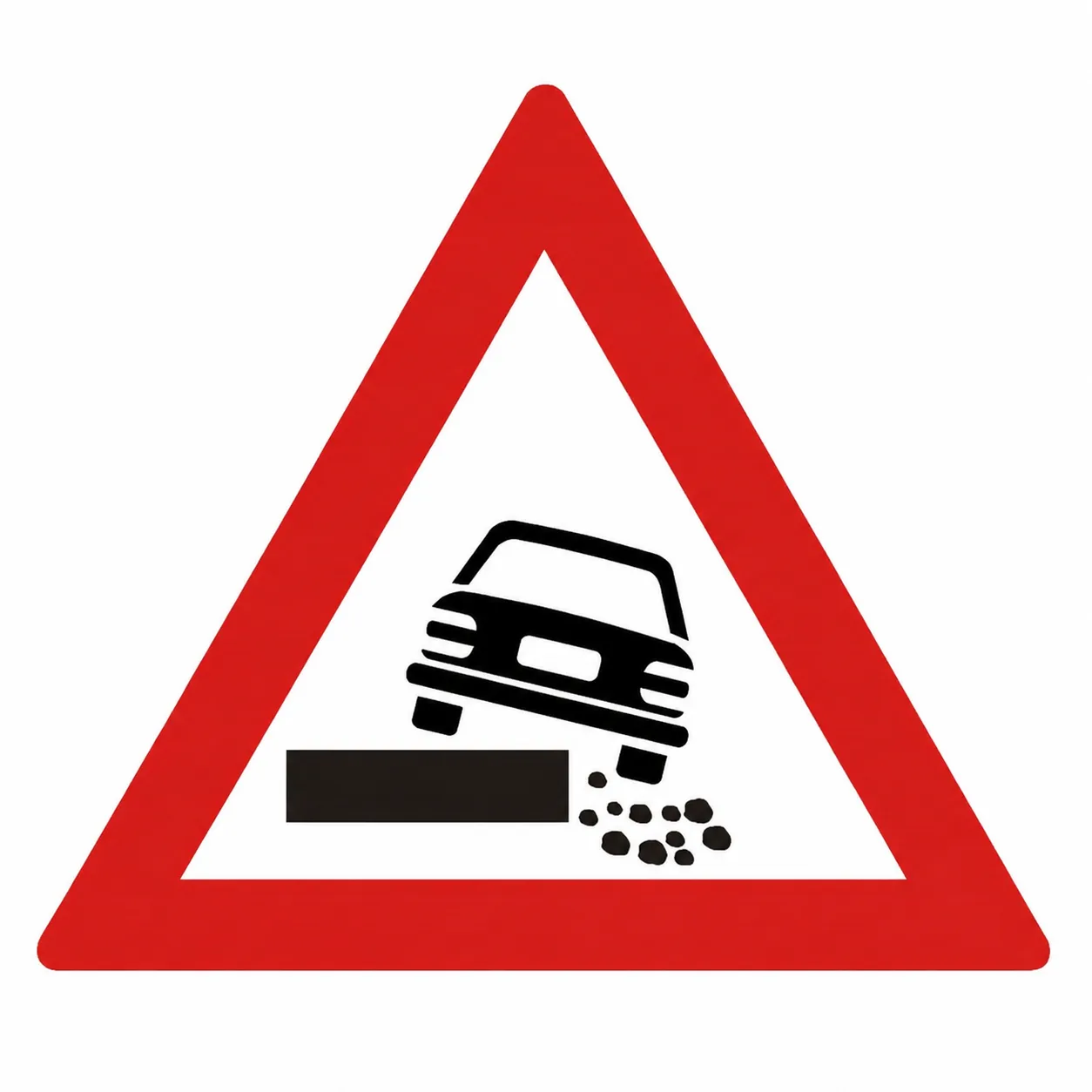
Warning indicator
The warning signal shall be a security sign informing of the existence of a risk or danger in a given area. It warns people before exposure to dangerous situations and is used in industry, construction, public spaces and commercial buildings, contributing to accident prevention.
In short: electrical hazard, toxic substances, flammable material, radiation, slippery surfaces, high temperatures, biological hazard or general hazard.
Do you need help choosing?
Tell us what you need and we'll send you the offer on the same working day.
The choice of the warning indicator shall be based on the type of risk in the area and on the environment of use, indoor, outdoor or industrial. The warning indicators shall be used together with the prohibition, mandatory and life-saving indicators, forming a complete security signalling system. A standard-compliant indicator, properly assembled and periodically checked, especially after deterioration or changing working conditions, supports compliance with occupational safety requirements.
The warning signal indicates a danger and helps prevent accidents. Discover the essential types, use and rules.
Warning indicator
The warning signal shall be a security sign informing of the existence of a risk or danger in a given area. It helps prevent accidents by warning people before exposure to potentially dangerous situations and is used in industry, public spaces, construction sites and commercial buildings.
Warning indicator
Warning indicator is one of the most important elements of modern security signalling systems. Whether we are talking about a factory, a warehouse, a yard, a public institution or even an office building, these indicators have the role of drawing attention to dangers that may affect people's health or safety.
A properly located indicator can significantly reduce the risk of accidents and can contribute to compliance with occupational safety and health rules. In this guide you will find out what a warning indicator is, how it works, where it is used, what types exist and how you choose the right option depending on the environment in which it will be mounted.
What is a warning indicator?
One warning indicator is a graphic sign intended to inform people of the existence of a risk or danger. It does not prohibit or require any action, but warns users to take preventive measures.
According to the European safety warning standards, the warning indicator shall normally:
- Triangle shape;
- yellow background;
- edge and symbol of black color.
This colour combination is internationally recognised and allows the rapid identification of a potential hazard.
How does it work?
The main purpose of a warning indicator is to instantly transmit the existence of a risk.
The person observes the symbol before entering a dangerous area and can adapt his behaviour accordingly.
Example:
- reduction of speed in an industrial area;
- use of individual protective equipment;
- avoid contact with dangerous substances;
- Keeping distance from equipment in operation.
The correct visibility and location are as important as the indicator design.
Why is it important?
The use of warning indicators benefits both employees and employers.
Among the most important are:
- reducing the number of accidents;
- prevention of work incidents;
- increasing the level of risk awareness;
- compliance with legislation on safety and health at work;
- protection of visitors and collaborators.
In many areas, the installation of these indicators is mandatory in accordance with the applicable regulations.
Benefits and Benefits
One warning indicator offers many practical advantages:
- rapid hazard identification;
- increasing safety at the workplace;
- Universal visual communication, regardless of language;
- low cost compared to preventive impact;
- compliance with European and national rules;
- reduction of accident costs and disruptions of activity.
Types and variants
There are numerous types of warning indicators, each intended for a particular risk.
The most common are:
Electrical hazard
It indicates the existence of electrical voltage and the risk of electrocution.
Toxic substances
It warns about the presence of dangerous chemicals.
Flammable material
Indicates the risk of fire or explosion.
Radiation
Used in laboratories, hospitals or special facilities.
Slippery surfaces
Commonly encountered in commercial and industrial spaces.
High temperatures
Signal hot surfaces or industrial equipment.
Biological risk
Used in laboratories and medical units.
General hazard
It warns of a risk that requires further attention.
Differences and comparisons
The warning indicator is often confused with other categories of signalling.
Warning indicator
- informs of the existence of a danger;
- It's triangular in shape.
Prohibition indicator
- prohibit certain actions;
- It has round shape and red contour.
Obligation indicator
- imposes mandatory behaviour;
- is represented by the blue circle.
Saving indicator
- indicate emergency exits or first aid equipment;
- use the green color.
Common errors
Even the best indicators lose their efficiency if they are used incorrectly.
The most common mistakes are:
- fitting to an inappropriate height;
- the location in lighted weak areas;
- use of damaged indicators;
- choosing a wrong symbol;
- the cover of the indicator with furniture or equipment;
- Lack of regular maintenance.
How do you choose a warning indicator correctly?
When choosing an indicator you need to analyze more factors.
Type of risk
The danger must be clearly identified before the symbol is chosen.
Environment of use
UV resistant materials and weather are recommended for outdoor use.
Size
The indicator shall be visible from the required distance.
Material
The most commonly used are:
- PVC;
- aluminium;
- industrial sticker;
- Polycarbonate;
- photoluminescent material.
Compliance with standards
It always chooses products that comply with European standards and safety signals legislation.
Professional advice
Specialists recommend:
- the location of the indicator before the risk zone;
- regular verification of visibility;
- immediate replacement of damaged indicators;
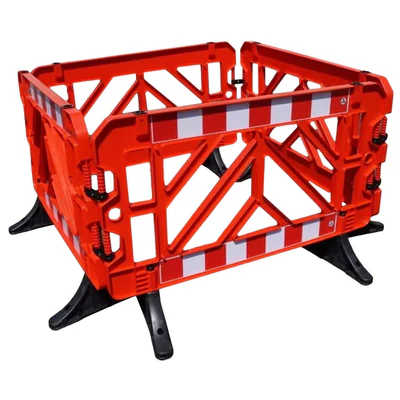
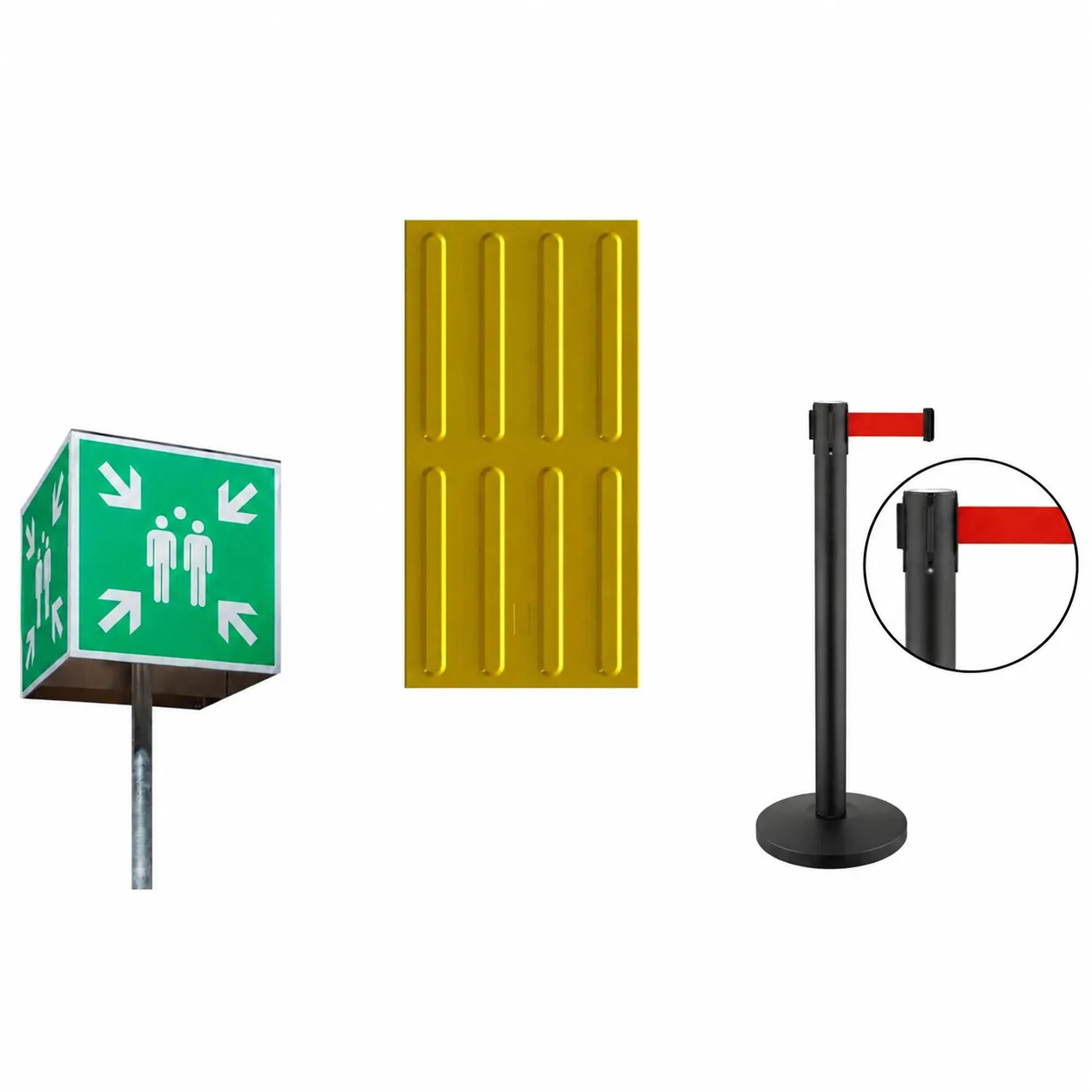
- use together with markings and protective barriers;
- training of employees on the meaning of each symbol.
An efficient signaling is part of a complete accident prevention system.
Real Example
In a logistics warehouse
The indicator warns about the circulation of stackers and reduces the risk of collisions.
In a factory
The signal for electrical voltage warns the staff before access to the technical room.
In a laboratory
The biological risk indicator shall inform the handling of hazardous materials.
In a shopping mall
The sign "Slip surface" prevents accidents during cleaning operations.
Recommendations
For effective protection:
- use standards-compliant indicators;
- adapt the size to the viewing distance;
- regularly check their status;
- complete the signal with instructions and protective equipment;
- update the indicators when changes in activity or risk assessment occur.
Conclusion
Warning indicator is an essential element of any safety and health system at work. By providing rapid and clear information on hazards, it helps to prevent accidents, protect staff and comply with legal obligations. Choosing a suitable indicator, correct location and periodic maintenance are factors that directly influence signaling efficiency and safety level in any work area.
Commercial benefits
- Reducing the risk of accidents and incidents.
- Compliance with labour security legislation.
- Increasing the safety level for employees and visitors.
- Fast visual communication and easy to understand.
- Durable materials for long use.
- Reduced maintenance costs.
- Adaptation for industrial, commercial and institutional applications.
- Availability in multiple dimensions and materials.
FAQ
1. What is a warning indicator?
It is a security sign that informs of the existence of a risk or danger.
2. What color does a warning indicator have?
Usually it is yellow, with symbol and black margin.
3. Where is warning indicators used?
In factories, warehouses, yards, hospitals, laboratories, public buildings and commercial spaces.
4. Are warning signs mandatory?
Yes, in many situations the legislation on safety and health at work requires their use.
5. What materials are recommended?
PVC, aluminium, polycarbonate, industrial sticker and photoluminescent materials.
6. What is the difference between a warning indicator and a prohibition?
The warning indicator shall inform of a danger and the prohibition shall indicate an action which is not permitted.
7. How do I choose the right size?
Depending on the observation distance, the lighting conditions and the mounting location.
8. How often do indicators need to be checked?
Periodically, during security inspections, and immediately after deterioration or modification of working conditions.
A warning indicator shall be used to promptly signal a danger and to prevent accidents by visual information of exposed persons. Choosing an indicator according to standards, correct fitting and periodic maintenance contributes to a safer environment and to compliance with legal requirements for safety at work.