Road sign – Safety, Standardisation and Traffic Efficiency
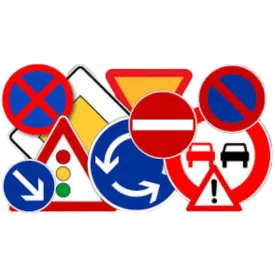
The road indicator is an official means of signalling that transmits information, obligations, prohibitions or warnings to traffic participants. It contributes to traffic safety, organises traffic and helps drivers, cyclists and pedestrians to comply with traffic rules.
In short: the indicators are warning, prohibition or restriction, mandatory, guidance and information, permanent or temporary.
Do you need help choosing?
Tell us what you need and we'll send you the offer on the same working day.
For public roads, private parks or business premises, choose compliant indicators, adapted to the location and type of signal required: permanent for stable rules, temporary for works or time-limited situations. An indicator should be replaced when damaged, has lost its reflective properties or no longer complies with the visibility requirements. The correct interpretation of the meaning of each prevents mistakes and accidents.
Road indicator it is an official means of signalling that transmits information, obligations, prohibitions or warnings to participants in traffic. It contributes to traffic safety, organises traffic and helps drivers, cyclists and pedestrians to comply with traffic rules.
Road sign – discover the main types, the meaning of each and how it contributes to the safety and organisation of road traffic.
Road indicator is one of the most important elements of road infrastructure. Whether you are an experienced driver, a beginner driver, a private parking manager or a company representative, knowing the meaning of the indicators is essential for safe and efficient traffic.
From warning indicators to guidance indicators, each symbol has a well-defined role and transmits information that needs to be understood quickly. In this guide you will find out what a road sign is, how it is classified, which are the main categories, how you choose the right indicators for private spaces and what mistakes are most commonly encountered in interpreting them.
Road sign – complete guide about types, meaning and correct choice
What is a road sign?
Road indicator is a signalling device located on public or private roads to transmit information to participants in traffic. It may warn of hazards, impose binding rules or provide information on the direction of movement.
The indicators are standardised so that messages are quickly recognised, regardless of the area in which a driver is travelling.
The main purposes are:
- increasing road safety;
- accident prevention;
- traffic fluidisation;
- the orientation of participants to traffic;
- protection of pedestrians and cyclists.
How does a road sign work?
A road sign transmits information through a combination of:
- form;
- colour;
- symbols;
- text;
- Standardized dimensions.
For example:
- the triangle indicates a danger;
- the red circle indicates a prohibition;
- the blue circle indicates an obligation;
- the rectangle or square provides useful information or directions.
Reflective materials allow visibility at night, and the location is set so that the message can be observed from time.
Why are road signs important?
Without indicators, circulation would become chaotic and much more dangerous.
The main benefits are:
- reduce the risk of accidents;
- organises the movement;
- inform drivers quickly;
- contribute to compliance with the legislation;
- facilitate traffic orientation;
- protect vulnerable participants.
In the private environment, indicators contribute to the organisation of parks, logistics platforms, industrial areas and access to premises.
Types of Road Signs
Warning signs
Acestea avertizează asupra existenței unui pericol.
Example:
- dangerous curve;
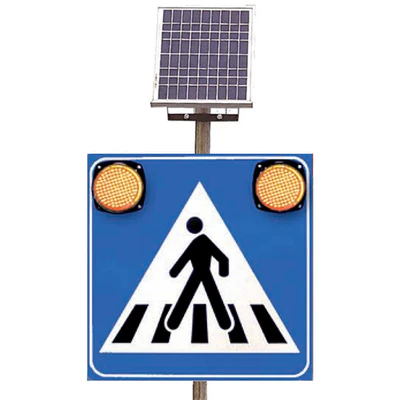
- passage for pedestrians;
- the slippery path;
- Roadway works;
- Animals on the roadway.
Prohibition or restriction indicators
They limit certain manoeuvres or access.
Example:
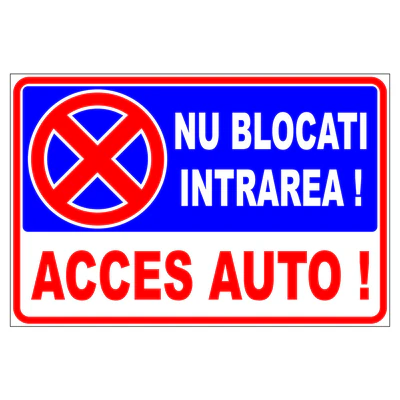
- prohibited access;
- speed limitation;
- the prohibition of overtaking;
- tonnage restriction;
- height restriction.
Mandatory signs
I'm transmitting binding actions.
Example:
- compulsory sense;
- mandatory direction;
- the track for bicycles;
- the obligation of the chains.
Indicators of guidance and information
It helps traffic participants to reach their destination.
Example:
- localities;
- motorway;
- hospital;
- petrol;
- parking;
- aeroport.
Temporary signs
It is used during work or in special situations.
They shall have priority over the permanent indicators when the signaling requires it.
Advantages of using compliant indicators
When manufactured according to standards and correctly located, the indicators offer many benefits.
Main advantage:
- high visibility;
- weather resistance;
- long duration of use;
- compliance with the legislation;
- reduction of incidents;
- effective guidance;
- professional image for companies and institutions.
Road sign for private spaces
More and more companies use indicators and off-roads.
These are recommended for:
- parking spaces;
- deposits;
- industrial halo;
- logistics centre;
- gassing;
- commercial centres;
- residential assemblies;
- schools;
- hospitals;
- hoteluri.
Among the most commonly used are:
- Parking;
- Forbidden access;
- Entry;
- Output;
- Speed limit;
- Single sense;
- Passing pedestrians;
- Reserved place.
Difference between permanent and temporary indicators
| Permanent indicator | Temporary indicator |
|---|---|
| long-term use | limited use |
| Fix mount | Provisional assembly |
| standard background | yellow background in many situations |
| permanent infrastructure | works or events |
Frequent errors in indicator interpretation
Even experienced drivers may misinterpret certain signs.
The most common mistakes are:
- ignoring temporary indicators;
- the confusion of the obligation with the recommendation;
- non-observation of tonnage limits;
- misinterpretation of priority;
- ignore the additional localized signs.
How do you choose a road sign correctly?
If you want to purchase indicators for a company or private property, it is recommended to check:
- the purpose of the use;
- the size required;
- the visibility;
- Reflective material;
- UV resistance;
- the catch system;
- compliance with applicable standards.
A specialised supplier may recommend the optimal solution depending on traffic and location type.
Professional advice
For effective results:
- Mount the indicators at the recommended height;
- avoid obstacles that reduce visibility;
- periodically inspect their condition;
- replace the damaged indicators;
- use certified reflective leaflets;
- comply with the technical rules on location.
Real example of use
In a commercial parking lot
The single direction and speed limit indicators reduce the conflicts between motor vehicles and pedestrians.
In a logistic park
Signalling for trucks optimizes flows and reduces handling time.
In a residential complex
Access, parking and speed indicators contribute to a safer environment for tenants.
Recommendations
When choosing a road sign:
- opt for certified products;
- verify the reflecting materials;
- adapt the size to the observation distance;
- comply with the legislation and standards in force;
- cooperate with a manufacturer or distributor with experience.
Conclusion
Road indicator is an essential element for safety and organisation of movement, both on public roads and in private spaces. Choosing compliant indicators, fitting them correctly and understanding the meaning of each symbol contributes to risk reduction, compliance with rules and efficient traffic.
BENEFICII COMERCIALE
- Increasing safety for drivers and pedestrians.
- Compliance with legal requirements on signalling.
- Efficient organisation traffic in private parking lots and premises.
- Accident reduction and incidents.
- Excellent visibility Thanks to the reflective materials.
- Long duration of use in varying weather conditions.
- Improving the professional image of the company or institution.
- More efficient management the flows of vehicles and persons.
FAQ
What is a road sign?
A road sign is an official means of signaling that transmits rules, warnings or information to traffic participants.
What are the main types of road signs?
The most important categories are: warning, prohibition, obligation, priority, guidance and information.
Who determines the significance of road indicators?
Significance shall be governed by the applicable road legislation and technical standards.
Can indicators also be mounted on private properties?
Yeah. Parking spaces, warehouses, residential assemblies and commercial spaces may use indicators adapted to their own needs.
What materials are the road signs made of?
The most commonly used are aluminium, galvanised steel and high-visibility reflective sheets.
Why are the indicators reflective?
To remain visible at night and under reduced visibility.
What is the difference between a warning indicator and a prohibition?
The warning indicator shall indicate a possible danger, while the prohibition indicator shall establish a restriction or a prohibition.
When should a road sign be replaced?
When damaged, it has lost its reflective properties or no longer complies with the visibility requirements.
Road indicator is an essential element of road safety, as it quickly transmits rules, warnings and information to all traffic participants. Choosing compliant indicators and their correct interpretation contributes to accident prevention and efficient movement.