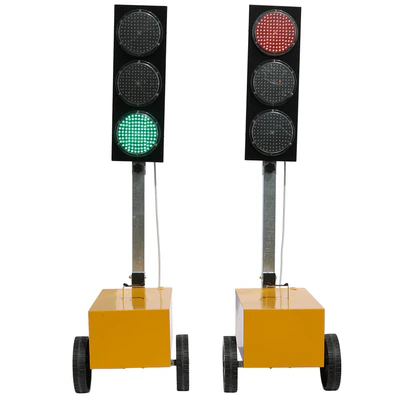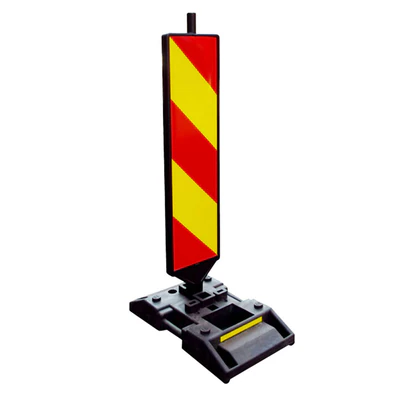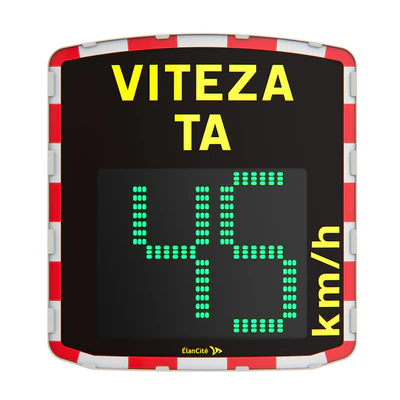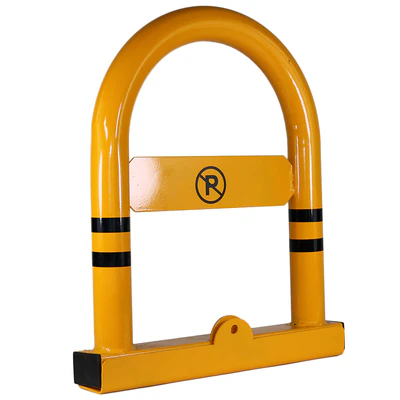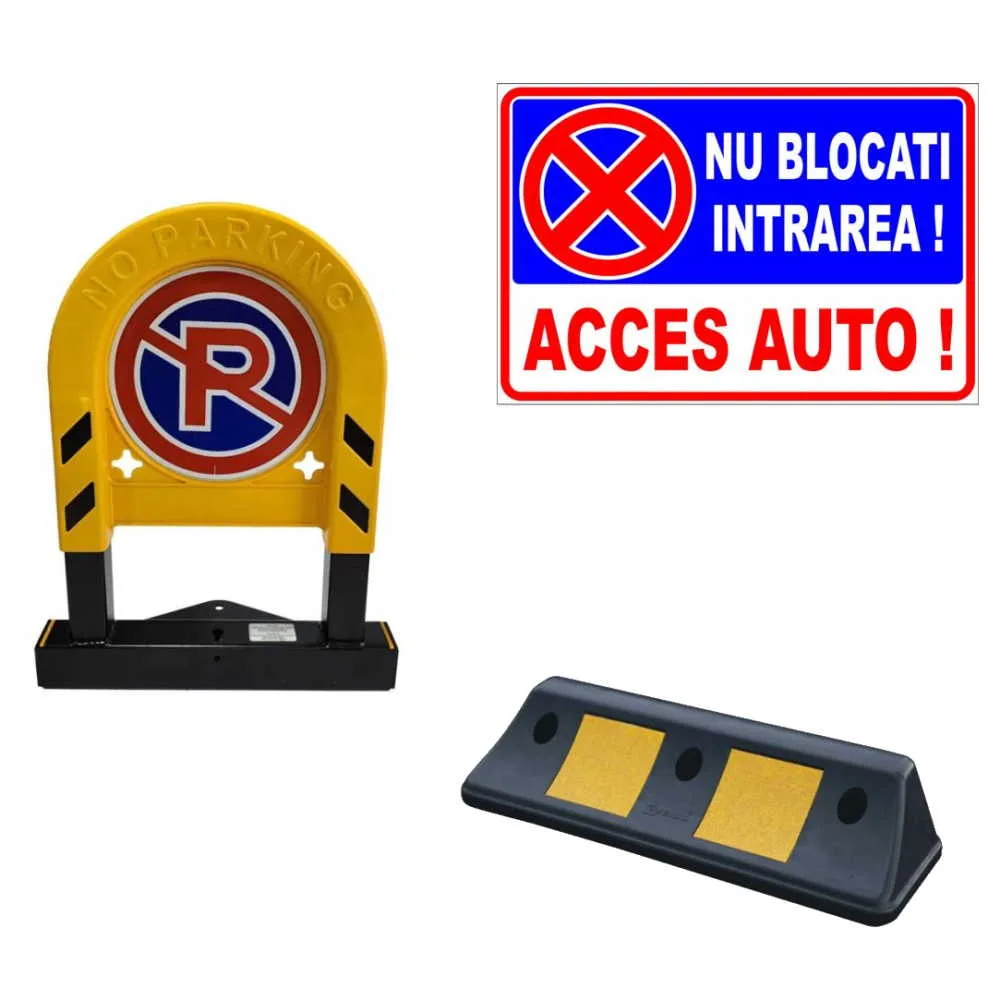
With signalling and steering
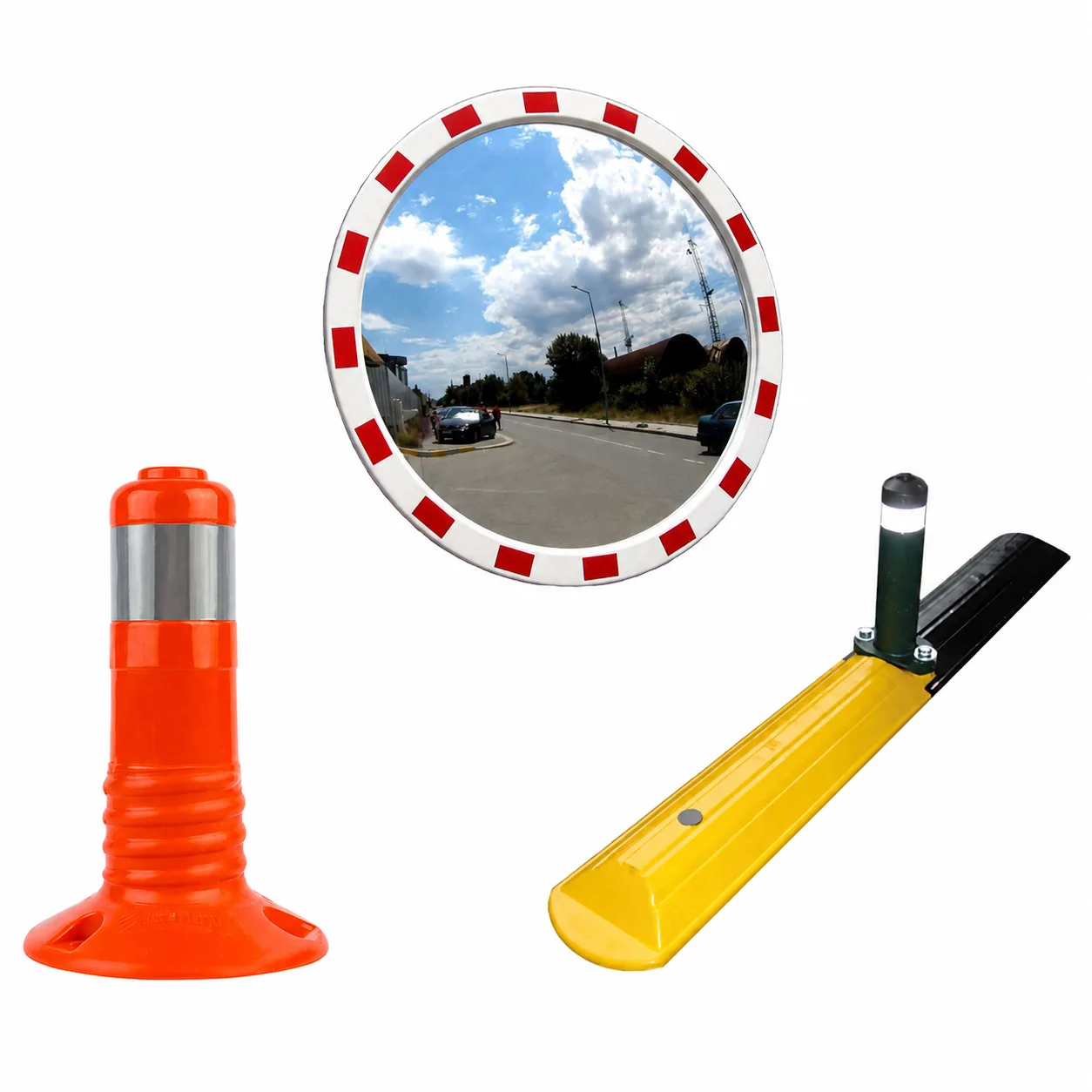
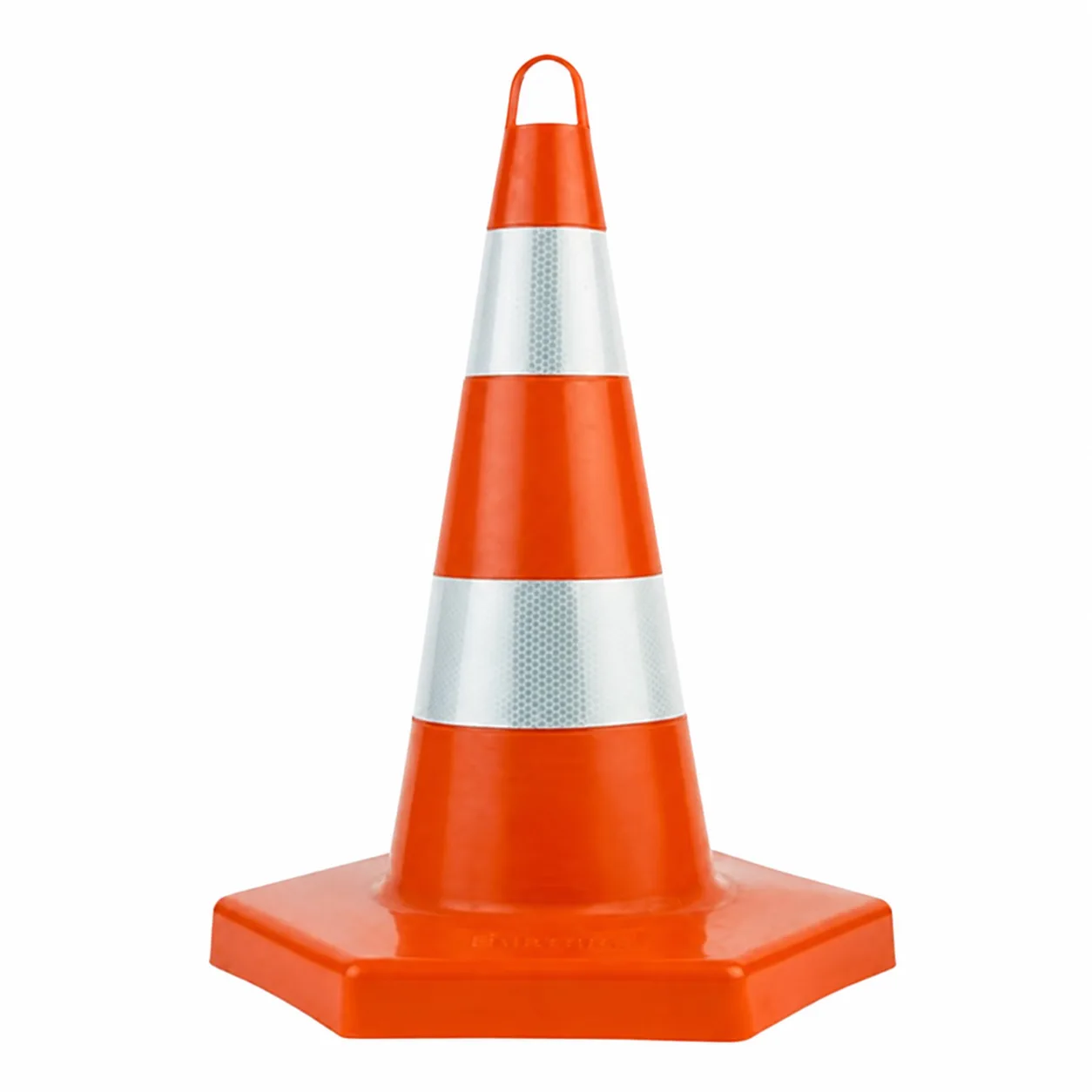
The Signalling and Steering Cone is a equipment used for the delimitation of work areas, traffic management and accident prevention. Visible from a distance and quickly to be located, it is found on yards, in parking lots and wherever the traffic is to be temporarily organised.
In short: flexible PVC cones, based on rubber, reflective, LED or parking, chosen after traffic, height and stability.
Do you need help choosing?
Tell us what you need and we'll send you the offer on the same working day.
The choice of the cone depends on the location of the use, the intensity of the traffic and the necessary visibility. For use at night, reflector or LED cones are suitable, and rubber base provides better stability than simple PVC models. The height and stability of the cone shall be adapted to the application. The cones can be filled with delineation bars, panels or LED lamps for clearer signaling.
The signaling and steering cone contributes to the organisation of traffic and to the safety of working areas. Discover its types, advantages and uses.
Signaling and steering cone is a road signalling equipment used for the delimitation of work areas, traffic management and accident prevention. Due to high visibility and rapid assembly, it is one of the most efficient solutions for the temporary organisation of movement.
With signalling and steering
Signaling and steering cone is one of the most widely used equipment for the temporary organisation of traffic and the protection of persons in risk areas. We meet him on site, in parking lots, near road works, at public events or in industrial spaces, where he contributes to maintaining a safe and orderly flow.
Although it seems to be a simple accessory, the choice of an appropriate con influences the visibility, safety of traffic participants and the efficiency of the delimitation of an area. In this guide you will find out what is a signaling and steering cone, how it works, what types exist, what are the advantages of each and what criteria need to be taken into account to make the right choice.
What is a signal and steering cone?
Signaling and steering cone is a temporary signalling device, normally made of PVC, rubber or flexible plastic, intended to mark and delineate surfaces where circulation is to be restricted or redirected.
Due to the intense orange color and reflective bands, it can be easily observed both day and night.
It is used for:
- delineation of the yards;
- road maintenance work;
- traffic management;
- the organisation of the parks;
- restriction of access;
- signalling obstacles;
- the organisation of sporting or public events;
- protection of industrial areas.
How does it work?
The principle is simple: the cone creates an immediate visual landmark, causing drivers or pedestrians to adapt their route.
Depending on the application, several cones may form:
- the colour of the circulation;
- protection zone;
- provisional routes;
- Access-prohibited spaces.
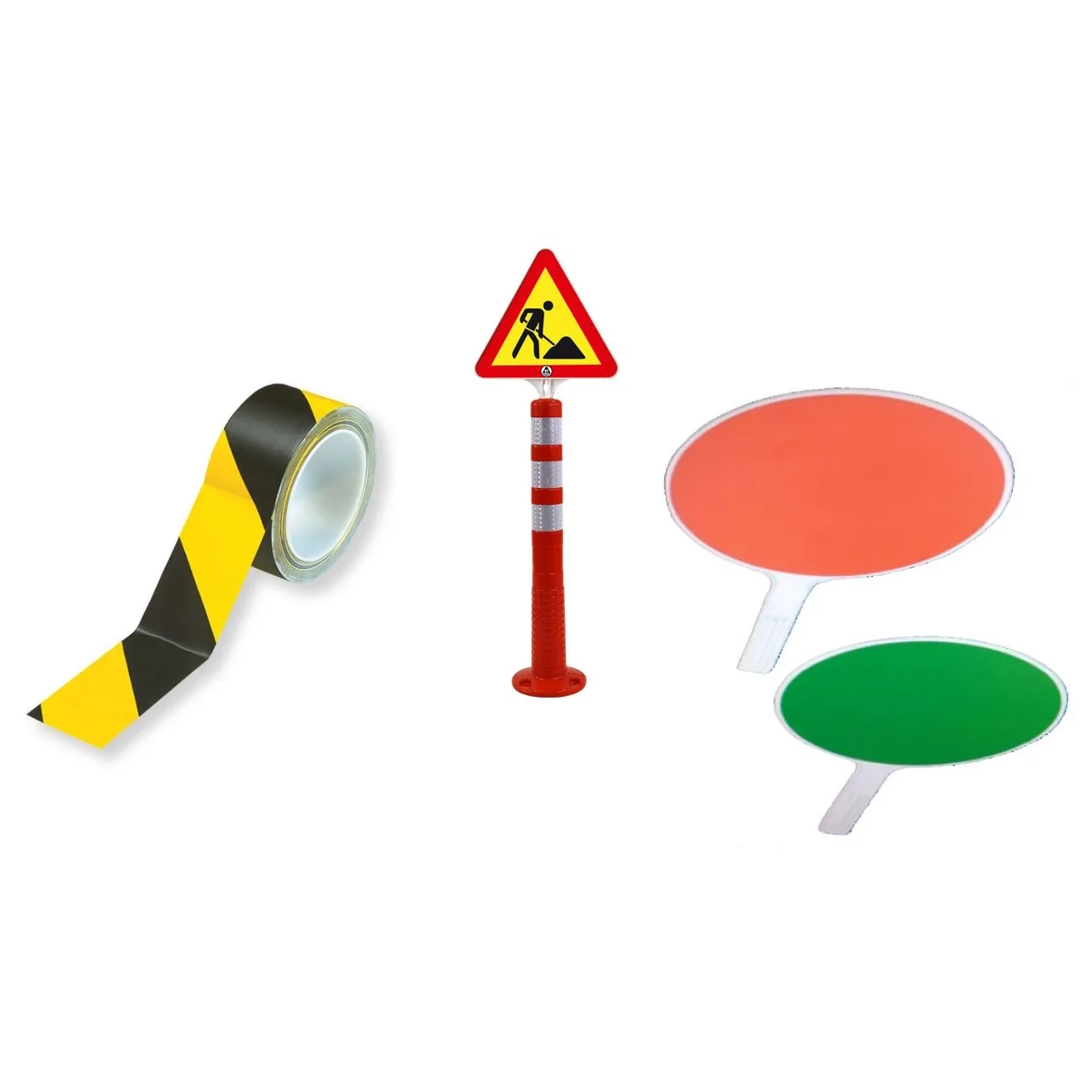
Professional models allow the installation of additional accessories:
- delineation chains;
- telescopic bars;
- information panels;
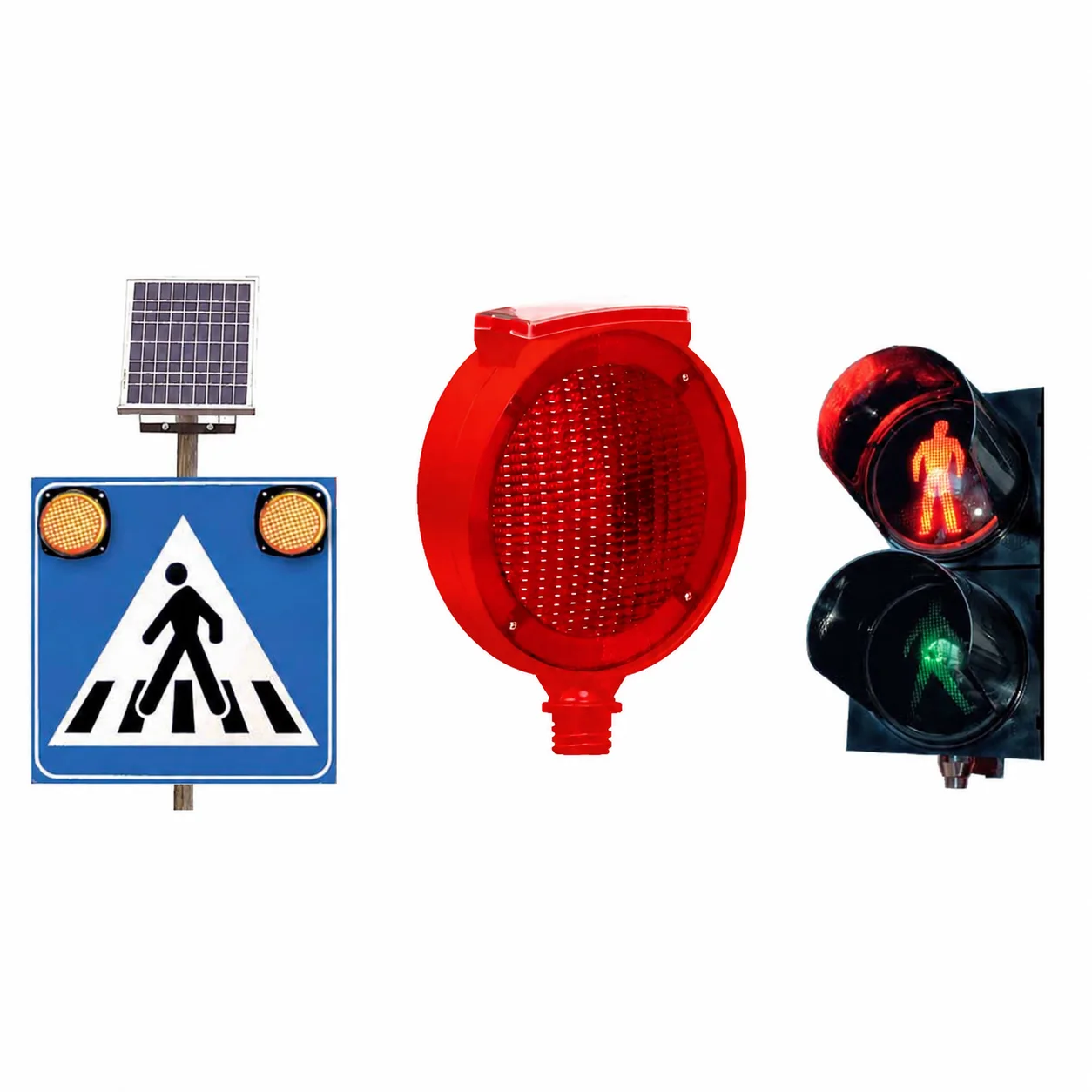
- LED warning lamps.
Thus, the system becomes even more visible under conditions of intense traffic or reduced visibility.
Why is it important?
Use of a signalling and steering con reduces the risk of accidents and contributes to compliance with safety rules.
The benefits are evident in many areas:
- road works;
- constructions;
- logistics;
- industry;
- commercial parking;
- airports;
- public institutions;
- emergency interventions.
A clear delimitation helps traffic participants to quickly identify route changes and react in a timely manner.
Benefits and Benefits
Compared to other temporary signalling solutions, the cones offer many advantages.
High visibility due to fluorescent colors and reflective strips.
Quick assemblyNo special tools.
Reduced weight, which facilitates transportation.
Impact resistancebecause flexible materials absorb shocks.
Weather resistance, including rain, UV radiation and extreme temperatures.
Reduced cost compared to the efficiency offered.
Easy storage, by overlapping several cones.
Types and variants
There are several models, each for specific applications.
Flexible PVC cones
- shock-resistant;
- return to the initial form;
- recommended for intensive traffic.
Rubber-based cones
- very good stability;
- external use;
- wind resistance.
Reflective cones
- excellent visibility at night;
- recommended for public roads.
LED cones
- ideal for night interventions;
- increase visibility under difficult weather conditions.
Parking cones
- small dimensions;
- used for the organisation of car spaces.
Differences and comparisons
With simple vs. with reflectorizer
Simple cones are sufficient for use in private or well-lit spaces.
Reflective models are recommended for public roads and works carried out during the night.
Cone PVC vs. rubber
PVC offers flexibility and reduced weight.
The tire provides superior stability under strong wind conditions.
With standard vs. with accessories
The models compatible with chains, panels or lamps allow for complete delineation systems.
Common errors
Among the most common errors are:
- the choice of an insufficient height;
- the use of cones without reflecting elements at night;
- location at incorrect distances;
- the use of damaged products;
- the choice of unstable models for the outside;
- ignoring the requirements of temporary alerting legislation.
How do you choose right?
Before purchasing it is recommended to analyse:
Place of use
Inside or outside?
Traffic volume
Road, pedestrian or industrial traffic?
Visibility required
Is the work going on day or night?
Cone height
The most commonly used variants are:
- 30 cm;
- 50 cm;
- 75 cm;
- 100 cm.
Stability
For outdoors, heavy-duty models are recommended.
Professional advice
Signalling specialists recommend:
- the exclusive use of certified accounts;
- periodic verification of reflective bands;
- regular cleaning to maintain visibility;
- replacement of deformed products;
- the combination of cones with panels and barriers for full signaling.
Real example of use
A constructor delimits a excavation area using reflective cones and warning tape.
A shopping centre organises the movement in the parking lot during the modernization work.
A logistics company separates the colors intended for stackers from those for pedestrians.
At a sporting event, the cones are used to track and restrict the access of the spectators.
Roadside intervention teams use LED lighting cones for rapid signalling of accidents.
Recommendations
For optimal results:
- choose products made from resistant materials;
- verify the existence of compliant reflective bands;
- adapt the size to the desired application;
- use compatible accessories for complex delimitations;
- comply with the rules on road signs and safety at work.
Conclusion
Signaling and steering cone is one of the most effective solutions for the temporary delimitation of risk zones and the organisation of movement. The simplicity of use, the low cost and the excellent visibility transforms it into an indispensable equipment for construction sites, parks, public roads, industrial spaces and events. Choosing a model adapted to the environment and complying with the location rules contributes significantly to increasing safety and reducing the risk of incidents.
BENEFICII COMERCIALE
- Reducing the risk of accidents in work areas.
- Rapid and efficient delimitation of temporary spaces.
- Excellent visibility during day and night.
- Impact-resistant products and difficult weather conditions.
- Reduced maintenance cost and long service life.
- Easy transportation and storage due to overlapping design.
- Compatibility with chains, panels and warning lamps.
- Suitable solution for construction sites, parks, industry and institutions.
FAQ
What is a signal and steering cone?
It is a device used for the temporary delimitation of working areas and safe traffic steering.
What materials are the signal cones made of?
The most common materials are flexible PVC, polyethylene and heavy-duty rubber.
When is a reflective cone recommended?
For work carried out on public roads, during the night or under reduced visibility.
What height should a signal cone have?
Depends on the application. Models between 50 and 75 cm are the most used for road traffic.
Can they be used inside?
Yeah. They are frequently used in warehouses, industrial halls and underground parking.
Are they weather resistant?
Professional models are designed for long-term outdoor use and are resistant to UV, rain and temperature variations.
Can accessories be mounted on cones?
Yeah. Many models allow the assembly of chains, delimiting bars, panels or LED lamps.
What is the lifetime of a signal cone?
Depending on the material and the conditions of use, it may exceed a few years in normal operation.
Signaling and steering cone is an essential solution for the temporary delimitation of working areas and the organisation of safe traffic. Choosing a robust, clearly visible and application-friendly model contributes to accident prevention and compliance with signalling rules.