Kilometre marker
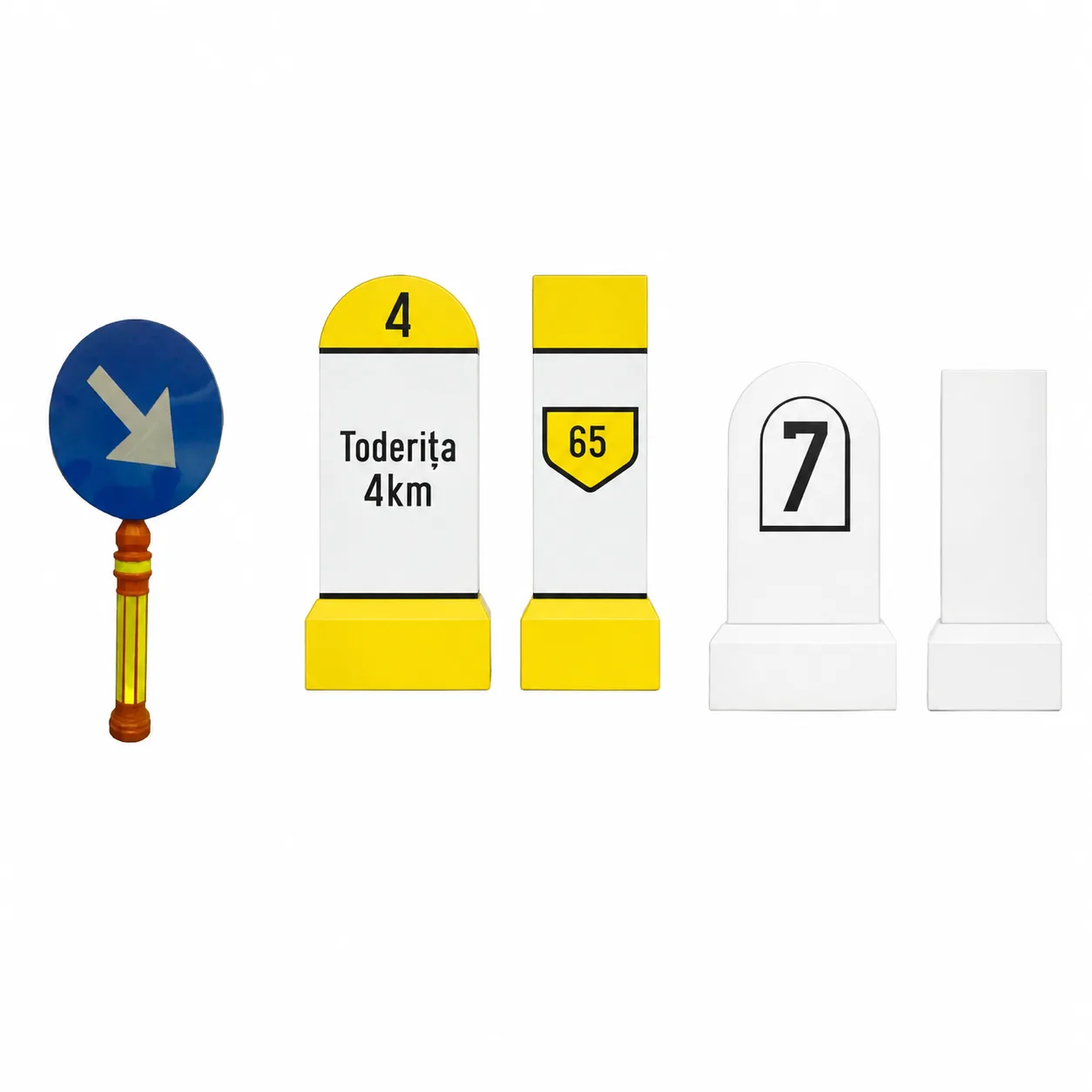
The kilometre terminal is a road signalling element indicating the exact position on a road, highway or other means of communication. It helps to provide guidance, infrastructure management and rapid location in emergency situations or technical interventions, being an indispensable benchmark of the road network.
In short: there are classic, hectometric, reflective, concrete or composite markers, chosen after the type of road.
Do you need help choosing?
Tell us what you need and we'll send you the offer on the same working day.
When choosing a kilometer markers, it matters the type of road, the material, the visibility, the duration of operation and compliance with the standards. Concrete terminals offer stability, and composites are a sustainable alternative for infrastructure projects. Reflective elements increase visibility at night and under reduced visibility and a correct mounting ensures the position and stability of the marker throughout the use.
Kilometre marker – full guide about role, types, materials and uses. Find out how you choose the right solution for road signage.
Kilometre marker
O kilometre marker is a road signalling element used to indicate the exact position on a road, highway or communication road. This helps to provide guidance, infrastructure management and rapid location in emergency situations or technical interventions.
Kilometre marker – the essential role in road guidance and management
Kilometric Borna is one of those infrastructure elements that many drivers observe without paying too much attention. However, these milestones are indispensable for the management of the road network, the orientation of traffic participants and rapid intervention in the event of incidents.
Regardless of whether we are talking about highways, national roads, counties or industrial projects, the mileage terminals provide accurate information about the location on the route. In this guide you will find out what a marker kilometer is, how it works, what types exist, what are the advantages of its use and what criteria should be taken into account when choosing the right model.
What's a marker kilometer?
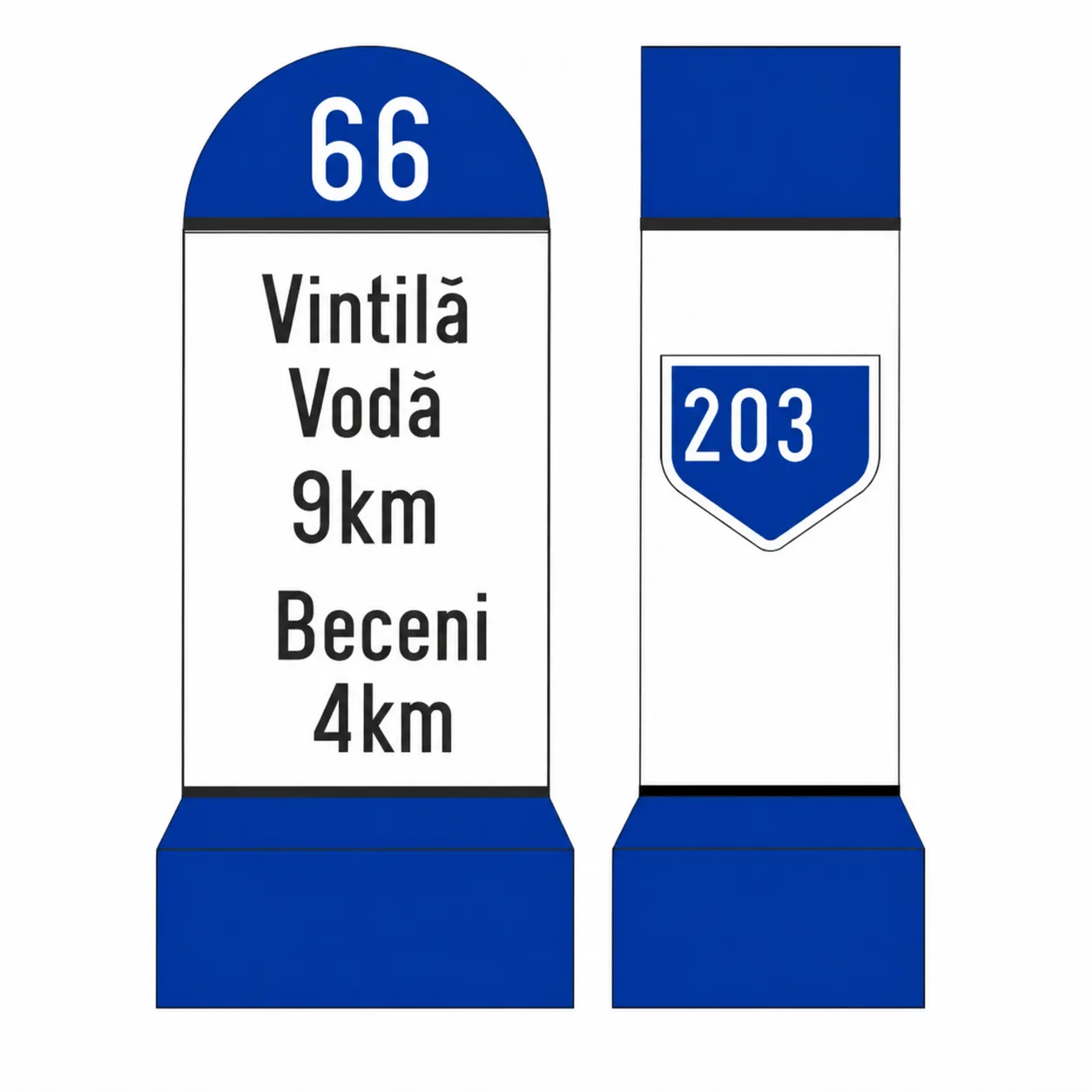
O kilometre marker is a fixed benchmark located along a road to mark distance from a reference point established by the road manager.
On its surface, information shall be entered such as:
- km;
- the hectometre;
- the road code;
- other elements of administrative identification.
This information allows the exact location of a position on the track.
How does a kilometer marker work?
The operation is simple but extremely efficient.
Each terminal is located at a predetermined distance according to the road project.
As follows:
- each km shall be marked;
- between kilometres there may be hectometric terminals;
- The position can be identified with very high precision.
This system is used by:
- Road managers;
- Road Police;
- intervention teams;
- maintenance firms;
- emergency services;
- the utility operators.
Why is it important a marker kilometer?
The roll of a marker kilometer exceeds the mere indication of distance.
It contributes to:
- rapid location of accidents;
- coordination of emergency interventions;
- identification of the road sectors;
- management of maintenance work;
- monitoring of infrastructure;
- the orientation of participants to traffic.
In the absence of these benchmarks, the exact identification of a location would require GPS coordinates or approximate descriptions, which may delay interventions.
Advantages of using mileage terminals
The use of these elements brings many benefits.
Rapid identification
The exact position can be communicated in just a few seconds.
Increasing road safety
Emergency services arrive more quickly at the scene of incidents.
Efficient administration
Road maintenance is organised on well-defined sectors.
Durability
Modern models stand out for years in difficult environmental conditions.
High visibility
Reflective materials allow identification at night.
Types of km markers
Depending on use and project, there are several variants.
Kilometre markers classic
They are located every kilometer and indicate the position on the route.
Hectometre markers
Mark every 100 meters and offer a much more precise location.
Reflectorizing terminals
It incorporates reflective elements for increased visibility during the night.
Concrete terminals
They have a very high resistance and are frequently used on public roads.
Composite material terminals
They are lighter, corrosion resistant and require reduced maintenance.
Material used
Currently, the mileage terminals can be made from:
- Vibropresed concrete;
- reinforced concrete;
- technical polymers;
- glass fibre;
- composite materials;
- Special resins.
Each material shall be chosen according to the intended operating environment and duration.
Kilometre marker vs. hectometric marker
Although they are similar, the two have different purposes.
Kilometric Borna
- Mark each kilometer;
- provide general guidance;
- is used on all categories of roads.
Hectometric Borna
- Mark every 100 m;
- allows for accurate location;
- is used in particular for intervention and administration.
Where are the mileage terminals used?
These benchmarks are found in many areas.
The most common applications are:
- motorways;
- national roads;
- roadways;
- municipal roads;
- railways;
- technological paths;
- forest roads;
- Logistic platforms;
- industrial zone;
- energy infrastructure.
Frequent mistakes in choosing a marker kilometer
An inappropriate choice may reduce the duration of use or efficiency.
The most common mistakes are:
- the choice of a material unsuitable for the environment;
- lack of reflective elements;
- non-compliant dimensions;
- incorrect location;
- the use of hard-to-read inscriptions;
- assembly without complying with technical standards.
How do you choose a right marker kilometer?
For a sustainable investment it is recommended that you consider some important issues.
Road Type
Requirements differ between highways and local roads.
Material
Choose material resistant to:
- ice cream;
- UV radiation;
- wetting;
- Mechanical impact.
Visibility
Reflective elements increase traffic safety.
Duration of operation
Premium models can function efficiently for decades.
Compliance with standards
Always check compliance with the technical rules and specifications applicable to the project.
Professional advice
Specialists recommend:
- use of certified materials;
- periodic verification of the inscriptions;
- replacement of damaged items;
- assembly according to the technical design;
- choice of products with high visibility.
These measures contribute to maintaining a safe and efficient road infrastructure.
Real example of use
A driver involved in an accident on the highway can communicate simply:
"Accident to kilometre 154."
This information allows intervention crews to quickly reach the exact location.
In the case of maintenance work, managers may immediately identify the sector where repairs or inspections are to be carried out.
Recommendations
When choosing a marker kilometer:
- opt for weather resistant products;
- verify the readability of the inscriptions;
- choose reflective variants for intensive roads;
- comply with the specifications of the infrastructure project;
- cooperate with suppliers specialised in road signalling equipment.
Conclusion
Kilometric Borna is an apparently simple but indispensable element for the efficient functioning of road infrastructure. It facilitates the orientation, rapid location of incidents and proper management of roads. Choosing a quality model, made of durable materials and assembled to standards, contributes to increased safety and reduced long-term maintenance costs.
Commercial benefits
- Precise location on any road sector.
- Increasing the efficiency of emergency interventions.
- Durable product, resistant to difficult weather conditions.
- Reduced long-term maintenance costs.
- Excellent visibility day and night.
- Compliance with infrastructure project requirements.
- Fast installation and minimum maintenance.
- Suitable solutions for public roads and industrial projects.
FAQ
What's a marker kilometer?
It is a roadmark that indicates the exact position on a road by marking the kilometer and sometimes the hectometre.
What's a marker kilometer for?
It helps to guide, locate incidents, manage infrastructure and coordinate interventions.
What materials are the mileage terminals made of?
The most commonly used materials are concrete, reinforced concrete, glass fibre and composite materials.
What is the difference between marker kilometers and hectometric boundary?
The kilometre terminal marks every kilometre, and the kilometre every 100 meters.
Are the mileages mandatory?
On roads managed in accordance with technical rules, they are part of the infrastructure identification and signalling system.
How long does a mile marker last?
Depending on the material and operating conditions, the life span may exceed 20–30 years.
How to mount a marker kilometer?
The assembly shall be carried out in accordance with the technical design and the specifications of the road manager in order to ensure the correct position and stability.
Why are reflective elements important?
They increase visibility at night and under low visibility, increasing road safety.
Kilometric Borna is an essential roadmark indicating the exact position on a road and facilitating the orientation, management of infrastructure and rapid interventions. The choice of a sustainable, visible and standard-compliant model contributes to the safety and efficiency of the road network.