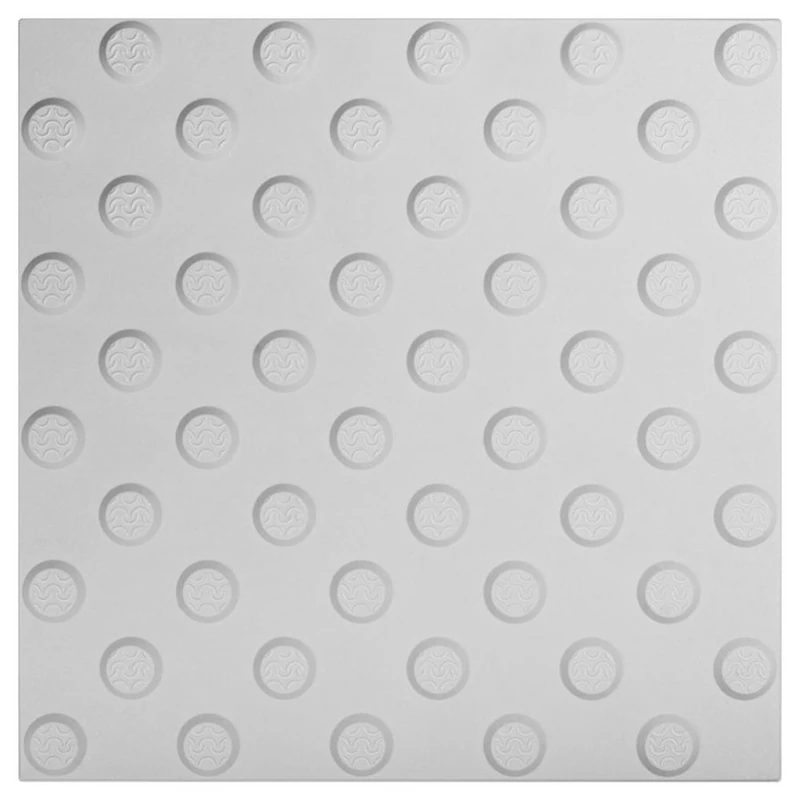
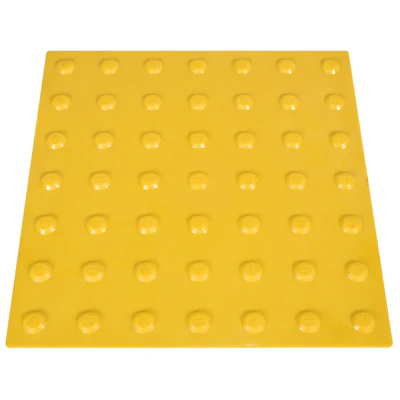
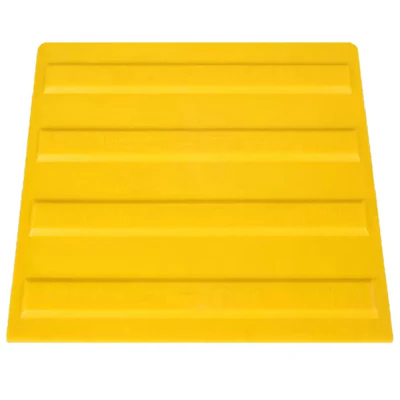
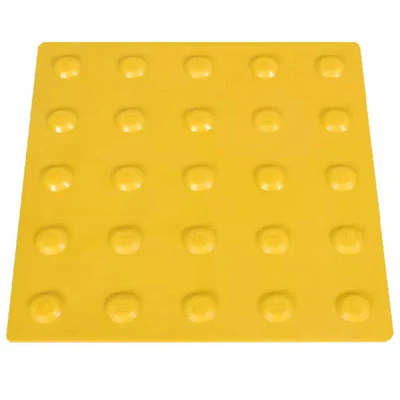
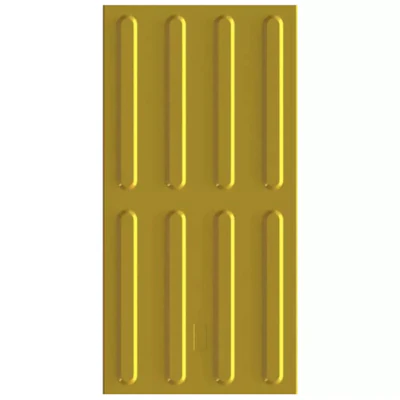
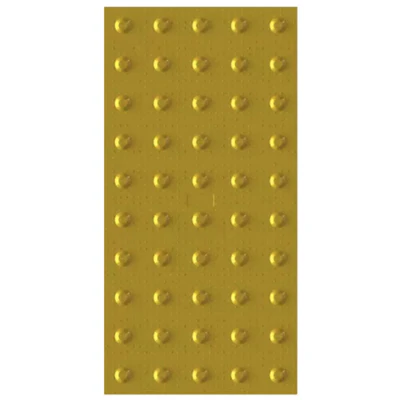
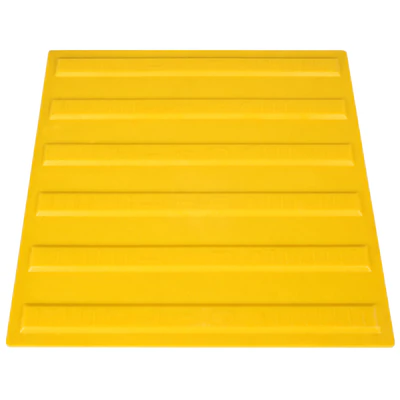
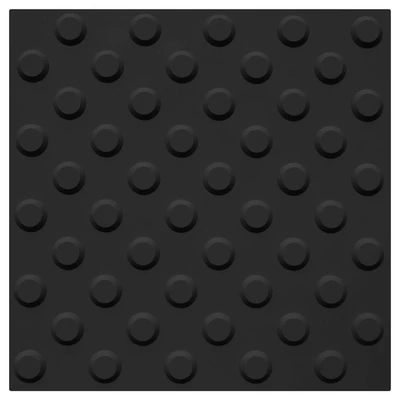
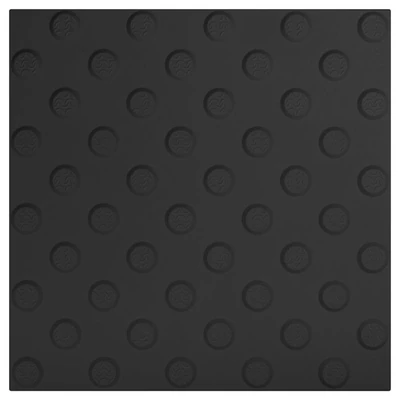
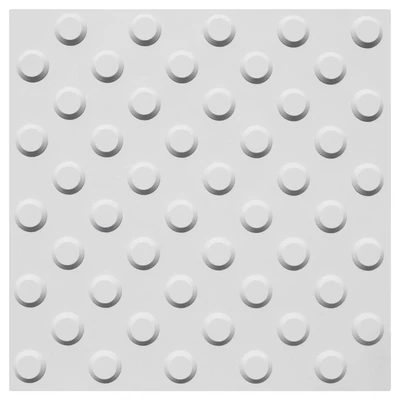
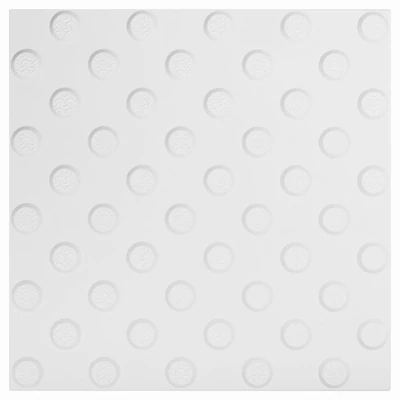
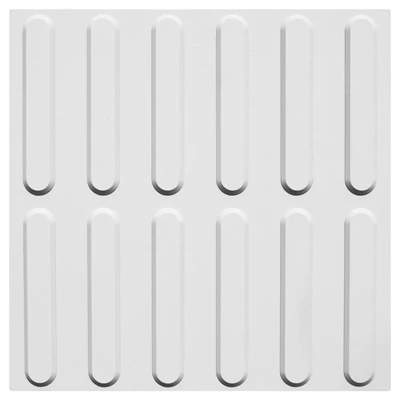
Surface touch warning visually odded people grey RAL 7035 300×300 mm is an essential element in modern urban infrastructure to create accessible, safe and compliant with international pedestal traffic standards. This product is designed to Tactile warning surface – a physical marking with special protuberances that gives touch to the blind or visually impaired, helping them to recognise changes in level, dangerous crossings or points of attention in the field.
While many tactile marking solutions are sold in contrasting colors such as yellow or red for maximum visibility due to ADA/ISO standards, version Grey RAL 7035 offers a discreet aesthetic option ideal for urban design projects, architectural interior or public spaces where you want chromatic harmony without compromising functionality.
What is a Tactile Warning Surface
O Tactile warning surface is a modular block with standard dimensions of 300 × 300 mm equipped with tactile reliefs (e.g. domes or protuberances). These reliefs are specially designed to be detected by the cane of an unseen or by the foot sole, providing physical signals of proximity to risk areas or changes in routes.
Essential technical specifications
Dimensions: 300 × 300 mm — standard format adopted on a large scale for compatibility with paving grids and pedestal flows.
Color: Gri RAL 7035 — neutral tuna, suitable for urban projects and public spaces with aesthetic requirements.
Marking type: Warning — Touch protuberances positioned to signal hazards or level changes.
Material: High-traffic and weather resistant polymer — designed for increased durability for external and internal use.
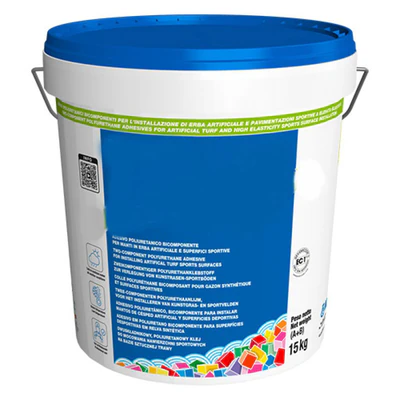
Install: Fixing on asphalted, concrete or paved surfaces, usually with special adhesive or mastic for pavement.
Where to use
Tactile surface warning visually odded people 300×300 mm is used in:
- pedestrian crossings and intersections for signalling hazardous areas;
- entrances to metro stations, trams, buses or railway stations;
- steps and ramps to warn of level differences;
- public and institutional spaces where accessibility is mandatory (hotels, malls, hospitals).
Key benefits for the user
- Improve Pedestrian Safety by tactile hazard warning;
- Increased accessibility for persons with impaired vision;
- Adaptable design thanks to the grey color RAL 7035, perfectly integrated into different projects;
- Simple and compatible installation with standard paving systems;
- Durable and durable material heavy traffic and varied weather conditions;
- Compliance with good practice Accessible Infrastructure (ISO/FDIS 23599 recommends touch surfaces for guidance and warning).
Why choose the grey version RAL 7035
Although contrasting colours (yellow, red) improve the visibility for users with a residual view, RAL 7035 grey offers aesthetic advantages for minimalist architecture and urban design, without compromising the tactical function. In projects where chromatic uniformity is desired — e.g. on sidewalks mounted with decorative paving or inside public buildings — this shade becomes ideal for harmonization with other finishes.
How to install correctly
- Surface preparation: Clean, level and dry the assembly area.
- Adhesive application: It uses a adhesive paving/mastic compatible with the basic type — concrete, asphalt or stone.
- Precise assembly: The plate shall be applied firmly in the desired position, ensuring complete contact between the rear and the substrate.
- Final verification: After the adhesive has been reinforced, check the alignment and tactile adhesion.
Customer-oriented commercial benefits
- Instant solution for accessibility according to modern standards;
- Reduces the risk of accidents for blind persons;
- Discrete integration in urban and interior design;
- Robust material for heavy traffic;
- Reduced costs with long-term maintenance;
- Compatible with standard paving systems;
- Simple to install, no special equipment.
FAQ
1. What is a tactical warning surface?
It is a touch plate designed to visually alert blind people about dangers or level changes through touch signals under their feet or sticks.
2. Where is this tactile plate used?
It is installed at pedestrian crossings, at stairs, transport platforms or other areas where land changes can be dangerous.
3. Why the size 300×300 mm?
This is a recognised standard dimension for interoperability and efficiency in infrastructure and pavement projects.
4. How does it fit right?
The surface shall be prepared, a pavement adhesive applied and the plate firmly attached to the substrate.
5. Is it suitable for the outside?
Yes — has durable traffic-resistant material and various weather conditions.