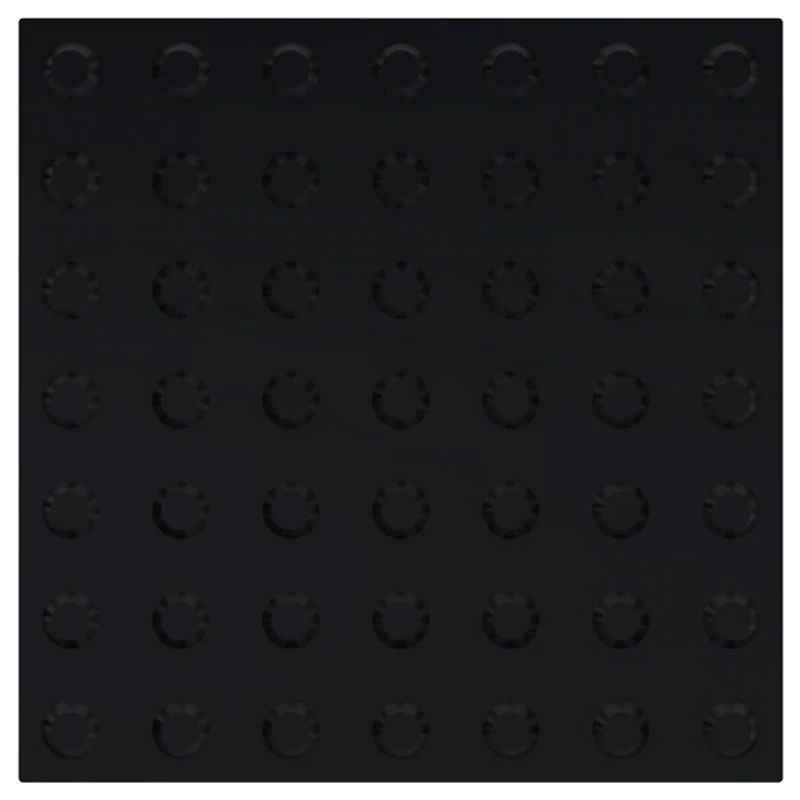
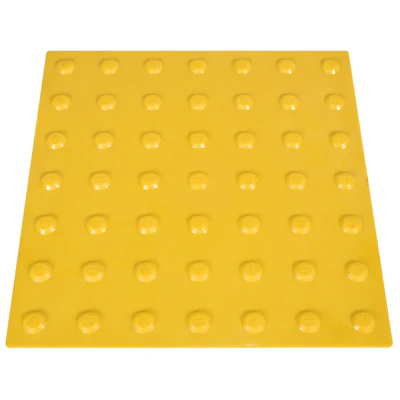
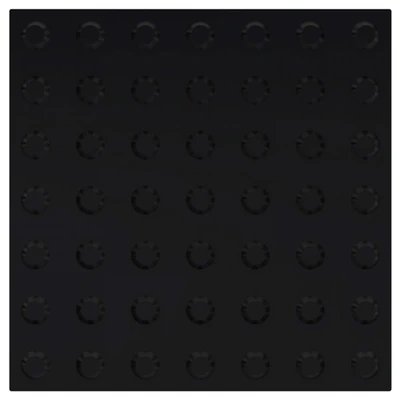
Touch mark for visually impaired people STOP 300x300 mm black is an essential element in modern infrastructure designed to increase the safety of people with visual impairments in public and private spaces. This type of tactile warning pavement clearly signal the stopping areas, the hazards or the changes in direction, being indispensable in accordance with the current accessibility rules.
In a context in which urban mobility standards are constantly evolving, the choice of STOP touch mark 300x300 mm It's not just a legal obligation anymore, it's proof of responsibility and professionalism.
What is a STOP tactile marking and why is vital
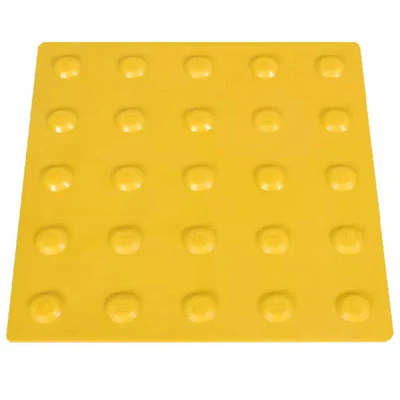
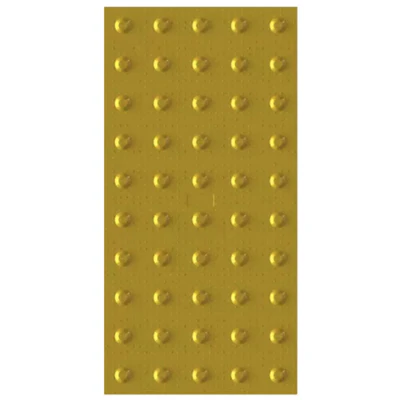
STOP-type tactile markings are special relief plates (usually with prominent points) which transmit a clear message by touch: ‘Stop – there is a danger or a major change'.
Main role of STOP tagging
- warns before pedestrian crossings
- point out the edge of the peran
- indicates proximity to stairs or ramps
- Mark areas with increased risk
By using this tactile marking for visually impaired people 300x300 mm blackspace becomes intuitive and secure for all users.
Technical specifications – performance and sustainability
Dimensions and optimised design
- Standard size: 300x300 mm
- Color: black – effective visual contrast in certain applications
- Model: relief type point (STOP / warning)
Resistant material
Manufactured from high-quality technical materials:
- Polyuretan / PVC industrial / hard composite
- high resistance to heavy pedestrian traffic
- excellent wear behaviour
Essential properties
- surface anti-slip
- UV resistance and temperature variations
- compatible with the interior and exterior
- Quick installation (adhesive or mechanical)
Where the STOP 300x300 mm touch mark is used
This tactile warning marking for visually odded people is used in multiple media:
Public spaces
- stations, airports, metro stations
- sidewalks and pedestrian areas
- pedestrian crossings
Commercial buildings
- shopping malls
- office buildings
- hotels and restaurants
Institutions
- hospitals
- Schools and universities
- public institutions
Industrial zone
- logistics
- deposits
- spaces with intense traffic
Compliance and standards
The marking shall comply with the requirements of:
- European accessibility rules
- standards for touch pads for visually odded people
- legislation on inclusion of persons with disabilities
The implementation of this type of product contributes directly to compliance with the rules of urban and architectural accessibility.
Competitive advantages over other products
Excellent vision and tactical perception
The well-defined relief allows rapid detection with the cane or heel.
Long life
There are years of intensive use without significant degradation.
Simple assembly
It can be installed quickly, without complex equipment.
Versatility
Compatible with concrete, asphalt, gravel, metal or wood.
How this product affects the user experience
Imagine a blind person sailing in a crowded space. Without tactful markings, every step is uncertain. With this black STOP touch marking 300x300 mm, experience becomes predictable and safe.
It is the difference between:
- insecurity and control
- risk and prevention
- chaos and clear guidance
Installation – fast and efficient
Installation methods
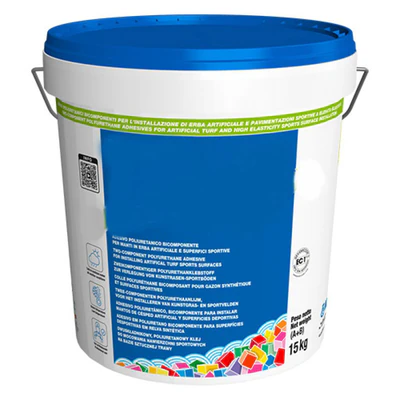
- Polyurethane adhesive glue
- mechanical fixing (screws/dilutions)
Recommendations
- surface to be cleaned and degreased
- assembly to be carried out on flat surfaces
- compliance with standard separations between plates
Maintenance and sustainability
Touch markings require minimum maintenance:
- regular cleaning with water and detergent
- Occasional verification of fixation
- high resistance to dirt and traffic
Commercial benefits for the customer
- Increases user safety
- Reduces the risk of accidents
- Compliance with the legislation in force
- Improve brand image
- Easy to install and maintain
- Efficient long-term cost
- Adaptable to any type of project
FAQ – Frequently Asked Questions
1. What is STOP tactile marking?
It is a type of tactile embossing point type that warns about a danger or need to stop.
2. Where does this type of marking stand?
In areas such as pedestrian crossings, stairs, towers or pedestrian intersections.
3. Is it legally binding?
In many public and commercial projects, yes – according to accessibility rules.
4. Can it be mounted outside?
Yes, it is weather resistant and UV radiation resistant.
5. How long does it last?
It can last for years under intense traffic conditions.
6. Is it slippery when it rains?
No, the surface is anti-slip.
7. Can it easily disassemble?
Yes, depending on the fixation method used.