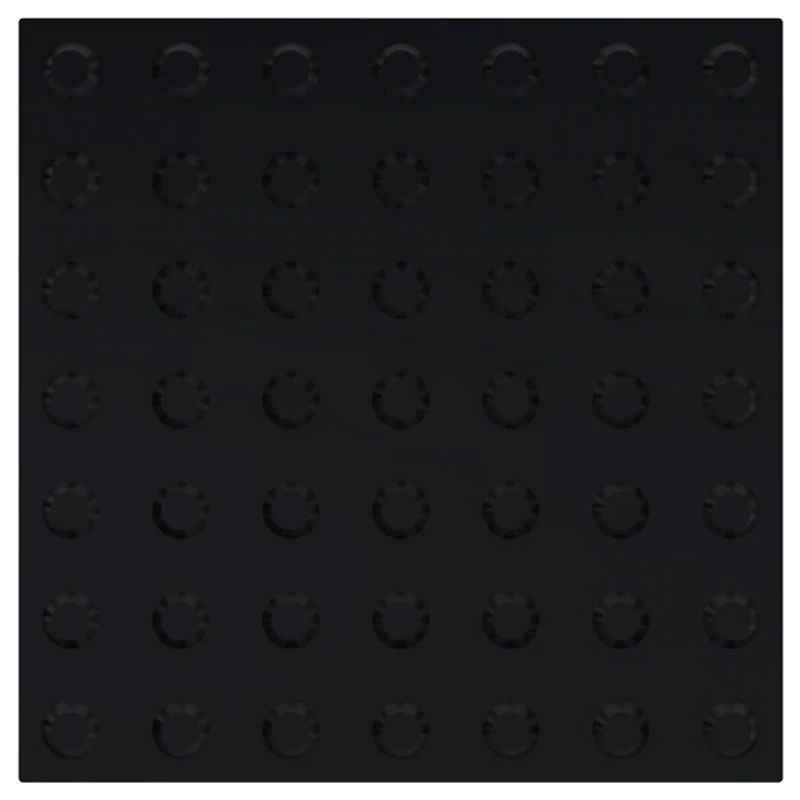
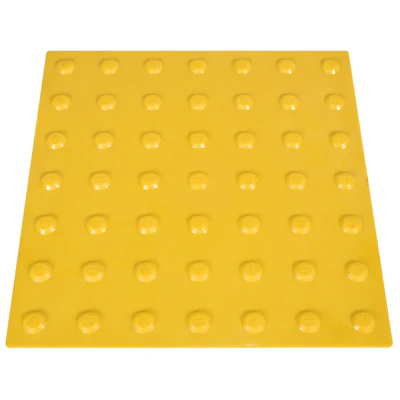
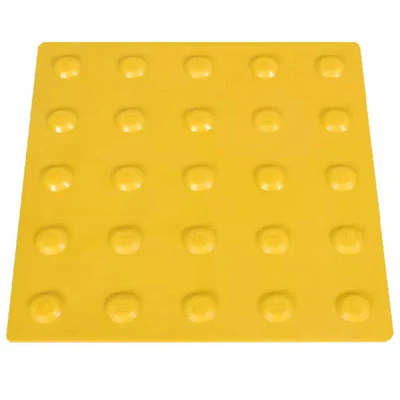
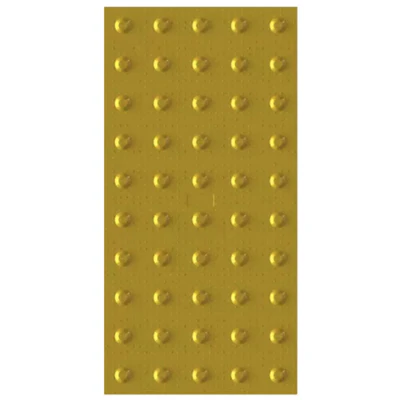
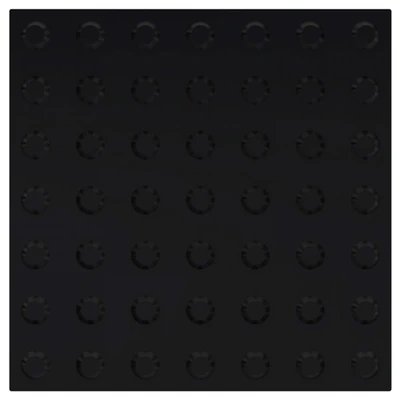
In a world where accessibility is no longer optional, but mandatory, Touch mark for visually odded people STOP 400x400 mm black becomes an essential element for any modern space. Whether we are talking about public buildings, shopping centres, institutions or industrial spaces, this type of tactile warning marking provides real safety, effective guidance and compliance with current standards.
This product is specially designed to transmit a clear signal of stopping people with impaired vision, using touch relief + visual contrast, exactly as the international accessibility rules recommend.
Why a STOP touch mark is essential in any modern project
In the absence of adequate guidance systems, blind people face real risks: stairs, ramps, dangerous areas or changes in level. This is where the role of the STOP touch mark 400x400 mm.
By his design with Truncated cottons in relief, the product instantly sends a clear message at touch:
???? "Warning! Stop. There's a danger or a change
It is commonly used in:
- front of the stairs
- margin of the peranes
- Crossing zones
- start of ramps
- entrances/exitments from buildings
Technical characteristics that make the difference
Optimum size for visibility and efficiency
Format 400x400 mm offers a generous contact surface, being ideal for:
- intensive traffic
- Wide areas of circulation
- installation in modular system
Black color – strong contrast and elegance
Color intense black:
- create excellent contrast with open surfaces
- discreetly integrates into modern design
- resists visual wear well
Standardised relief touch surface
Tactiles are designed according to ergonomic requirements:
- easily detectable with white cane
- quickly perceived under the ground
- Uniform arrangements for consistency
Durable material for intensive traffic
Manufacture from resistant materials (technical polymers or industrial composites):
- abrasion resistance
- excellent behaviour at varied temperatures
- long-term
Where the STOP 400x400 mm touch mark is used
Public spaces and institutions
- city planning
- hospitals
- Schools and universities
- airports and airports
Commercial buildings
- malls
- supermarkets
- office buildings
Urban infrastructure
- walk
- Pedestrian crossings
- Transport stations
Industrial and logistical spaces
- production hal
- deposits
- Controlled access areas
How it works in practice
When an unseen person reaches the surface of this STOP tactile warning marking, feel the difference in texture immediately.
The stick detects the obstacles raised
The mole perceives vibration and change
The brain associates the model with "stopping"
The result?
✔ accident prevention
✔ Safe orientation
✔ increased autonomy
Real advantages for customers
- Reduces the risk of accidents in critical areas
- Increases accessibility of the building
- Contribution to legal compliance
- Improve the image of the company
- Demonstrate social responsibility
- Quickly and efficiently installed
- Minimum maintenance required
Fast and flexible installation
The STOP tactile marking may be mounted by:
- Professional adhesive glue
- mechanical fixing (depending on model)
It may apply to:
- concrete
- Fat
- granite
- asphalt
The correct assembly ensures:
- Maximum adhesion
- sustainability
- Optimum operation
Difference from other tactile markers
Not all markings are the same. Version 400x400 mm black STOP is differentiated by:
- large size → faster detection
- standardized design → universal recognition
- premium material → superior resistance
- wide application → inside + outside
Compliance and standards
The product is designed in line with the accessibility requirements used in:
- Modern public projects
- constructions in accordance with European standards
- urban infrastructure works
It is compatible with:
- complete tactile guidance systems
- routes for visually odded people
- integrated accessibility solutions
Commercial benefits
- ✔ Increases user safety
- ✔ Reduces legal liability
- ✔ Optimize traffic flows
- ✔ Improve visitor experience
- ✔ Increases perceived value of building
- ✔ Small investment, major impact
- ✔ Quick implementation in any project
FAQ – Frequently Asked Questions
1. Where should the STOP touch mark be mounted?
Before dangerous areas: stairs, crossings, ramps or edges.
2. Is this type of marking mandatory?
In many public or modern projects, yes – it is part of accessibility requirements.
3. He's holding out on you?
Yes, if it is made of resistant materials and mounted correctly.
4. Can it be mounted on the gravel or concrete?
Yeah, it's compatible with most hard surfaces.
5. What is the difference from the orientation markings?
The STOP markings warn, the orientation markings guide the direction.
6. How long does the installation take?
Usually a few minutes per plate, depending on the method.