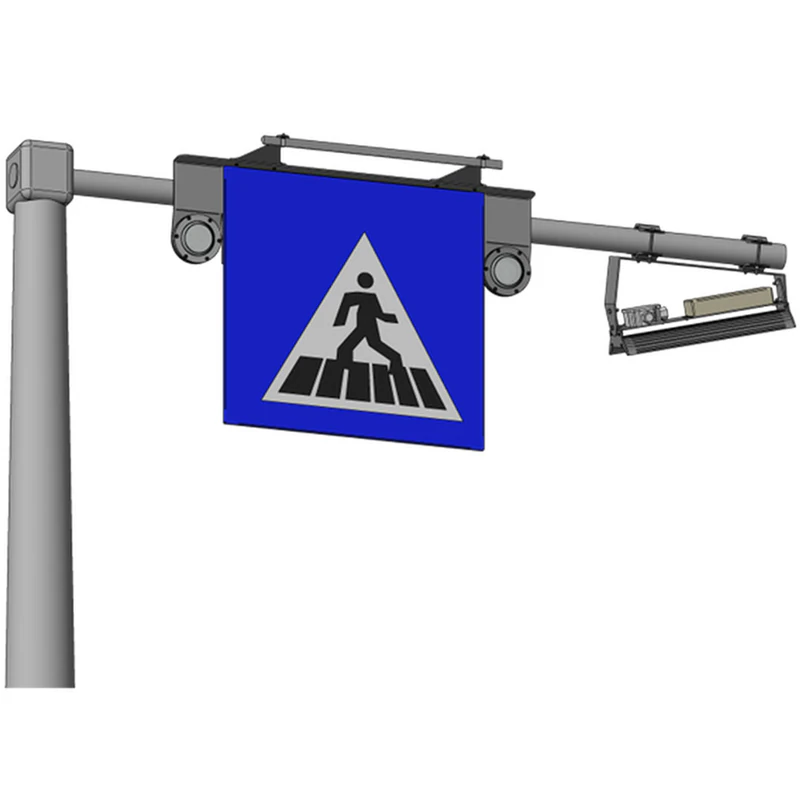
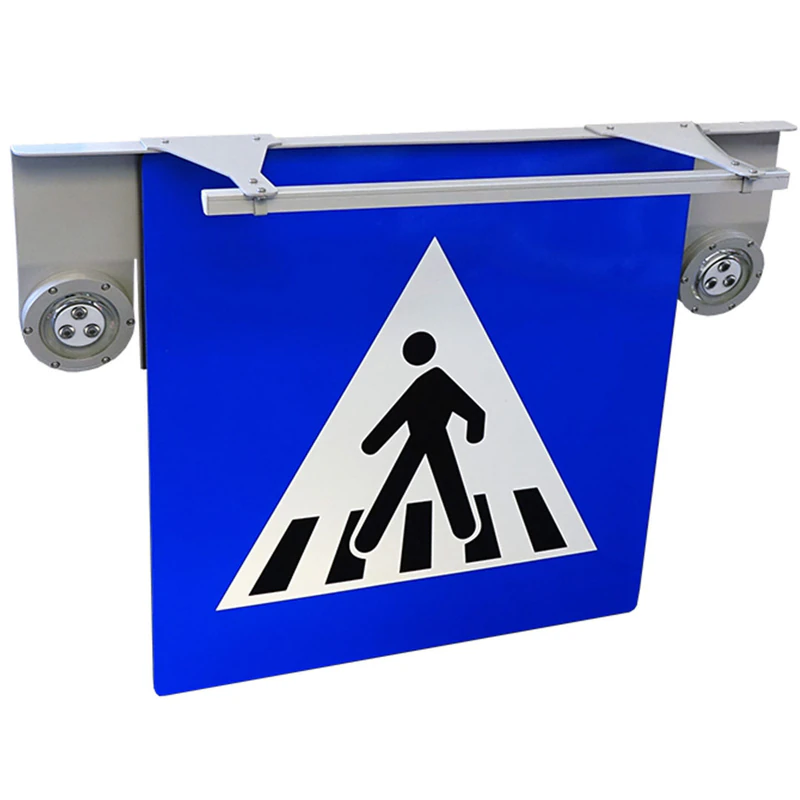
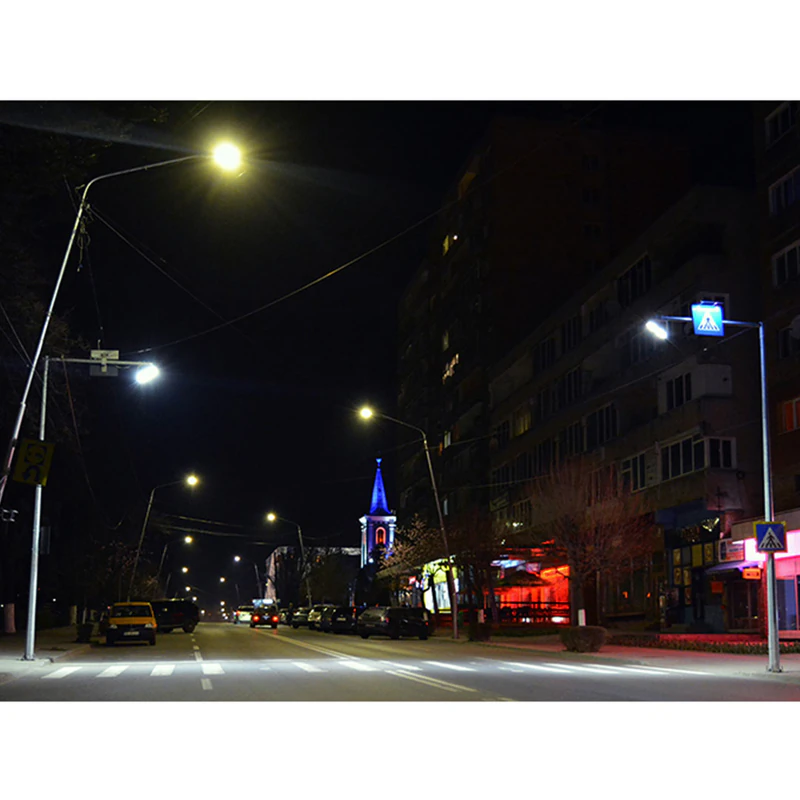
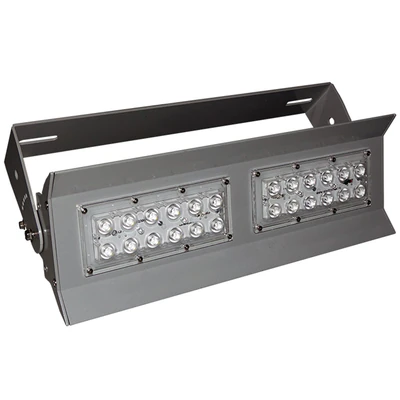
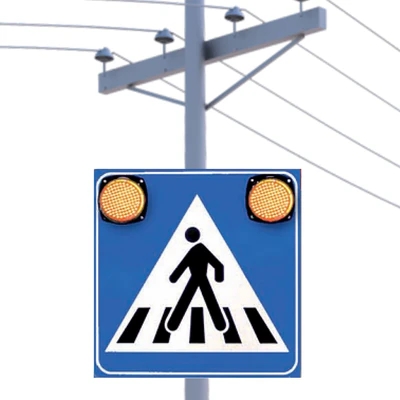
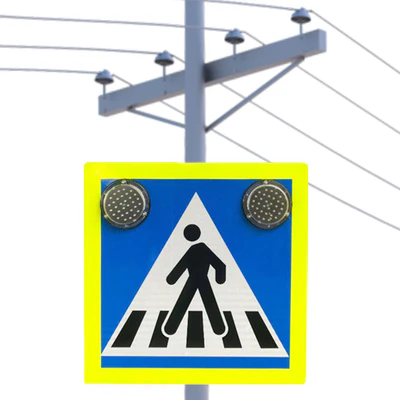
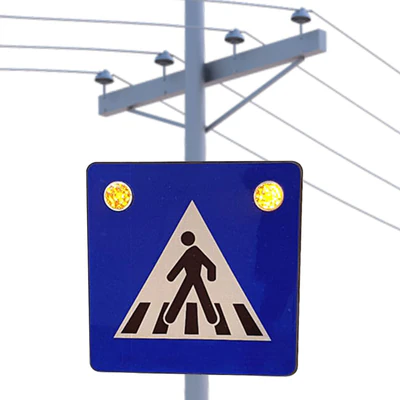
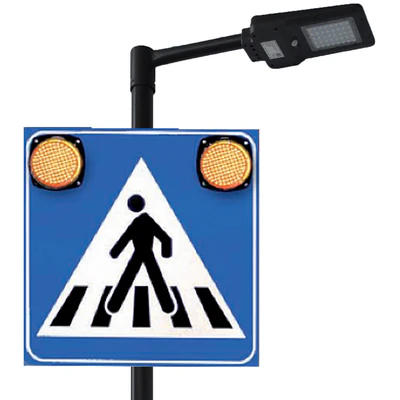
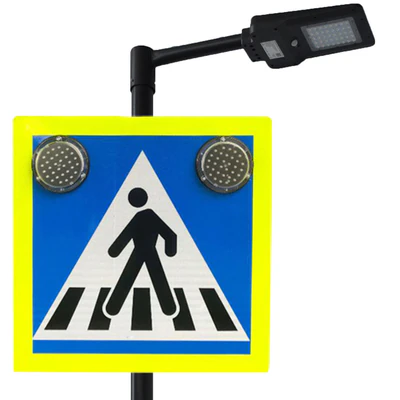
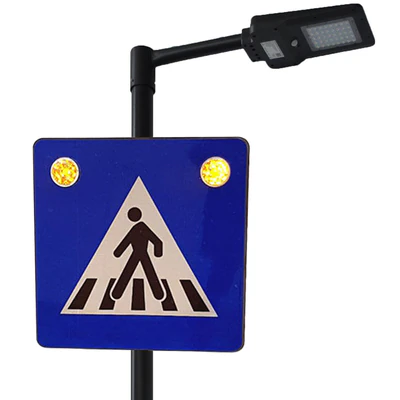
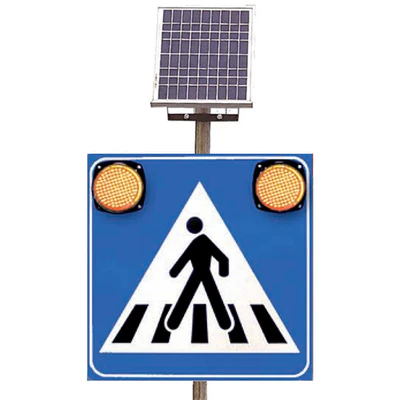
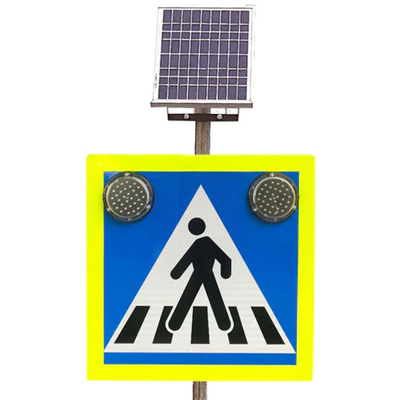
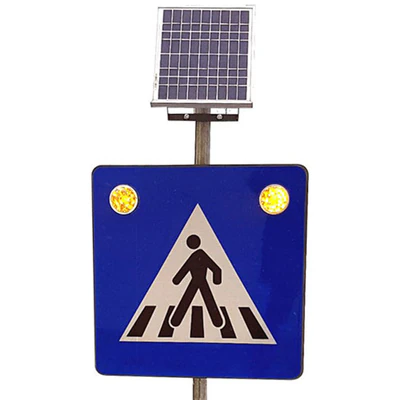
Lighting system for pedestrian crossing is one of the most efficient modern solutions for increasing road safety in urban and peri-urban areas. In each city there are intersections, residential areas or intense roads where the visibility of pedestrians is reduced, especially at night or under adverse weather conditions.
One professional lighting system for pedestrian crossings completely transforms the way drivers perceive crossing. By using LED lighting bodies with asymmetrical distribution, specially marked posts and intelligent detection systems, pedestrians become visible from a distance, and drivers can react much faster.
These systems are designed to meet European road lighting standards and to create a positive contrast between pedestrian and roadway, which significantly reduces the risk of accidents. The lighting standards require that the level of illumination of pedestrian crossings be higher than the overall illumination of the road, precisely to draw attention to the crossing area.
In practice, a complete pedestrian crossing lighting system includes:
- dedicated LED lighting bodies
- lighting posts or consoles
- control and food system
- motion sensors or intelligent systems
- signs and visual markings
The result is a overlit pedestrian passage, visible from a distance, even in areas with insufficient street lighting.
What is a pedestrian crossing lighting system
One Pedestrian passing lighting system is an infrastructure dedicated to the intense and targeted illumination of the crossing area, designed to increase pedestrian visibility and signal to drivers the presence of a risk zone.
Unlike ordinary street lighting, these systems use special optical for asymmetric lighting, oriented to pedestrians and crossing area. Thus, the drivers observe the silhouette of the pedestrian much earlier.
In most modern projects, systems include:
- high efficiency LED lighting
- sensors for detecting pedestrians
- intelligent control of the luminous flux
- power supply or photovoltaic panels
As a pedestrian approaches the passage, sensors can activate illumination at maximum intensity, increasing visibility instantly.
Why special lighting is needed for pedestrian crossings
The visibility of pedestrians saves lives
Accidents in pedestrian crossings frequently occur due to low visibility. Standard public lighting is not always enough to highlight a pedestrian crossing.
By installing a dedicated lighting system:
- pedestrians are visible from far greater distances
- Drivers are visually alerted
- reaction time increases significantly
In addition, accented lighting creates a visual area of alertWhich causes drivers to slow down.
Positive contrast between pedestrians and roadway
A key principle of lighting for pedestrian crossings is Positive contrast.
The light shall be oriented so that:
- the pedestrian is illuminated frontally
- the background remains darker
- pedestrian silhouette becomes clearly visible
This technique is used in most modern road safety systems.
Compliance with European standards for lighting
Design of pedestrian lighting must meet technical standards such as SR EN 13201, which set the minimum level of illumination and the mode of light distribution.
According to these standards:
- the illumination of the passage must be Not less than 1,5 times larger than road lighting
- lighting shall be directed towards the crossing area
- the systems shall be located before the passage, on each direction of circulation.
Components of a professional pedestrian crossing lighting system
Dedicated LED lighting bodies
The heart system is represented by LED projectors with asymmetrical distribution.
These are specially designed for:
- lighting of pedestrians
- zebra marking illumination
- reducing blindness of drivers
LED Advantages:
- Low energy consumption
- long life
- High luminous flux
- start instant
Lighting posts and consoles
The lighting bodies are mounted on metallic posts or street consoles.
In many projects, the pillars are painted in yellow and black, colours that attract the attention of drivers and signal the presence of pedestrian crossings.
The typical height of the pillars is between:
This position ensures the correct distribution of light on the roadway.
Feeding system
Lighting systems for pedestrian crossings can operate with several types of power supply:
Power supply
The most common solution in urban areas.
Advantage:
- stability
- constant illumination
- simple maintenance
Photovoltaic feed
More and more projects use Solar panels for food.
The system shall include:
- solar panel
- battery
- solar controller
This solution is ideal for:
- areas without electricity network
- national roads
- rural area
Intelligent sensors and systems
Modern systems may include:
- PIR sensors
- motion detectors
- remote sensing systems
- adaptive control of the luminous flux
These technologies allow:
- lighting at maximum intensity only when a pedestrian is detected
- energy savings
- distance monitoring
Types of lighting systems for pedestrian crossings
Illuminated static LED
The simplest system.
Characteristics:
- constant illumination
- reduced cost
- Quick installation
Illuminated with motion sensors
In this case:
- The system detects pedestrians
- increase light intensity
- reduces energy consumption
Adaptive Intelligent Illuminated
Smart systems include:
- Telemanagement
- Digital control
- integration with smart city infrastructure
They may adjust the illumination according to:
Where lighting systems are used for pedestrian crossings
These systems shall be installed in particular in high-risk areas:
urban agglomerated areas
national roads
resident areas
Schools and kindergartens
hospitals
Public transport stations
dangerous intersections
Local authorities are increasingly implementing these systems to increase traffic safety and reduce accidents.
Commercial benefits for authorities and projectors
- increase pedestrian safety
- reduces the risk of accidents
- improves the visibility of passages
- solution in accordance with European standards
- Low energy consumption
- lifespan
- minimum maintenance
- compatible with smart city projects
- Quick installation
- Increases traffic discipline
FAQ – Frequently Asked Questions
What is a pedestrian crossing lighting system?
It is a specially designed system to illuminate the crossing area with targeted LED bodies, increasing pedestrian visibility and road safety.
Why is it different from normal street lighting?
The street lighting is general, while the pedestrian crossing system is specially oriented towards pedestrians and crossing marking.
What kind of light is used?
Most systems use LEDs with asymmetric distribution, to illuminate pedestrians without producing blindness for drivers.
Can it be installed without the power grid?
Yeah. There are systems powered by Photovoltaic panels and batteries, ideal for isolated areas.
Are these systems mandatory?
More and more authorities are implementing dedicated lighting of pedestrian crossings in road safety projects.
What lifespan does the system have?
LED lighting bodies can work more than 50,000 hours, which means many years of use without major intervention.