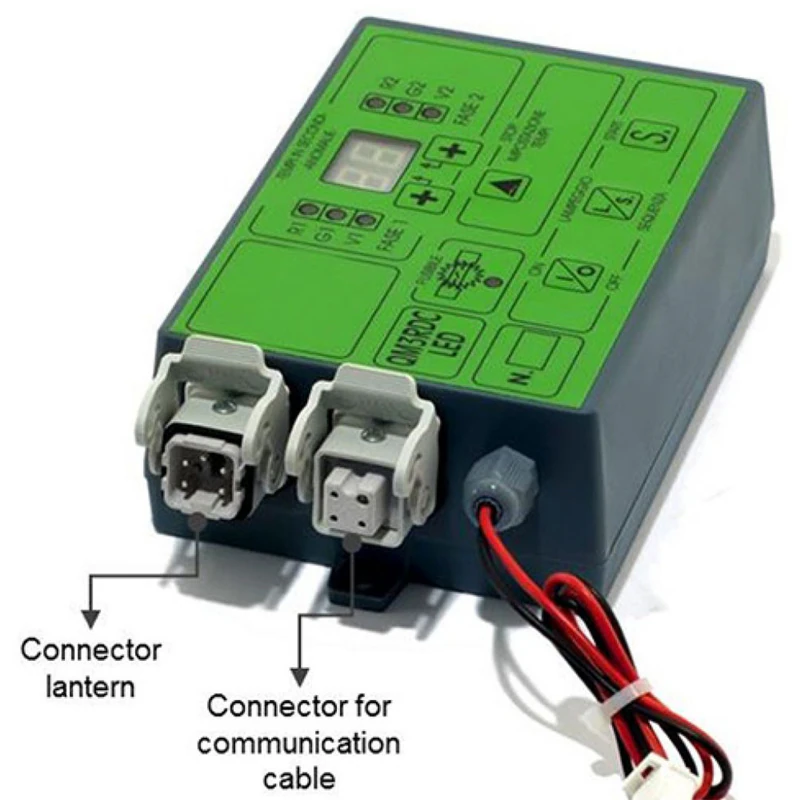
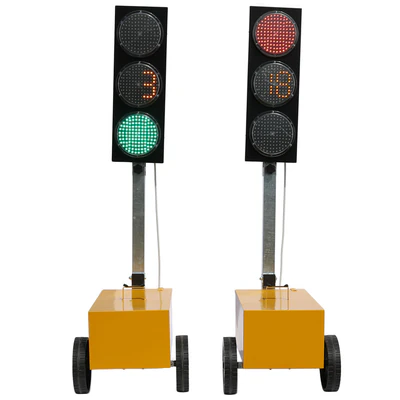
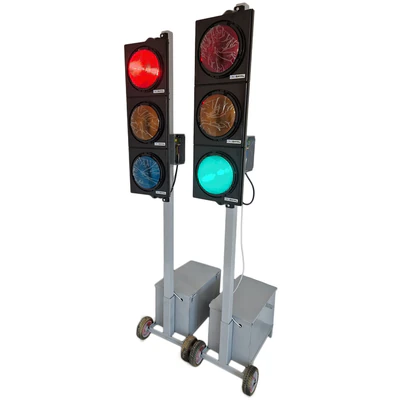
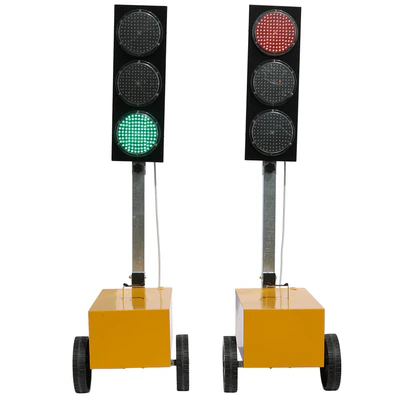
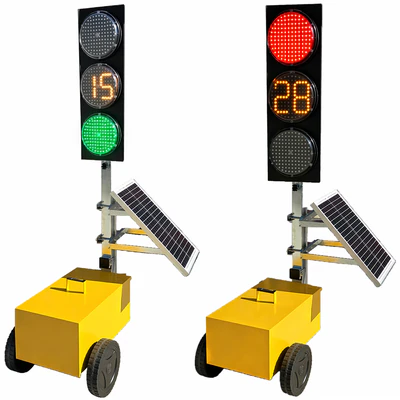
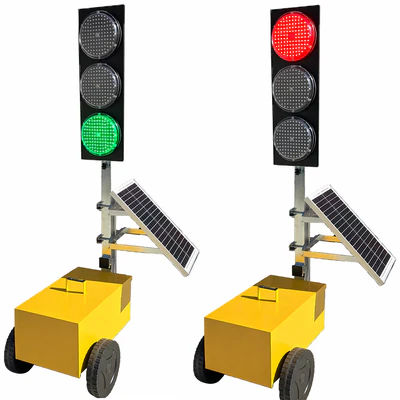
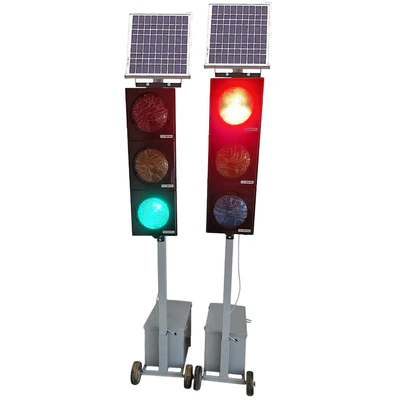
Managing traffic in areas with road works, narrow roads or temporary interventions requires reliable and easy to configure equipment. Control unit for mobile traffic light is the essential component coordinating the operation of temporary traffic lights, ensuring the correct alternating of traffic flows and maintaining the safety of participants in traffic.
This electronic control unit for mobile traffic light is designed to automatically or manually manage traffic lights, red-green times and synchronisation of several traffic lights. The system uses modern microprocessor technology and allows the configuration of signaling programs directly from the control panel or via computer connection.
For construction firms, road managers or local authorities, a Joint control for mobile traffic lights It is not just a technical equipment – it is the instrument that makes the difference between fluid traffic and dangerous blocking in a working area.
The role of the control unit in a mobile traffic light system
In a temporary road signalling system, each component has a clear function: traffic lights provide the visual signal, and control centre is "the system's brain.
It shall coordinate:
- red – yellow – green light sequence
- phase change times
- synchronization between two or more traffic lights
- Operating modes (automatic, manual or synchronized)
- monitoring the functioning of the system
Practically, without this electronic unit, mobile traffic lights could not function coordinated.
Modern systems can control multiple signal outputs and digital inputs, allowing for complex traffic scenarios and monitoring of consumption or power supply.
Why a unified road work control is essential
In areas where traffic is to be directed alternately on a single band – for example, in asphalt works, bridge repairs or utility interventions – traffic control must be precise.
O control unit for mobile traffic light offers:
- automatic traffic control
- synchronization between senses
- rapid scheduling of traffic cycles
- stable operation in difficult conditions
- continuous monitoring of the system
Without an automatic system, driving traffic would require dedicated personnel, increase the risk of accidents and lead to significant delays.
How a unified control for mobile traffic lights works
At the technical level, a united control is a electronic controller with microprocessor which handles all the signals of the light.
The running process shall include:
- Receiving configuration data – times, sequences, ways of working
- Activation of signalling cycles
- Signal transmission to traffic lights
- Real-time system monitoring
- Automatic correction of errors or defects
Many modern plants also include diagnostic systems, checking the current of each lamp or LED to detect any malfunctions.
Operating modes of a unit control for mobile traffic light
A major advantage of these equipments is flexibility. Depending on the type of work or the traffic conditions, the plant can operate in several ways.
Automated with fixed times
Most commonly used mode. The system runs cycles that are set for each direction of circulation.
Advantage:
- simple configuration
- continuous operation without intervention
- Predictability for Drivers
Synchronized mode
In this way, two or more traffic lights work synchronised to control alternative traffic on a narrow sector.
This mode is ideal for:
- roads with only one temporary band
- works on bridges
- long construction sectors
Manual control
The operator may intervene directly to change the signaling phases.
Useful in situations such as:
- Unplanned traffic
- emergency response
- manual management of the vehicle flow
Intermittent mode
The light can operate on intermittent yellow for warning signaling.
Easy programming and configuration
One of the most important advantages of a Modern control stations for mobile traffic lights is simple programming.
Configuration can be performed:
- directly from the LCD screen control panel
- by computer connected by serial port or dedicated interface
- by remote control or radio systems
The interface is designed so that operators can quickly modify signaling times or programs without advanced technical knowledge.
Real-time monitoring and diagnosis
For systems used on public roads, reliability is essential.
Therefore, modern plants include monitoring functions such as:
- verification of power supply voltage
- monitoring of electricity consumption
- spotting defects
- recording of operating parameters
These functions allow rapid identification of problems and significantly reduce the time taken to intervene.
Robust construction for outdoor use
The control units for mobile traffic lights are designed for difficult working conditions.
Typical characteristics:
- metal or industrial casing
- Robust electronic component
- vibration resistance and dust
- protection against voltage fluctuations
These features ensure stable operation in the road environment, where equipment is exposed to extreme temperatures, humidity and vibration.
Integration with modern traffic control systems
Advanced models can be integrated with modern monitoring and control technologies.
These may include:
- GSM / GPRS communication for remote control
- automatic alarm transmission in case of malfunctions
- connection to centralised traffic management systems
- collection of traffic flow data
This type of connectivity allows authorities to manage road work more efficiently and optimise traffic.
Typical technical characteristics of a unit control for mobile traffic light
The specifications may vary by model, but most professional plants include:
- microprocessor control
- Multiple output lamps for light-signalling
- programmable digital inputs
- several operating programs
- monitoring of consumption and voltage
- local or remote configuration
- support for synchronisation between units
- integrated electronic protections
For example, some controllers can manage up to 16 signal outputs and 8 programmable digital inputs, providing flexibility for complex applications.
Areas of use
O control unit for mobile traffic light is used in a variety of road infrastructure scenarios.
Construction works and repairs
- rehabilitation roadway
- works at bridges
- intervention on utility networks
Temporary narrowed paths
- Single-band sectors
- areas with temporary restrictions
Events and temporary traffic management
- traffic diversions
- public events
- maintenance work
Emergency situations
- rapid roadway interventions
- accident or blocking areas
Commercial benefits for customers
✔ Increases traffic safety in the yard
✔ Reduces the risk of road accidents
✔ Efficient steering of alternative circulation
✔ Fast configuration of the traffic lights
✔ Automatic system monitoring
✔ Reduction of staff costs
✔ Autonomous and stable operation
✔ Quick installation on the ground
✔ Suitable for various types of work
✔ Compatible with modern control systems
FAQ – Frequently asked questions about mobile traffic control station
What is a unified control for mobile traffic lights?
It is the electronic unit that controls the operation of mobile traffic lights, setting signaling times and synchronisation between units.
What is this equipment used for?
It is used for traffic management in areas with road works or sectors where traffic should be managed alternately.
Can I program the command center?
Yeah. Most models allow programming of direct traffic cycles in the control panel or by connecting to the computer.
Can it work without human intervention?
Yeah. In the automatic mode, the system completely manages the switching of traffic lights.
Can more traffic jams be synced?
Yeah. The plant can control two or more traffic lights for single-way traffic.
What power does the system use?
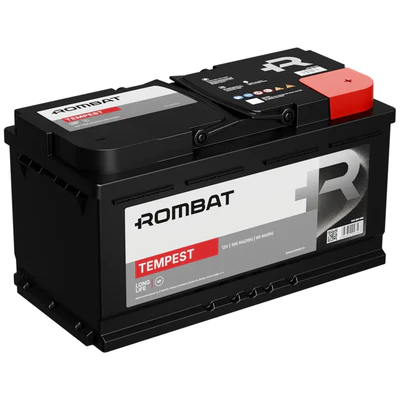
Depending on the configuration, the systems can operate on batteries, solar panels or direct power supply.
Is it resistant to difficult weather conditions?
Yeah. The power plants are designed for outdoor use and resist extreme temperatures, dust and vibrations.