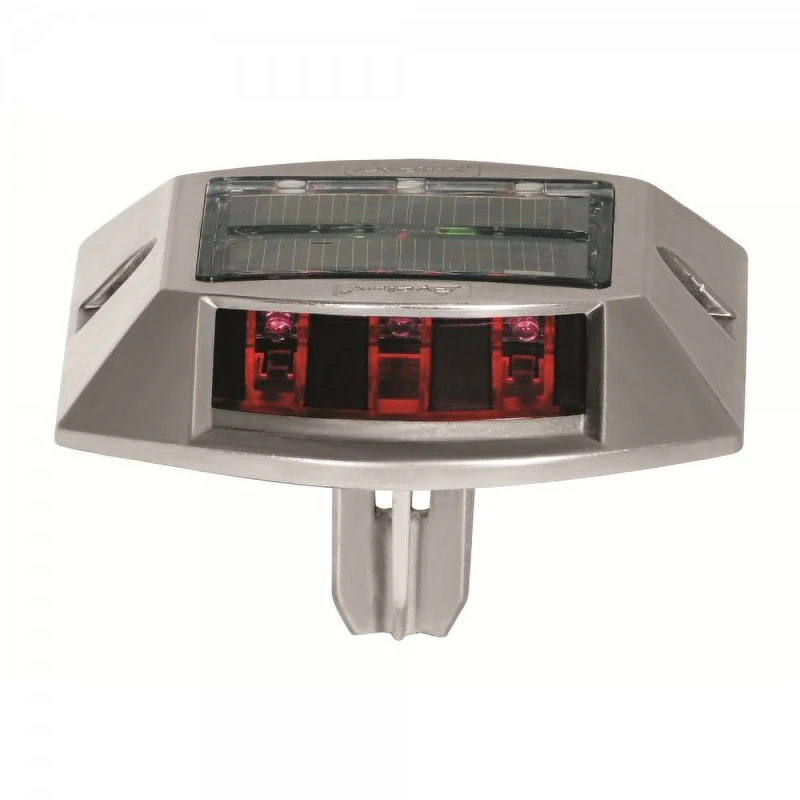
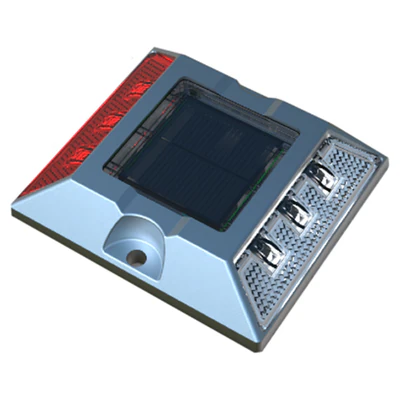
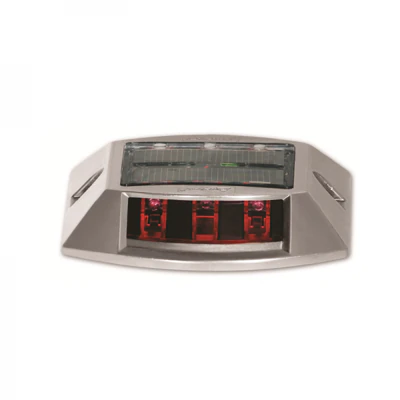
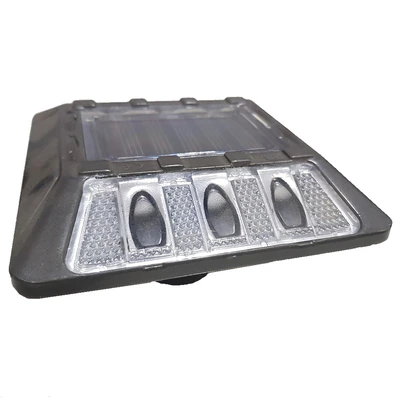
Solar Road Button is a modern and sustainable solution for signaling pedestrians at pedestrian crossings and road intersections, complete powered by solar energy, without electrical cables, without high maintenance costs and with fast mounting. Designed to withstand various environmental conditions, this device offers increased visibility, increased safety and long-term reliability – exactly what local administrations, infrastructure companies and smart city solution integrators are looking for.
Advantages of a Solar Road Button
Intelligent pedestrian access control
Solar Road Button allows pedestrians to request the passage by pressing, activating the light or sound signal without delay. It is ideal in areas with intense traffic, where synchronization between pedestrians and vehicles is essential.
Complete solar power supply
Powered by a powerful solar module, the device automatically loads during the day, storing energy for nighttime operation. This reduces operational costs and eliminates the need for external cables or batteries.
Simple and flexible installation
The assembly is done quickly on existing posts or structures, without complex electrical works – reducing the time and costs of implementation for authorities and construction companies.
How a solar road button works
Main component
- High efficiency solar panel – captures daylight
- Electronic control unit – manages light signals and pedestrian entrances
- Weather-resistant button – for quick pressing
- LED Lights Indicator – visible and at night
- Internal battery with autonomy – for continuous operation
Activation process
- The pedestrian pushes Solar Road Button
- The signal is taken over by the control unit
- Audible/visual light signal is generated for drivers and pedestrians
- The system automatically returns to the waiting state
Essential technical characteristics
Performance solar module
✔ High efficiency monocrystalline solar panel
✔ Capacity up to 20–30 W, optimized for European latitude
✔ Operation guaranteed even on cloudy days
Battery and autonomy
✔ LiFePO4 battery with long life cycle
✔ Over 72 h without sun
✔ Overload protection and deep discharge
Carcase and strength
✔ Water and dust resistant IP65 housing
✔ Operating temperatures: −20°C to +60°C
✔ Anti-vandalism component
Signing
✔ High intensity LEDs
✔ Visibility > 500 m under night conditions
✔ Accessible sound signal option
Compared to other signalling solutions
Solar road button vs Cable button
- ✔ No cables = quick installation
- ✔ Without monthly electricity costs
- ✔ Operating independently of the power grid
Solar road button vs mobile/QR phones
- ✔ Instant Answer
- ✔ Resistant to weather
- ✔ Immediate physical visibility
Solar road button vs traditional LED buttons
- ✔ Increased autonomy
- ✔ Free energy in the sun
- ✔ Flexible installation
Real applications
Passages of pedestrians
One solar road button installed on the most crowded crossings increases the safe crossing rate by up to 40% compared to the non-semaphoric crossings.
Public transport stations
It allows pedestrians in stations to signal the passing request and interact with smart traffic systems.
Commercial areas and campuses
Ideal for malls, institutions or university campuses, where the pedestrian flow is variable and intense.
Before purchase – technical guide
What to check
- Solar panel power
- Battery autonomy
- IP certifications
- Compatibility with existing traffic lights
Useful Questions
- How often will it be exposed to sunlight?
- Is it the crowded or peripheral area?
- Is there a need for a sound signal?
Commercial benefits
- ✔ Savings at electricity costs
- ✔ Simple assembly without electricians
- ✔ High visibility day and night
- ✔ Resistant under extreme conditions
- ✔ Reduce pedestrian accidents
- ✔ Increase traffic safety
- ✔ Smart City Integration
Frequently Asked Questions (FAQ)
1. What is a solar road button?
A pedestal signaling device powered by solar energy, without cables, for safe passage.
2. How does it feed?
Through solar panels that charge an internal battery, ensuring continuous operation.
3. Is it resistant to rain and dust?
Yes, it has IP65 housing, protected against water and dust.
4. Can it be integrated with existing traffic lights?
Yes, in most cases it can be connected to the traffic lights.
5. How long does the assembly take?
Usually 30–60 minutes, without complex electrical works.
6. How long does the battery last?
In 72 hours without solar power, depending on the model.
7. Is it suitable for rural areas?
Yeah, especially where there's no power grid.